eFoil Comparison 2026: Fliteboard, Lift, Awake, Waydoo, Aerofoils and SiFly
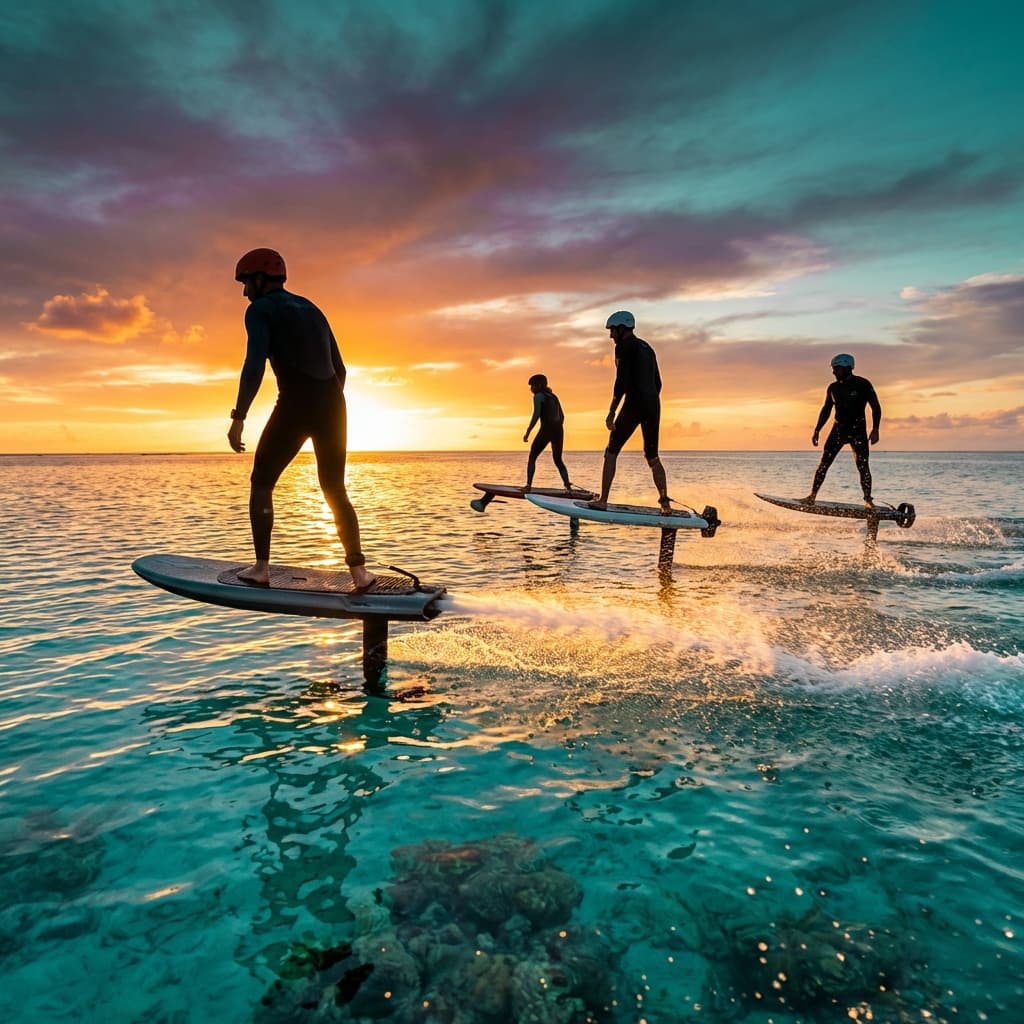
The best eFoil for a first season on a lake can be the wrong board for a surf break. Board volume influences the start. The foil controls lift and turning. Battery mass changes the carry and the ride. Propulsion determines the options for powered cruising and motor-off glide.
This eFoil comparison covers Fliteboard, Lift Foils, Awake, Waydoo, Aerofoils and SiFly, with recommendations for beginners, heavier riders, shared use, carving and wave riding. The aim is to match a complete electric hydrofoil board to the rider and the water.
Research basis: Manufacturer product pages, support documentation and regional catalogues checked on 21 September 2026. Specifications and runtime figures are manufacturer claims. Recommendations reflect our assessment of the documented designs; this article contains no hands-on test scores. Model names, packages and availability vary by country.
eFoil comparison at a glance
Board volume provides a useful starting point. It describes the hull's displacement capacity. Rider weight limits are a separate specification. The board must support its equipment and the rider before takeoff.
| Brand and model | Published board volume | Main role in this comparison | Key decision |
|---|---|---|---|
| Fliteboard ICON | 100 L | Learning, cruising and shared use | Select propulsion and battery for the rider |
| Fliteboard PRO | 67 L | Progression and carving | Trade starting support for a smaller platform |
| Fliteboard ULTRA L3 | 49 L | Wave riding and motor-off transitions | Commit to an advanced riding focus |
| Fliteboard RACE | 58 L | Powered course riding | Choose a package for course riding |
| Lift LIFT5 / LIFT5 F Cruiser | 83 L | Learning and recreational cruising | Compare carbon and fibreglass packages |
| Lift LIFT5 / LIFT5 F Sport | 67 L | Progression and recreational carving | Check rider fit against the Cruiser |
| Lift LIFT5 Pro | 55 L | Experienced riders seeking a compact board | Accept reduced support during starts |
| Lift LIFTX | 42–70 L across the listed range | Surf, wake and hybrid powered riding | Balance board size against motor-on endurance |
| Awake VINGA Carve | 77 L | Jet-driven cruising and carving | Select LR4 or XR4 battery |
| Waydoo Flyer EVO Max Plus | 130 L | First boards and shared use | Prioritise flotation and a broad platform |
| Waydoo Flyer EVO Pro Plus | 90 L | Progression within the EVO range | Retain EPP construction in a smaller board |
| Waydoo Flyer EVO Master | 75 L | Performance progression | Check regional Master / Master Plus naming |
| Aerofoils Adventure | 103 L | Cruising and learning with a jet drive | Match battery and wing package to rider |
| Aerofoils Performance | 83 L | Progression within the Aerofoils range | Choose reduced volume after a demo |
| SiFly Rider+ | 130 L | Learning and heavier riders | Confirm the complete set and wing selection |
| SiFly Stellar X | 75 L on the current store page | Experienced riders seeking a carbon board | Confirm model revision against older literature |
Sources: Fliteboard ICON, PRO, ULTRA L3, RACE, LIFT5, LIFT5 F, LIFTX sizes, VINGA Carve, Waydoo model guide, Aerofoils range, SiFly Rider+ and Stellar X.
eFoil buying criteria: board, wing and mast
Start with the board, rider and launch site
A wide deck gives a learner room to kneel, position feet and recover balance. A high-volume hull offers support during those transitions. A small board reduces the platform around the rider and demands a controlled start.
Volume needs context. A 100 L board carrying a battery, mast, motor and foil has less spare displacement than a bare 100 L surfboard. Width, hull shape, weight distribution and technique influence the result. A manufacturer's maximum rider rating describes a limit under its stated conditions; beginner suitability requires a separate assessment.
For a shared board, choose around the heaviest beginner who will use it. For a personal performance board, use a demo to establish the smallest platform that supports consistent starts in your home conditions.
Choose the wing before chasing motor power
The front wing generates lift. Its size and shape affect takeoff speed, glide and turning. The rear wing, or stabiliser, changes pitch behaviour and the balance between control and responsiveness. Lift's wing guidance treats front-wing selection as a central influence on ride character. Lift wing selection guide.
A large learning wing can suit slow cruising and repeated starts. A performance wing can suit speed or carving but increase the skill needed to maintain flight. Surface area provides an incomplete picture: profile, span and aspect ratio matter.
Compare a learner package with a learner package. A demonstration on a surf wing says little about the same board with a beginner foil.
Treat the mast as part of the launch plan
A longer mast increases the vertical distance between the board and foil. That can provide clearance through chop and banked turns, but it increases the depth needed for launch. A short mast can suit instruction and shallow launch approaches where the manufacturer's minimum clearance can be maintained.
Measure usable water depth at low water, including rocks and weed. Ask the instructor to demonstrate the takeoff and return route with the proposed mast. A suitable riding area can have an unsuitable launch.
Fliteboard: ICON vs PRO vs ULTRA L3 vs RACE
Fliteboard's range separates four needs: a learning platform, a progression board, a surf-focused board and a race board. Each configuration serves a distinct task.
ICON: the starting point for shared recreational use
The 100 L ICON is the Fliteboard candidate for a household board or a rider who values support during starts. Its configuration options include Flite Jet 2 and Flite Prop. Fliteboard identifies the propeller option as a source of added thrust for heavier riders. The listed Cruiser Jet 1500 C wing provides a starting configuration for recreational riding. ICON product details.
Our assessment: Put ICON on the demo list for learning and cruising. Test the propulsion choice with the intended rider; a preference for a jet should include an assessment of takeoff behaviour.
PRO: the progression choice
The 67 L PRO reduces volume from ICON and targets riders with boardsports experience or an interest in carving. Fliteboard offers battery choices spanning Nano, Sport and Explore, subject to the selected configuration. PRO product details.
Our assessment: PRO suits a rider who has established starts and wants a compact platform. A beginner should assess it against ICON during the same lesson. The PRO name describes a riding direction. The larger board remains a candidate for learners.
ULTRA L3: a wave-riding commitment
The 49 L ULTRA L3 uses a surf-focused package with an 82 cm MN Carbon Wave C mast and a folding-prop option. Fliteboard publishes an 18.1 kg configuration weight with Flitecell Nano, plus a Sport battery option for extended riding. The quoted weight belongs to that configuration. ULTRA L3 product details.
Our assessment: Compare ULTRA L3 against LIFTX for powered access to waves and motor-off riding. Its appeal lies in compact dimensions and reduced system mass. A learner whose main task is reaching a standing position should begin the comparison with ICON.
RACE: a different objective from surf glide
The 58 L RACE x Mercury Racing targets powered course riding. Fliteboard describes its shape and mast as a package for flat-water racing and identifies Flitecell Explore as a choice for voltage support under load. RACE product details.
Our assessment: Choose RACE for acceleration, course work and powered turns. ULTRA L3 is the relevant comparison for a rider whose goal is wave energy and motor-off transitions.
Ownership question: Request a written list of compatible batteries, propulsion units and wings for the chosen generation. A broad component catalogue creates choice, but compatibility must be checked at part level.
Lift Foils: LIFT5 F vs LIFT5 vs LIFTX
Lift offers three distinct paths: fibreglass learning packages, carbon recreational boards and a lighter surf-focused platform.
LIFT5 F: a learning package with an upgrade path
The LIFT5 F Cruiser is 83 L; the Sport is 67 L. Both use fibreglass boards, an aluminium mast and the Lift Connect System. Lift advertises a 90-minute maximum runtime and compatibility with its Blowfish inflatable rail accessory. LIFT5 F specifications.
Our assessment: Cruiser is the first demo choice for shared use and riders seeking a broad platform. Sport deserves consideration after the rider demonstrates repeatable starts. Check the complete package weight and assembly process alongside the carbon model.
LIFT5: choose the shape that fits the job
The carbon LIFT5 range includes Cruiser at 83 L, Sport at 67 L, Pro at 55 L and Laird at 64 L. Lift's published rider limits range from 86 kg / 190 lb for Pro to 113 kg / 250 lb for Cruiser. The listed complete packages use LCS Jet propulsion and claim a maximum of 90 minutes with the Gen5 Full Range battery. LIFT5 configuration table.
Our assessment: Cruiser suits a stability-led purchase. Sport suits progression. Pro belongs on an experienced rider's list. Laird needs a shape-specific demo: its length exceeds Sport's, while its stated volume is lower. Length is an incomplete sizing rule.
Lift's support guide describes the LCS connections and the different factory wing pairings. Those pairings form part of the comparison; a Cruiser with its learning wing and a Pro with a performance setup serve different tasks. LIFT5 support guide.
LIFTX: powered access, surf and motor-off glide
LIFTX uses a folding propeller and a smaller battery than the LIFT5 Full Range package. The listed range spans 42 L to 70 L. For the 5'2 / 64 L model, Lift publishes 21.05 kg / 46.4 lb complete setup weight, a 91 kg / 200 lb rider limit, and a 45-minute maximum motor-on runtime. LIFTX configuration details.
Our assessment: LIFTX belongs beside ULTRA L3 in a surf-focused comparison. A session that mixes motor use with wave energy can exceed its powered runtime, but that duration measures a different activity from continuous powered cruising.
Battery detail to verify: Lift's support page labels LIFTX capacity at 0.9 kWh, while the 5'2 product page lists 1 kWh. Obtain the exact battery specification for the offered package. Gen4 and Gen5 packs have generation restrictions; LIFTX battery use on LIFT5 requires the stated adapter. Lift battery compatibility guide.
Awake: VINGA Carve and regional VINGA models
Awake's current global product page lists VINGA Carve, a 77 L board with an 80 cm mast and Linear Jet propulsion. Published claims include 45 km/h / 28 mph, 60 minutes with LR and 120 minutes with XR. The page gives a 7.5 kg board weight and 8.5 kg drivetrain weight; neither figure represents the complete riding system. VINGA Carve specifications.
Our assessment: Carve belongs on the list for riders seeking a jet-driven platform between large learning boards and compact surf boards. A demo should focus on starting support, throttle control through turns and recovery after touchdown.
Regional catalogues need attention. Awake's Australian range lists VINGA Adventure at 95 L, with a Cruise 1600 wing and a claimed 120-minute maximum using an XR battery. Its package listing contains battery choices that require confirmation. Awake Australia VINGA Adventure.
Our assessment: Adventure is a separate candidate for a rider seeking a larger platform. Confirm the model name, board, wing and battery on the order. Avoid treating Carve, Adventure, Ultimate and older VINGA 3 listings as interchangeable specifications.
Awake's Flex battery concept can support ownership across its eFoil and jetboard ranges. That benefit depends on the product generation and exact pack. Request a compatibility statement covering both boards before planning a shared battery fleet. Awake Flex XR4 battery.
Waydoo: Flyer EVO Max Plus vs Pro Plus vs Master
The Flyer EVO range uses board size to separate learning and performance roles. Waydoo Europe's guide lists Max Plus at 130 L, Pro Plus at 90 L, Master at 75 L, and Lite at 90 L. Lite uses a different power specification from the other three in that guide. Waydoo EVO model table.
Max Plus: the flotation-led option
Max Plus combines a 130 L EPP board with sensors and GPS. The hull listing gives a 30 lb weight, distinct from the complete system. Waydoo Max Plus board.
Our assessment: Max Plus deserves a place on a beginner or shared-board shortlist. Test remounting, knee comfort and the carry from the vehicle. The large platform that helps a start takes space in storage and transport.
Pro Plus: the middle of the range
Pro Plus reduces volume to 90 L. Waydoo's regional product listing identifies it as the EVO Pro Plus board, while the model guide places it between Max Plus and the carbon Master in volume. Pro Plus board listing.
Our assessment: Compare Pro Plus with Max Plus after a lesson. Choose based on starting confidence and the intended rider group. A solo rider may prefer its dimensions; a mixed household may value Max Plus's platform.
Master: inspect the package behind the name
The 75 L carbon Master targets progression toward performance. Regional listings use Master and Master Plus naming, so confirm the board revision, mast and propulsion unit. Waydoo Master package.
Our assessment: Master suits a rider with consistent starts who wants a carbon board within the EVO ecosystem. Flight assistance should be assessed as an aid, with the rider responsible for balance, steering and clearance.
Runtime detail: Waydoo Europe lists 120 minutes in its model guide; a Waydoo regional Max Plus page claims 135 minutes with the 2,300 Wh option. These claims use different published contexts. Ask for expected duration with your weight, wing and cruising pace. Max Plus battery and runtime claim.
Aerofoils: Adventure vs Performance
Aerofoils, known through the Audi e-tron foil name, offers Adventure at 103 L and Performance at 83 L. Its range includes the 230 L Hyperfly, an option worth a separate demo for riders seeking a different learning format. Aerofoils model range.
Adventure: a jet-driven learning candidate
The carbon Adventure board is the larger of the two conventional boards compared in this section. Aerofoils positions it for learning and progression. Adventure board details.
Our assessment: Put Adventure beside Fliteboard ICON for a jet-drive demo. Compare the ease of getting to your feet, controller ergonomics, remounting and the assembled carry. A shared propulsion label cannot predict the feel of the complete board.
Performance: a smaller platform within the same range
The Performance board reduces volume to 83 L. That offers a distinct progression choice while retaining a larger platform than the 49–55 L specialist boards in this article. Aerofoils Performance board.
Our assessment: Performance belongs on a competent rider's shortlist for recreational carving. The local dealer's wing and drive-unit options deserve as much attention as the board name.
Aerofoils describes its propulsion as an integrated jet. Enclosure reduces access to rotating components, but the foil, speed and falls remain hazards. Training and clearance remain part of the purchase decision. Aerofoils beginner guide.
The Endurance battery page lists 2.23 kWh, with claims of 120 minutes or 40 km. Those maxima describe different performance measures and require the manufacturer's test conditions for interpretation. Aerofoils Endurance battery.
SiFly: Rider+ vs Stellar X
SiFly offers a useful comparison between a large foam board and a compact carbon model.
Rider+: platform and a broad rider range
The 130 L Rider+ uses EPP foam and aluminium construction. SiFly lists a 40–140 kg / 88–309 lb rider range and a maximum runtime of 120 minutes in its specifications. The linked page sells a board, so check the contents of the complete eFoil set. SiFly Rider+ specifications.
Our assessment: Rider+ deserves a demo for heavier beginners and shared use. Pair the rider assessment with the specified wing and motor. A published upper weight figure cannot guarantee a comfortable learning experience in chop.
Stellar X: carbon construction and a performance role
SiFly's current store lists Stellar X at 75 L, with carbon sandwich construction, a 40–100 kg / 88–220 lb rider range, and a claimed 45 km/h / 28 mph maximum. Stellar X product specifications.
Our assessment: Stellar X suits an experienced rider considering a performance board with greater volume than the smallest surf-focused models. Compare the package against Waydoo Master and Fliteboard PRO through a demo that includes touchdowns and restarts.
Revision detail: An older SiFly manual lists Stellar X at 78 L. This article uses the current store's 75 L figure. Confirm the supplied revision before using either number to compare packages. SiFly user guide.
Battery life: compare energy, weight and powered runtime
Maximum runtime is a poor league table without a common test. Rider weight, wing, propulsion, speed, water conditions and battery temperature change the result. A surf session with long motor-off periods measures a different demand from a lake crossing under power.
| Battery or platform | Published energy or package detail | Manufacturer duration claim | Interpretation |
|---|---|---|---|
| Flitecell Nano | 806 Wh; 6.2 kg / 13.7 lb | Maximum 45 minutes | A low-mass battery choice |
| Flitecell Explore | 2.1 kWh; 14.5 kg / 32 lb on linked listing | Maximum 150 minutes | Check fit with the exact board and generation |
| Lift Gen5 Full Range | 2.2 kWh in support guide | Maximum 90 minutes | LIFT5 platform; generation-specific fit |
| Lift LIFTX | 0.9 kWh support figure; 1 kWh product figure | Maximum 45 minutes of powered riding | Resolve the capacity discrepancy for the supplied pack |
| Awake VINGA Carve | LR4 or XR4; XR4 listed at 2.55 kWh | 60 minutes LR; 120 minutes XR | Battery choice changes both mass and duration |
| Waydoo EVO | 1,800 Wh or 2,300 Wh options | 120-minute guide; 135-minute Max Plus claim | Verify battery and test conditions |
| Aerofoils Endurance | 2.23 kWh | Maximum 120 minutes | Treat duration and distance claims as separate figures |
Sources: Flitecell Nano, Flitecell Explore, Lift battery guide, LIFTX product page, VINGA Carve, Waydoo guide, Max Plus claim and Aerofoils Endurance.
Our comparison rule: Use a battery with sufficient capacity for the intended powered session, with a reserve for the return. Accept the extra mass if duration is the priority. Choose reduced mass if the goal is short sessions, carrying ease or motor-off manoeuvres.
For a useful demo, record rider weight, battery model, wing, propulsion and start/end charge. Separate time under power from pauses and motor-off riding. Avoid converting maximum speed multiplied by maximum runtime into a range estimate: those claims can come from different operating conditions.
Jet vs propeller vs folding propeller
An enclosed jet, a guarded propeller and a folding propeller solve different design problems. The word “jet” describes neither a universal safety rating nor a guarantee of a particular ride feel.
| Propulsion choice | Main reason to consider it | What to assess during a demo |
|---|---|---|
| Enclosed jet | Reduced access to rotating components | Throttle response, takeoff with your weight, intake care |
| Guarded propeller | Powered thrust with a protective structure | Guard design, acceleration and handling during remounts |
| Folding propeller | Reduced blade drag during motor-off riding | The transition to glide and suitability for your skill |
Fliteboard offers jet and prop choices on ICON, while its ULTRA L3 supports a wave-focused folding prop. Lift's listed LIFT5 packages use LCS Jet, while LIFTX uses a folding prop. The relevant comparison is the purchased configuration. Fliteboard propulsion choices, ULTRA L3, LIFT5 and LIFTX.
Use the manufacturer's required guards, training procedure and shutdown instructions. Keep hands clear of the drive. Select a launch and riding area with space for falls and separation from swimmers. An enclosure addresses a component hazard; it leaves the need for rider control and safe water access intact.
Which eFoil fits your riding?
These shortlists reflect our assessment of the documented designs. Use them to select boards for a demo.
| Rider or use | Models to compare | Reason for the shortlist |
|---|---|---|
| First-time rider seeking a conventional board | Fliteboard ICON, LIFT5 F Cruiser, Waydoo Max Plus, Aerofoils Adventure | Learning-oriented platforms with different propulsion and construction choices |
| Heavier beginner | Waydoo Max Plus, SiFly Rider+, Fliteboard ICON | Large platforms; exact rider rating and wing require confirmation |
| Household with mixed abilities | ICON, LIFT5 Cruiser, Max Plus, Rider+ | Platform support for starts and shared use |
| Rider seeking progression and carving | Fliteboard PRO, LIFT5 Sport, Waydoo Pro Plus, Aerofoils Performance | Mid-volume choices across four ecosystems |
| Experienced rider seeking a compact carbon board | LIFT5 Pro, Waydoo Master, SiFly Stellar X | Different volumes and system choices for a performance demo |
| Surf or wake rider seeking motor-off glide | Fliteboard ULTRA L3, Lift LIFTX | Folding-prop configurations and a surf focus |
| Rider focused on powered race courses | Fliteboard RACE | A documented race-specific design |
| Awake owner seeking an eFoil | VINGA Carve; regional Adventure where offered | Potential battery sharing after compatibility confirmation |
Ownership: the comparison that matters after delivery
Carry the package before choosing it
A board's published weight can exclude the battery, wing or drivetrain. Ask for three figures: complete riding weight, battery weight and the heaviest part after disassembly.
A 20 kg item with a useful handle can present a different carry from a lighter item with an awkward grip. Test your actual route: stairs, beach, dock, vehicle and storage rack. Include the controller, charger and protective bags in the transport plan.
Confirm service access in your country
Request the location that will handle a battery fault, controller issue or damaged mast. A sales outlet and a service centre can perform different roles.
Ask who arranges battery transport, which parts are stocked in your country, and whether a dealer can diagnose the system. Obtain the local warranty terms for the board, battery, drive and controller. A global brand name offers little guidance about repair lead times at a particular location.
Inspect maintenance and storage requirements
Read the exact model's instructions for rinsing, drying, connector care, corrosion protection, charging and storage state of charge. Give those tasks a place in the ownership routine. Avoid substituting a familiar procedure from another brand.
For a used board, request its generation, battery history, charger identification, service records and any fault history. Verify parts compatibility before treating an older package as an entry into a current ecosystem. Lift's Gen4/Gen5 restrictions illustrate the need for that check. Lift generation compatibility.
Plan travel around the battery
The batteries in this comparison exceed the 160 Wh threshold used in the FAA's passenger-baggage guidance. They cannot travel as ordinary passenger baggage under those rules. Other routes require the airline's and relevant authority's requirements. FAA lithium battery guidance.
For a destination trip, investigate a compatible local rental battery or specialist dangerous-goods transport before booking. A board bag solves handling and protection; it cannot change a battery's transport classification.
Check local water-access rules with the responsible authority. Electric propulsion requires a local access check alongside other powered watercraft.
A demo checklist for a useful comparison
- Match the setup. Record board, battery, mast, propulsion and wing names.
- Start from the water. Test the kneeling position, foot placement and takeoff.
- Test a restart. Assess the effort after a fall, with instructor guidance.
- Ride at a comfortable pace. Compare control and balance before speed.
- Try turns and touchdowns. Assess recovery within your skill level.
- Inspect the controller. Check trigger reach, screen visibility and charge information.
- Rehearse ownership. Carry, disassemble and inspect the charging process.
- Request a package sheet. Confirm model revision, components, local support and warranty.
eFoil comparison FAQs
What is the best eFoil for beginners?
A suitable beginner eFoil combines a supportive board, a learning wing, manageable throttle response and access to instruction. Start a demo shortlist with Fliteboard ICON, Lift LIFT5 F Cruiser, Waydoo Max Plus or Aerofoils Adventure. Rider weight and launch conditions determine the final choice.
Is Fliteboard better than Lift?
The comparison depends on the model. ICON and LIFT5 Cruiser address learning and cruising; PRO and LIFT5 Sport address progression; ULTRA L3 and LIFTX address surf-focused riding. Compare the complete configurations and local service options within the same use case.
Can a heavier rider use an eFoil?
Choose a package whose published rider rating covers the rider and whose board and wing support the intended skill level. SiFly publishes a 140 kg upper rider figure for Rider+, but a lesson remains the relevant test of beginner fit. Rider+ rider range.
What runtime can an eFoil battery provide per charge?
The cited claims span 45 minutes for compact battery setups to 150 minutes for Flitecell Explore. These are manufacturer maxima across different configurations. Use your weight, wing, speed and powered riding time to assess the battery you need. Nano runtime and Explore runtime.
Does a jet drive remove the need for training?
Training remains essential. The foil, mast, board speed and falls require control and clearance. Propulsion enclosure is one design feature within the complete equipment and training decision.
Can an eFoil use wave energy for unpowered riding?
Surf-focused setups can use wave energy after powered takeoff. Fliteboard ULTRA L3 and Lift LIFTX provide folding-prop configurations for this purpose. The rider must have the foil skills and conditions needed to maintain glide. ULTRA L3 and LIFTX.
Should I buy the smallest board I can ride?
Choose the board that supports the sessions you intend to have. A small board can suit a skilled solo rider, while a larger platform can serve shared use, repeated starts and changing conditions. Consistent takeoffs are a stronger buying criterion than a small volume figure.
Choose the setup that earns water time
Start with rider fit and the launch site. Choose the board and wing for the intended session. Select the battery for powered duration and carrying needs. Confirm the package and service support in your country.
For a first board, give flotation and controlled starts priority. For progression, compare mid-volume models through the same manoeuvres. For waves, compare motor-off behaviour and system mass. For racing, choose a configuration built around that task.
Explore the eFoil directory to build a shortlist. A demo with the exact board, wing, battery and propulsion provides the strongest basis for the final decision.
Stay in the Loop
Get weekly updates on the latest electric boats, industry news, and exclusive insights.