Electric Outboard Motors
View filterable outboard listingsPowerful, quiet, and efficient electric propulsion for every boat. From portable motors to high-performance outboards.
Electric outboard motors are reshaping small-craft propulsion. From dinghies and fishing boats to tenders and daysailers, electric drives deliver clean thrust without the noise, fumes, or fuel complexity of traditional gas engines.
They suit inland lakes with noise or emissions limits, marinas with strict air-quality rules, and boaters who want a calmer experience on the water. With few moving parts, many electric systems last for years with minimal service.
Benefits
- Zero Emissions
No gasoline, exhaust, or fuel spills onboard
- Low Noise
Quiet operation keeps conversation and wildlife undisturbed
- Lower Running Cost
Electricity often costs far less per mile than gasoline
- Minimal Upkeep
No oil changes, spark plugs, or winterization routines
- Strong Torque
Full thrust from zero RPM for better docking
- Lake Access
Meets restrictions on bans or limits for gas motors
Buying Guide
Power Rating
Match the motor’s thrust and equivalent horsepower to your boat size.
Battery Capacity
Larger batteries extend range but add weight; portable units offer flexibility.
Shaft Length
Ensure proper prop depth for consistent propulsion and control.
Charging
Identify where you will charge—dock power, home, or portable chargers.
Top Manufacturers
Motor Comparison
Side-by-side technical specifications
| Model | Power | Charging |
|---|---|---|
IE 150ACEL Power | 150 hp rated / 200 hp peak | Up to 6.6 kW AC; DC fast charging available |
IE 75ACEL Power | 55 kW rated / 93 kW peak for 30 seconds | AC and DC Fast Charge supported |
IE 250ACEL Power | 250 hp rated / 350 hp peak | AC and DC Fast Charge supported |
BlueSpin 15 kW InboardBlueNav | 15 kW; 25 hp manufacturer equivalence | Standard 230 V connection; charger depends on system |
EP-40 Electric InboardElco Motor Yachts | 17 kW continuous; 29.4 kW peak | Charger selected with AGM or lithium battery package |
Spirit 1.0 PlusePropulsion | 1 kW (3 HP) | 8.5 hrs (Standard) |
| 90 kW (120+ HP Continuous) | 6 kW AC standard; DC fast charging supported | |
| 150 kW (200+ HP Continuous) | AC and DC fast charging; final configuration by project | |
| 300 kW (400+ HP Continuous) | up to 200 kW DC Fast Charge | |
Storm 300+Evoy | 225 kW nominal / 450 kW peak | 20 kW AC standard; DC fast charging up to 200 kW |
WAVE 150+ExploMar | 100 kW (200 HP Equivalent) | 7 kW AC / 40 kW DC |
WAVE 300ExploMar | 150 kW (300 HP Equivalent) | up to 120 kW Fast Charge |
WAVE 70+ExploMar | 40 kW (70+ HP Class) | 7 kW AC / 40 kW DC |
FM100 Electric OutboardFlux Marine | 75 kW / 100 hp continuous; about 112 kW / 150 hp acceleration | Integrated AC and DC charging; configuration dependent |
FM115Flux Marine | 86 kW (115 HP Continuous) | About 7.5 hr on 220 V / 30 A; about 1.5 hr 20–80% DC fast charge |
Ultima 3.0Haswing | 480 W or 1,030 W selectable | 33.6 V / 4 A charger; time varies by battery |
Avator 110eMercury Marine | 11 kW (15 HP) | 520 W portable or 1,050 W vessel-mounted charger |
Avator 7.5eMercury Marine | 750W (3 HP Equivalent) | 110 W charger included; 230 W and 520 W optional |
MO 80MITEK Srl | 60 kW input / approximately 80 hp class, archived claim | N/A |
SD10 SaildriveOceanvolt | 10kW (13.4HP) | Shore + Hydrogeneration |
ServoProp 15Oceanvolt | 12 kW continuous / 15 kW peak | Shore + Advanced Hydrogeneration |
RemigoOneRemigo | 1,000 W input; 30 kg static thrust | 6 h standard AC; 3 h fast AC; 10–12 h DC |
115HPStealth Electric Outboards | 86 kW / 115 hp continuous in earlier listing | Depends on selected battery system |
TEMO·450TEMO | 450 W input; 200 W propulsive power | About 3–3.5 h mains; optional 12 V charger |
AlarisTohatsu | 6.0 kW input (9.9 hp combustion-outboard class) | Depends on selected 48–60 V battery and charger |
Deep Blue 50 RTorqeedo | 50 kW continuous / 60 kW peak (80 hp equivalent class) | Integrated high-voltage charger |
E-Motion 180EVision Marine Technologies | 180 HP | Configuration dependent; confirm with powered-boat specification |
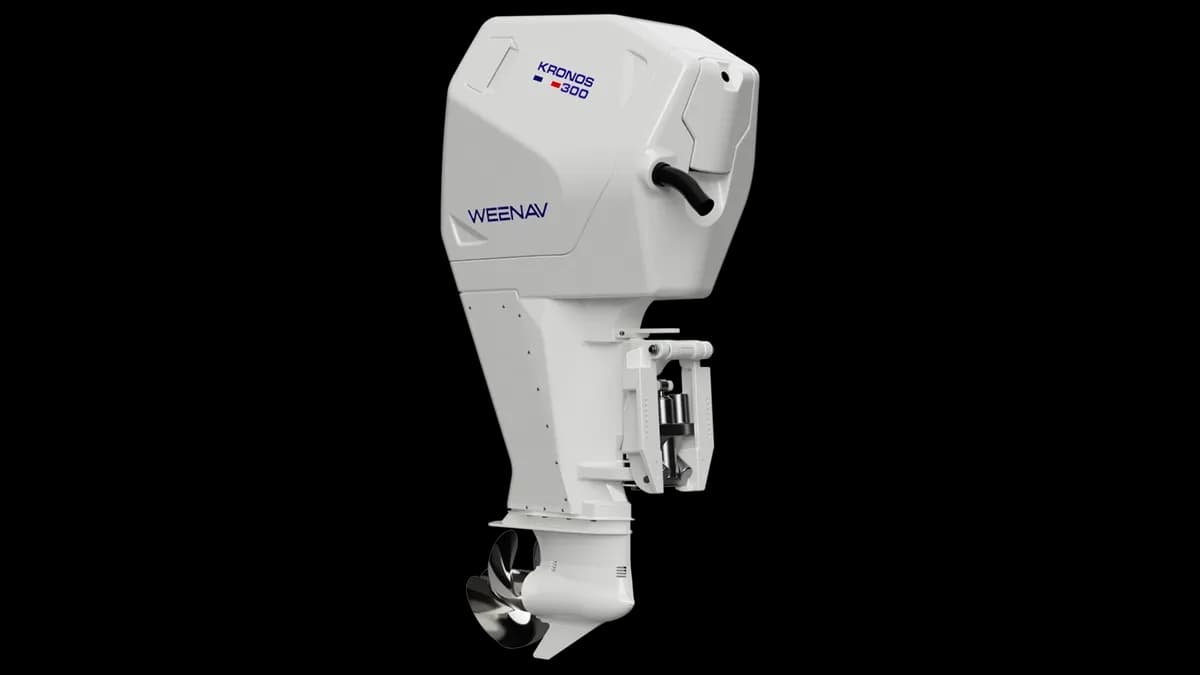
KRONOS 300Weenav | 220 kW / 300 hp continuous; 300 kW / 408 hp peak | 22 kW AC; CCS up to 200 kW (10–90% in about 30 min) |
SDe15 Electric SaildriveYanmar | 15 kW at 2,700 rpm; S2-60 rating | Installer-specified shore charger |
Featured Engines


All Outboards
29 Models


Outboard FAQ
Electric outboards are significantly quieter, produce zero exhaust fumes, and require much less maintenance. They provide instant torque, making them excellent for docking and low-speed maneuvers, though gas motors still lead in high-speed, long-distance applications.
Range varies based on battery capacity and speed. At a leisurely cruising speed, you can expect 2-6 hours of run time. However, running at full throttle will dissipate the battery much faster due to increased water resistance.
Most small to medium electric outboards can be charged using standard 110V or 220V shore power outlets. High-performance systems may require dedicated Level 2 chargers similar to those used by electric vehicles.
Yes, they eliminate local water and air pollution by removing exhaust and unburned fuel from the equation. They also significantly reduce noise pollution, which is less disruptive to both humans and marine ecosystems.
Maintenance is minimal. There are no oil changes, fuel filters, spark plugs, or impellers to replace. Occasional checks of the propeller, zinc anodes, and electrical connections are typically all that's required.
Stay Updated on
Electric Marine Tech
Join 2,500+ boaters receiving weekly insights on new motors and technology breakthroughs.