eFoils Explained: Best Electric Hydrofoil Boards Buyer's Guide
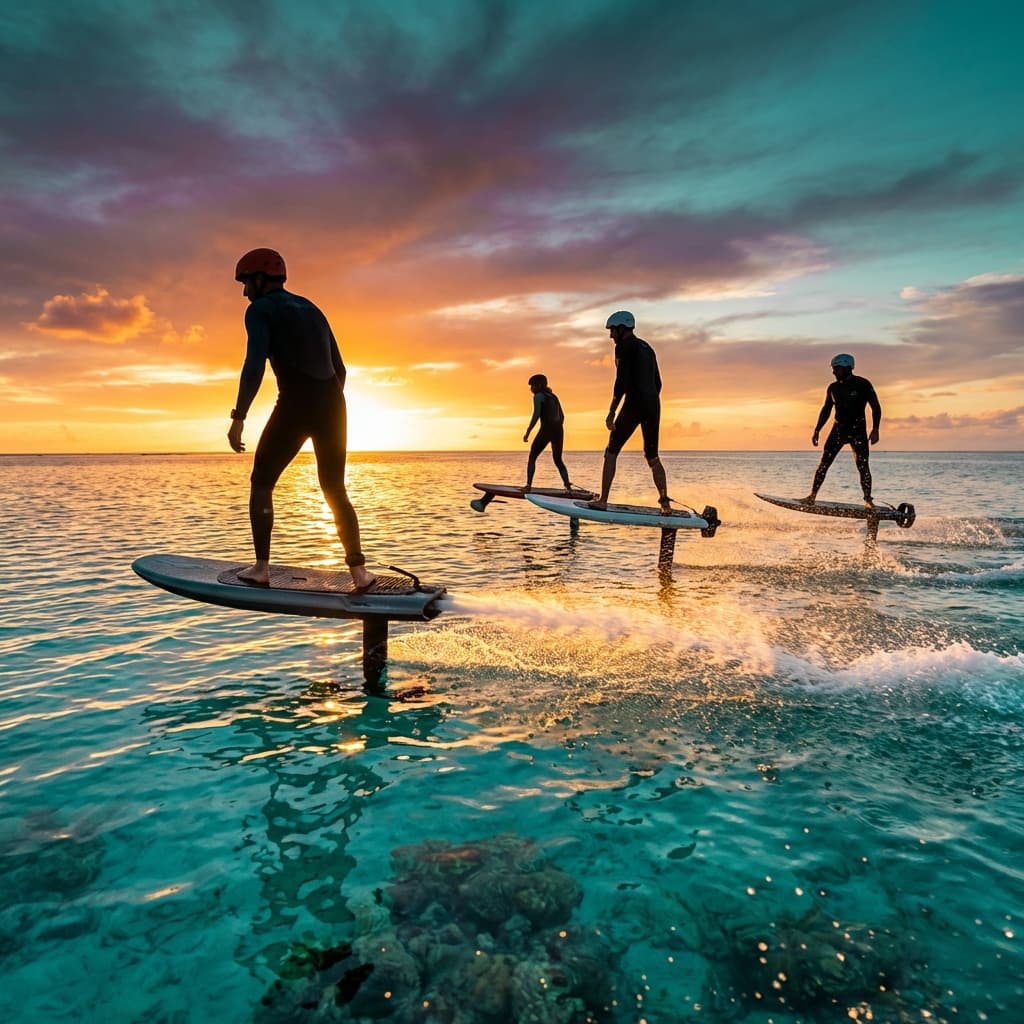
Imagine gliding silently above the water, hovering on a board as if defying gravity itself. That experience is exactly what an efoil delivers, and it is quickly becoming one of the most exciting water sports in the world.
An efoil, short for electric hydrofoil, is a surfboard equipped with an underwater wing and a battery-powered motor that lifts you above the water's surface as you gain speed. No waves required, no engine noise, just pure, smooth flight over the water. It sounds futuristic, but this technology is now more accessible than ever for beginners who want to try something truly extraordinary.
If you are new to the world of electric hydrofoil boards and feeling overwhelmed by the options, you are in the right place. This guide breaks down everything you need to know before making a purchase. From understanding how efoils work to comparing the best boards on the market today, we cover the key features, price ranges, and beginner-friendly options to help you make a confident, informed decision. Let's get started.
What Is an eFoil?
An eFoil is a battery-powered electric hydrofoil surfboard equipped with an underwater mast and wing assembly that generates hydrodynamic lift as the board gains speed. Once that lift threshold is reached, the board and rider rise silently above the water surface, gliding on air rather than riding through chop. The entire propulsion system is self-contained, drawing power from an onboard rechargeable battery connected to an electric motor that drives a propeller beneath the foil mast. You control speed through a wireless handheld remote, making the experience intuitive from your very first session.
The riding sensation is unlike anything else on the water. Riders consistently describe it as flying over water, with near-silent propulsion and minimal surface contact creating a smooth, almost frictionless glide. Most beginners achieve basic foiling within a short learning curve, supported by the growing number of rental operations and certified instructors now operating globally.
What separates an eFoil from a traditional surfboard or a kitefoil is straightforward: no waves, no wind, and no external tow are required. All propulsion is generated internally, making eFoiling possible on flat lakes, harbors, and reservoirs where conventional foil sports simply cannot operate.
The environmental credentials are equally compelling. Battery-electric systems produce zero exhaust emissions and generate minimal wake, making eFoils welcome on noise-restricted and ecologically sensitive waterways where combustion-engine craft are prohibited. According to market research from Fact.MR, the electric hydrofoil surfboard market was valued at USD 420 million in 2025 and is forecast to reach USD 1.12 billion by 2035 at a 10.3% CAGR, confirming that mainstream adoption is accelerating rapidly.
How eFoils Work: Lift, Power, and Speed
Understanding the mechanics behind an eFoil helps you make smarter buying decisions and sets realistic expectations before your first session on the water.
Hydrodynamic Lift: How the Board Rises
The lift process follows the same aerodynamic principles as aircraft wings, just applied underwater. As the board accelerates, water flowing over the curved upper surface of the hydrofoil wings moves faster than water passing beneath, creating a pressure differential that pushes the board and rider upward. This "takeoff" threshold typically falls between 10 and 20 km/h, varying with rider weight, wing surface area, and board configuration. Heavier riders generally require larger wing surface areas to achieve lift at lower speeds, while lighter riders can get airborne more easily. The front wing does most of the lifting work, while the smaller rear stabiliser wing manages pitch and keeps the board level once you are flying.
The Electric Drivetrain
A waterproof brushless electric motor, sealed inside a pod at the base of the underwater mast, drives a propeller to push the board forward. All speed control is handled through a handheld Bluetooth wireless remote with variable throttle settings, allowing smooth, incremental acceleration rather than abrupt power surges. This setup is particularly beginner-friendly, since gradual throttle input gives new riders time to find their balance before reaching takeoff speed. Per the FOIL.zone builder community, brushless motors in production-grade configurations are rated to handle sustained water exposure while maintaining consistent power output across different conditions.
Speed Tiers and Battery Systems
The eFoil market segments into three practical performance tiers that directly guide model selection. Entry and leisure models cruise below 35 km/h, making them the right choice for beginners focused on balance and control. Intermediate and sport models reach below 45 km/h, suited to confident riders wanting a more dynamic experience. Performance and expert platforms push below 55 km/h, designed for riders with strong technical skill and physical conditioning.
Powering all of this are lithium-ion or LiFePO4 battery packs built into the board itself, typically ranging from 1.5 kWh on entry-level models to 3 kWh or more on premium platforms. Ride time falls between 60 and 120-plus minutes depending on throttle usage, rider weight, and water conditions. Slower cruising extends range considerably, since motor power draw increases sharply with speed.
Technology Progress: 2024 to 2026
Advances in motor efficiency and battery energy density since first-generation eFoils have meaningfully extended ride times and shortened charging durations on current production models. These improvements have lowered the financial and practical barriers to entry, broadening the rider demographic well beyond experienced surfers to include complete beginners. More models now arrive with beginner-oriented features including progressive throttle modes and interchangeable wing sets, allowing riders to progress from entry-level riding to more advanced performance within a single platform as their skills develop.
eFoil vs. Electric Surfboard vs. Foil Assist vs. Wing Foil
Before spending thousands of dollars on electric water sports equipment, understanding which category actually matches your goals is the most important research you can do. These four disciplines share electric propulsion or foil technology at their core, but they deliver entirely different experiences on the water.
eFoil vs. Electric Surfboard
An electric surfboard, such as the Awake Ravik, is a battery-powered board that propels riders across the water surface using a jet or propeller system. There is no hydrofoil mast, no lift, and no flying sensation. You race across the water at speeds reaching 30 to 40 mph, which is genuinely thrilling, but the experience is fundamentally comparable to a motorized wakeboard rather than silent flight above the surface. The learning curve is gentler since riders do not need to master foil balance, making it accessible to anyone with a jet ski or wakeboard background. Entry costs are generally lower, and battery drain is higher due to surface drag, which shortens session times compared to an eFoil. If above-water flight is what excites you, an electric surfboard will not deliver it, regardless of speed. You can read a detailed comparison of electric surfboards vs. eFoils to explore the distinction further.
eFoil vs. Foil Assist Systems
Foil assist systems like Foil Drive attach a compact electric motor unit to an existing non-motorized foil board. The motor provides just enough thrust to reduce the effort required to achieve lift during paddling or wave-catching, effectively extending session length and improving wave access in marginal conditions. This makes foil assist a session-extension tool for experienced foil surfers, not a standalone beginner system. Critically, buyers must already own a compatible foil board, meaning the total cost of entry is higher than the motor unit price alone. A notable 2025 to 2026 trend is worth flagging: high-end foil assist setups now rival entry-level eFoil pricing, blurring what was once a clear cost hierarchy. Review the eFoil vs. foil assist differences before assuming foil assist is automatically the budget option.
eFoil vs. Wing Foil
Wing foiling uses a handheld inflatable wing to harvest wind energy and fly a hydrofoil board. It delivers genuine foil flight, but it is entirely wind-dependent, meaning flat lakes, harbours, and sheltered bays where eFoils perform best are simply off-limits. Managing a wing while simultaneously balancing on a foil board demands two separate skill sets developed in parallel, creating a steeper initial learning curve. Wing foiling is the natural progression for kitesurfers or windsurfers moving into foil flight, not an entry point for general water sports beginners.
Best-For Summary
| Category | Best For | Key Limitation |
|---|---|---|
| eFoil | Flat-water independence, all-conditions riding, beginners seeking flight | Highest upfront cost |
| Electric Surfboard | Surface speed, accessible entry, wakeboard backgrounds | No foil flight, shorter battery life |
| Foil Assist | Experienced foil surfers extending sessions | Requires existing foil equipment |
| Wing Foil | Wind-sport athletes graduating to foil | Wind-dependent, dual skill set required |
Clarifying your category before purchasing is not optional at these price points. Buying an electric surfboard when you wanted flight, or a foil assist kit when you needed a self-contained system, is an expensive mistake that the right research prevents entirely.
The Best eFoil Brands in 2026: Top Models Compared
Choosing your first eFoil is one of the most consequential decisions you will make in this sport. The brand you select determines your parts availability, software updates, local dealer support, and long-term resale value. The seven brands below represent the strongest options available to North American and European buyers in 2026, organized to help you match your budget and goals to the right platform.
1. Lift Foils (United States)
Lift Foils is the category pioneer and the most widely cited market leader in the eFoil segment. The current Lift3 platform uses a modular architecture, meaning wings, masts, and battery configurations can be swapped as your riding style evolves. That flexibility is genuinely valuable because your needs at six months will be very different from your needs at two years. The aftermarket ecosystem around Lift is the deepest in the industry, with authorized US retailers stocking spare wings, masts, propellers, and batteries. For any buyer who prioritizes domestic support, fast parts shipping, and a large community of existing riders, Lift Foils is the benchmark. New pricing ranges from approximately USD 9,000 to USD 12,000 depending on the wing and mast package you select.
2. Fliteboard (Australia)
Fliteboard holds a co-leading premium position alongside Lift Foils and is among the most-searched head-to-head comparisons in the segment as of 2026. The brand is known for exceptional build quality and the longest-running proprietary software ecosystem in the category, which means app-based ride tuning, speed limiting for beginners, and over-the-air updates are all mature features rather than works in progress. The Ultra and Air models create a clear progression path, allowing a beginner to start on a more stable, larger board and graduate to a performance-oriented setup without switching brands. Strong distribution across North America and Europe makes demo and service access realistic for most buyers. Pricing runs from approximately USD 10,000 to USD 14,000.
3. Waydoo (China)
Waydoo is the top recommendation for budget-conscious first-time buyers, and the gap between its price and the next tier is substantial. The Flyer and Cruiser models sit at approximately USD 4,000 to USD 6,500, making the eFoil category accessible for buyers who cannot justify a five-figure outlay on a sport they are still learning. Critically, affordability concerns about early-generation Chinese-manufactured eFoils have been addressed by real-world durability testing; long-term reviews published in 2025 and 2026, including extended multi-thousand-mile ride logs, have validated the reliability of current Waydoo hardware. Community feedback from late 2025 confirms the brand has improved meaningfully, with one rider purchasing three units for group riding. One practical caution: after-sales support can vary by region, so confirming local dealer availability before purchase is strongly advised. You can browse and compare Waydoo models alongside premium competitors at e-surfer.com's eFoil shop, which stocks multiple brands simultaneously for side-by-side evaluation.
4. Awake (Sweden)
Awake takes a premium, performance-focused approach to eFoil design with Swedish engineering and a strong emphasis on high-grade materials and sustainability credentials. The Vinga eFoil line, including the Vinga 3 and Vinga S variants, targets experienced riders who want top-tier hardware and are willing to pay for European manufacturing provenance. Pricing ranges from approximately USD 11,000 to USD 13,000, and the brand maintains a strong European retailer network alongside confirmed North American distribution through specialty dealers. For buyers who prioritize eco-conscious manufacturing alongside performance, Awake is a compelling choice.
5. Radinn (Sweden)
Radinn occupies a distinct niche in the eFoil market through its cartridge-based battery system. Rather than waiting for a full recharge cycle between sessions, riders can swap a depleted battery cartridge for a charged one in minutes. This capability is particularly valuable for rental operators, resort deployments, and anyone who wants back-to-back riding sessions without long breaks. Radinn holds a notable market position in Europe and is worth evaluating seriously if extended daily ride time is a priority.
6. Mako (United States) and Cabrinha (United States)
Both Mako and Cabrinha hold meaningful positions in the North American market and deserve consideration depending on your background. Cabrinha enters the eFoil space with decades of kite and wing foil heritage, which translates into foil hardware expertise that experienced foil athletes will recognize immediately; riders already inside the foil sports ecosystem will find the brand's approach intuitive. Mako targets premium recreational buyers with a compact, travel-friendly board design that suits riders who want to transport their setup easily between destinations. Both brands are worth evaluating through hands-on demos before committing.
How Much Does an eFoil Cost in 2026?
New eFoil prices in 2026 span a wider range than most beginners expect. Entry-level models from Waydoo start at approximately USD 4,000, while premium configurations from Fliteboard and Awake can exceed USD 14,000 once you factor in larger battery packs and performance-grade components. The majority of full-featured, ride-ready models cluster in the USD 8,000 to USD 12,000 band, which represents the sweet spot where battery capacity, build quality, and warranty support converge. European buyers should note that pricing on that continent often sits between €12,000 and €20,000 for a well-specified eFoil, and boards advertised "from €9,995" frequently climb substantially higher after you configure battery size and accessories at checkout. For a thorough breakdown of what drives these price differences, the complete eFoil price guide at e-surfer.com is one of the most detailed resources available.
The True Cost of Ownership Goes Beyond the Sticker Price
The purchase price is where the math starts, not where it ends. Accessories including board bags, spare propellers, helmets, and impact vests add several hundred dollars to your initial outlay, and these are not optional extras for safe riding. Battery health checks are recommended annually, particularly for saltwater riders, and motor servicing is advisable every 100 to 200 hours of use. Buyers who purchase the most affordable configuration frequently find themselves upgrading within a season, so choosing the right spec from the beginning often proves more economical over time. Waydoo's detailed price breakdown outlines how tiered model lineups affect long-term value at different budget levels.
Navigating the Pre-Owned Market
The certified pre-owned segment has matured significantly, with retailers now listing second-hand models in the USD 3,000 to USD 7,000 range. Real-world community data shows that some eFoils purchased new for USD 12,500 have resold within months for under USD 6,000, reflecting rapid market competition and price compression. Before buying used, ask the seller for total battery charge cycles, inspect mast connections for saltwater corrosion, request motor service records, and confirm whether the manufacturer's warranty transfers to new owners. These four questions protect you from inheriting expensive problems.
High purchase cost remains the most consistently cited barrier to eFoil market growth across 2025 and 2026 research reports. Before committing, consider attending a seasonal demo event, booking an eFoil rental session, or exploring financing options that some dealers now offer at these price points.
eFoil Rental vs. Buying: Which Option Makes Sense for You?
The decision to rent or buy an eFoil is one of the most practical questions a newcomer to the sport will face, and the answer depends almost entirely on how often you plan to ride and where you live.
The Rise of eFoil Rentals
The commercial rental segment is currently the fastest-growing application category in the eFoil market, a trend expected to accelerate through 2035 according to industry outlook reports covering the USA Electric Hydrofoil Surfboards market. Resort operators, beach clubs, and water sports centers are deploying rental fleets at a pace that makes it genuinely easy to try the sport before committing thousands of dollars. This accessibility is a significant development for beginners who want a supervised first experience with professional instruction included in the session fee.
Running the Numbers
Most eFoil rental sessions are priced between USD 150 and USD 300 per hour. A rider logging 20 hours per year would spend USD 3,000 to USD 6,000 annually on rentals alone. Compare that against a one-time purchase in the USD 8,000 to USD 12,000 range, and the break-even point typically falls somewhere between two and four years of consistent riding. A useful way to frame this is through total cost of ownership analysis, which accounts not just for the purchase price but also for maintenance, battery servicing, storage, and insurance on the ownership side.
When Renting Makes More Sense
Renting is the smarter choice if you have limited storage space, a seasonal riding window shorter than three months per year, or genuine uncertainty about whether you will stay committed to the sport long-term. If a well-stocked local rental fleet is already available nearby, the convenience argument for ownership weakens considerably.
When Buying Makes More Sense
Ownership pays off when you ride more than 30 to 40 hours per year, live near a suitable waterway, and want the freedom to customise your wing and mast configuration for different conditions. Year-round access alone can tip the economics firmly toward buying within two to three seasons.
A Note for Commercial Operators
If you are considering launching an eFoil rental business rather than simply renting as a consumer, structured financial planning tools make a meaningful difference. The ROI calculator resources available at eboatdirectory.com for electric marine vessels provide a practical framework for modelling fleet investment returns, factoring in utilisation rates, session pricing, and maintenance cycles. That framework translates directly to eFoil fleet planning for anyone looking to enter the commercial rental market.
eFoil Regulations in North America and Europe
Before you purchase or ride an eFoil, understanding the regulatory environment in your region is not optional. Regulatory ambiguity is consistently ranked as one of the top market barriers in 2025 and 2026 industry research, and the rules governing where and how you can legally ride vary enormously depending on your country, state, and even your local harbour authority.
United States
In the US, eFoils are generally treated as motorized vessels subject to state-level boating laws, with most states defaulting to personal watercraft regulations in the absence of eFoil-specific legislation. This creates a patchwork of requirements that riders must research individually before their first session. Many states set the minimum operator age at 16 and require riders to complete a boating safety certificate course. Wearing a personal flotation device is mandatory in most jurisdictions. Hawaii offers the most detailed publicly available framework, with the Division of Boating and Ocean Recreation publishing explicit guidance on eFoil classification, vessel registration, and ocean zone compliance. States like Texas incorporate eFoils directly into official boater safety curricula. Unique locations such as Lake Tahoe add additional biosecurity requirements, including mandatory boat inspection station clearance, decontamination slips, and annual mussel stickers tied to invasive species prevention. Riders who register their craft in their home state and obtain a hull identification number can generally satisfy registration requirements when travelling to other states that mandate it, without re-registering each time.
Canada
Transport Canada classifies motorized eFoils as power-driven vessels under the Canada Shipping Act. This means riders must carry a Pleasure Craft Operator Card, wear a Transport Canada-approved PFD, and comply with national navigational rules. Provincial regulations layer additional requirements on top of the federal baseline, particularly around speed restrictions within 30 metres of shore and minimum operator age thresholds. Before riding in any Canadian province, confirm both federal and provincial rules independently.
European Union
EU regulations diverge significantly by member state. Germany, the Netherlands, Italy, Denmark, and Portugal require riders to hold a boat operator licence and carry proof of insurance. France, Poland, and Sweden operate under comparatively relaxed frameworks, though local harbour authority bylaws still impose speed zones and proximity-to-shore restrictions. The complete Europe eFoil guide for 2026 documents the country-by-country breakdown in detail and is worth reviewing before planning any trip.
United Kingdom
Post-Brexit, the UK's Maritime and Coastguard Agency classifies eFoils similarly to personal watercraft. Riders must comply with local port and harbour authority rules, which vary substantially by location. Several popular coastal areas have introduced seasonal bans or designated restricted zones for motorised foil craft, particularly during peak beach season.
Practical Compliance Checklist
Before your first ride anywhere, work through these five steps:
- Verify local classification in your specific jurisdiction before purchasing. eFoils may be classed as a PWC, a power-driven vessel, or remain legally unclassified depending on where you are.
- Carry proof of insurance at all times. This is legally required in Germany, the Netherlands, Italy, and several other jurisdictions.
- Check no-wake zone and restricted area maps for each riding location before launching.
- Confirm permit requirements. Some marinas and coastal areas require prior approval for motorised foil craft.
- Register your craft in your home state or province where required, and keep documentation accessible during inter-jurisdictional travel.
Treating regulatory research as part of your pre-purchase process protects you from fines, equipment confiscation, and avoidable safety incidents on the water.
Where to Ride: Finding eFoil-Friendly Locations
Finding the right water is just as important as choosing the right board. eFoils demand specific conditions, and knowing where to look before you arrive at the water's edge will save you frustration and, more importantly, keep you safe.
Ideal Water Conditions for Beginners
Calm, flat water is the non-negotiable foundation for a successful first session. Protected bays, inland lakes, reservoirs, and sheltered coastal inlets offer the stable surface conditions that let you focus on balance rather than fighting chop. The minimum safe depth is approximately 1.2 metres (4 feet); anything shallower puts the foil mast at risk of striking the bottom during falls, which can damage equipment and cause injury. Before launching at any new spot, physically inspect the surface conditions on arrival, check the weather forecast for wind events, and scan for submerged obstacles that may not be visible from shore.
Using eFoil-Spot.com to Find Legal Riding Locations
One of the most practical pre-trip research tools available today is efoil-spot.com, a community-driven map listing verified, legal eFoil spots across Europe, the USA, and the UAE. Each listing includes coordinates, photos, and a difficulty rating, making it straightforward to identify beginner-appropriate locations before travelling to an unfamiliar waterway. The platform was actively maintained as of May 2026 and allows riders to submit new spots, so the database continues to grow as the community expands.
Resort and Rental Hubs as First-Ride Destinations
Major eFoil lesson and rental operations are concentrated in Hawaii, Florida, California, the French Riviera, and Mediterranean and Caribbean resort clusters. In Waikiki, for example, operators run structured private lessons within clearly defined riding zones, giving beginners a controlled, professionally supervised introduction to the sport. These resort hubs are ideal for combining a first lesson with a travel experience before committing to a purchase; trying multiple boards in guided conditions is among the most efficient ways to narrow your buying decision.
Infrastructure Gaps in Inland North America
Outside major coastal markets, purpose-built eFoil infrastructure remains scarce. Dedicated launch facilities, secure overnight storage, and marina-level charging points are rare in inland and rural markets across North America. Buyers in these regions should plan for trailer or vehicle transport to access suitable water bodies, invest in a portable charging solution compatible with their battery system, and independently verify motorised watercraft regulations for each new waterway they intend to ride. These logistics add meaningful cost and planning overhead that coastal buyers rarely face.
Using eBoat Directory to Locate Dealers and Demo Sites
For riders researching where to demo or purchase an eFoil, eboatdirectory.com provides an electric marine directory covering eFoil listings by brand and region. It serves as a practical starting point for identifying authorised dealers and demo sites across key North American and European markets, particularly useful for buyers outside the established coastal riding hubs who need to locate the nearest hands-on test opportunity.
First-Time eFoil Buyer's Checklist
Every detail below maps directly to a purchase decision. Work through this checklist before you commit a dollar to any model.
1. Confirm local regulations before you select a model. eFoil classification is actively evolving across North America and Europe, and the rules that apply to your zip code or postcode may differ significantly from the next state or country over. Some jurisdictions classify eFoils as personal watercraft, triggering registration, licensing, and minimum-age requirements. Others treat them as non-motorised boards with no formal oversight at all. Resolve this before you choose a brand, because certain high-powered configurations may be restricted in your home waters regardless of how appealing the spec sheet looks.
2. Try before you buy with a rental session or demo day. Most riders achieve stable foiling within one to three hours of guided instruction, but the learning curve is physical and highly individual. Booking a rental session or attending a manufacturer demo event gives you genuine data on your own progression before you spend thousands. The experience will also clarify which board size and power setting feels manageable, information no spec sheet can replicate.
3. Match board volume and wing area to your weight and skill level. Independent testing consistently recommends a minimum board volume of 100 litres and a front wing surface area of at least 2,000 cm² for beginner configurations. Larger wing area generates lift at lower speeds, giving you more time to find your balance before the board accelerates. Most manufacturers publish explicit weight-range recommendations for each configuration; treat those ranges as hard limits, not suggestions. You can also find the best 2026 eFoil comparisons on YouTube to see how different setups perform on the water before committing.
4. Evaluate battery capacity against your actual usage pattern. A battery delivering roughly 90 minutes of ride time with a three-hour recharge cycle suits a casual weekend rider perfectly well. If you plan back-to-back sessions or operate in a rental context, a swappable battery system removes the wait entirely. Always cross-reference the manufacturer's stated capacity in watt-hours against your expected session length, and confirm whether spare batteries are available in your region.
5. Check the authorised dealer and service network near you. A brand without local service coverage creates real risk. Warranty repairs, foil hardware replacements, and battery servicing all require authorised technicians, and shipping a board internationally for a repair extends downtime significantly. Before purchasing, verify that at least one authorised dealer operates within a reasonable distance and confirm typical turnaround times for parts orders.
6. Inspect documentation thoroughly when buying used. A pre-owned eFoil can represent strong value, but only with proper documentation in hand. Request the total battery charge cycle count, full motor service history, and a physical inspection of the foil mast and connection points for corrosion. Critically, confirm whether the manufacturer warranty transfers to a second owner; policies vary considerably between brands and can materially affect the residual value of the board.
7. Budget for mandatory safety accessories from day one. A certified helmet, an impact vest, a foil-rated leash, and a padded board bag are non-negotiable purchases. These items protect both you and the board during the falls that are inevitable in the early learning phase. Allocate a minimum of USD 300 to 500 for a complete safety kit alongside your board budget.
8. Research the brand's software ecosystem before purchasing. App connectivity, speed mode programmability, and remote firmware update capability vary widely between manufacturers. For a beginner, app-controlled speed limiting is a genuine safety feature that lets you cap performance until your skills develop. As you progress, the ability to unlock higher speed modes and receive over-the-air updates extends the useful life of the product without requiring hardware changes. Choose a brand whose software roadmap aligns with the riding level you expect to reach within two to three years, not just where you are on day one.
Choosing Your First eFoil: Key Takeaways
The decision framework covered in this guide follows a clear sequence: define your riding frequency, confirm local regulations, complete at least one rental session, then align brand and model selection to your budget and regional service availability. Skipping any step in that sequence increases the likelihood of a costly mismatch between the board you buy and the conditions in which you will actually ride.
The market context reinforces the timing. With the eFoil segment valued at USD 420 million in 2025 and growing at a 10.3% CAGR toward USD 1.12 billion by 2035, ongoing technology investment from manufacturers continues to lower the entry barrier for first-time buyers. Battery efficiency gains and improved beginner-friendly control systems make 2026 arguably the most accessible year yet to enter the category with confidence.
For your next practical step, visit eboatdirectory.com to browse eFoil brand listings, compare authorised dealers, and connect directly with manufacturers serving North America and Europe. The directory consolidates the research process into one platform.
If purchase intent is high but logistics remain unresolved, revisit the rental versus ownership analysis and the regulations section before committing to a specific model.
Conclusion
Electric hydrofoil boards represent one of the most thrilling innovations in water sports today, and getting started is more within reach than most people realize. To recap the essentials: efoils work through a combination of underwater wings and battery-powered motors, no waves are required, beginner-friendly models exist at a range of price points, and choosing the right board comes down to your skill level, budget, and intended use.
Now that you understand what separates a quality efoil from the rest, you are equipped to shop with confidence rather than guesswork. Browse the recommended models in this guide, compare the features that matter most to you, and do not hesitate to test ride before committing.
The water is waiting. Your first flight above it could be closer than you think.
Stay in the Loop
Get weekly updates on the latest electric boats, industry news, and exclusive insights.
Subscribe to eBoat Newsletter