Electric Boat Motors: A Complete Buyer's Guide for Every Use Case
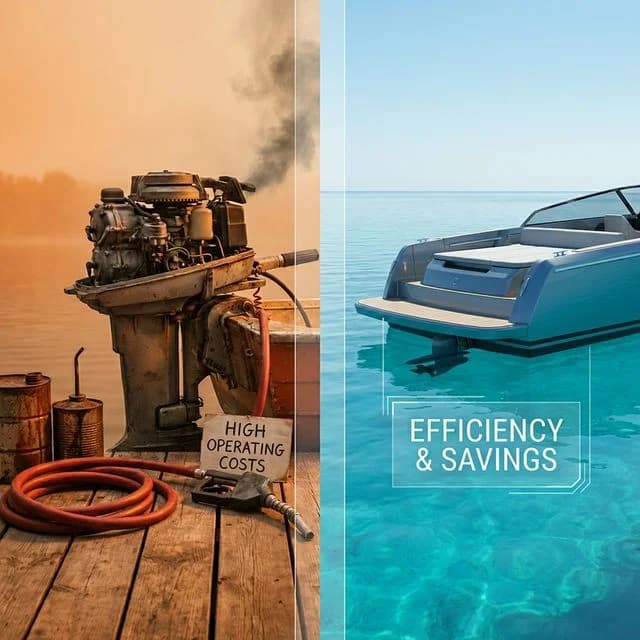
The boating world is changing fast, and electric power is leading the charge. Whether you are considering your first boat purchase or looking to upgrade your current setup, understanding your options has never been more important. An electric boat motor is no longer just a niche choice for early adopters; it is quickly becoming the smart, practical solution for anglers, recreational boaters, and eco-conscious water enthusiasts alike.
But with so many models, power ratings, and technical specifications on the market, knowing where to start can feel overwhelming, especially if you are new to boating. That is exactly why we put this guide together.
In this complete buyer's guide, you will discover the key types of electric boat motors available today, how to match the right motor to your specific use case, and the most important factors to consider before spending a single dollar. From quiet freshwater fishing trips to open-water adventures, we have broken everything down into clear, digestible sections designed specifically for beginners. By the end, you will feel confident and informed, ready to make the best decision for your time on the water.
Why the Shift to Electric Boat Motors Is Accelerating
If you've been watching the marine industry over the past few years, one thing is clear: the move toward electric boat motors is no longer a slow trend. It's a structural shift backed by billions in investment, tightening environmental regulations, and a wave of new products from both established manufacturers and innovative specialists.
The numbers tell the story plainly. The global electric outboard motors market reached $4.797 billion in 2024 and is projected to hit $13.74 billion by 2035, growing at a 10.04% CAGR. For buyers, this growth rate is directly meaningful. More capital flowing into the sector means better product choices, stronger dealer networks, and faster improvements in range, power, and reliability. The technology available to someone shopping for an electric boat motor today is dramatically better than what existed just three or four years ago, and the pace of improvement is only accelerating.
Environmental regulation is playing an equally important role, particularly in Europe. Maritime activities contribute nearly 15% of coastal water pollution in Europe, according to the European Environment Agency, and the EU has responded with increasingly strict emissions frameworks. For European boaters, this makes the shift to electric propulsion a regulatory reality rather than a personal preference. If you boat on European waters, the regulatory direction of travel is unambiguous.
The mainstream adoption numbers in Europe are striking. According to a Eurostat study cited by market analysts, over 60% of new recreational boats sold in Europe are now equipped with or compatible with electric propulsion systems. That figure signals a genuine crossing from niche to mainstream. Norway, Sweden, and Germany are leading adoption, driven by mature EV infrastructure and renewable energy grids. Critically, government incentive programs across both North America and Europe are actively reducing the cost of entry, making electric motors accessible to a wider range of buyers at every budget level.
Finally, the competitive landscape has matured considerably. Traditional marine manufacturers including Honda Marine, Yamaha, Suzuki, and Nissan have entered the electric segment alongside dedicated specialists. This dual structure gives buyers a genuine choice: specialist innovation or established dealer network scale. For a first-time buyer, that combination of options, supported by growing infrastructure and regulatory momentum, makes right now an excellent moment to explore electric propulsion seriously.
How to Choose an Electric Boat Motor: 5 Criteria That Actually Matter
Once you understand why the electric marine market is growing, the next challenge is practical: how do you actually choose the right electric boat motor for your specific situation? The specs can feel overwhelming at first, but five criteria cut through the noise.
1. Match Your Power Range to Your Hull
Power range is the single most important specification you will evaluate. The market divides cleanly into five segments: under 5 kW for small tenders, kayaks, and inflatables; 5 to 20 kW for day boats, pontoons, and fishing boats; 20 to 50 kW for larger recreational vessels; 50 to 100 kW for semi-commercial and high-performance applications; and over 100 kW for commercial ferries, water taxis, and workboats. Unlike combustion engines, electric motors deliver maximum torque instantly from a standing start, which means underpowering a hull creates immediate, noticeable performance problems rather than gradual frustration. Overpowering, on the other hand, wastes capital you could redirect toward a better battery system. Start with your hull type and intended use, then select the power band that fits, rather than working backward from a motor you find attractive.
2. Understand Motor Type Before Comparing Peak Numbers
Three motor architectures dominate the market, and each carries a different efficiency profile and maintenance burden. Permanent Magnet motors are the most widely adopted globally; they deliver strong, consistent torque across a broad RPM range and suit the majority of recreational buyers. DC Brush motors cost less upfront but require periodic brush replacement, adding a maintenance variable that matters for buyers prioritizing low ownership costs over time. Asynchronous induction motors handle sustained high-load commercial applications well but introduce additional system complexity that most recreational buyers do not need. The critical mistake beginners make is comparing motors by peak kilowatt figures alone. Always ask manufacturers for full efficiency curves showing real-world performance at typical cruising RPM ranges, since that is where your motor will spend most of its operating life, not at peak output.
3. Choose Battery Chemistry Carefully and Think About Weight Placement
Lithium-ion batteries dominate the recreational segment for good reason: superior energy density and significantly lower weight compared to older lead-acid alternatives. The practical guide to electric boat batteries is worth reviewing when comparing chemistry options in detail. Solid-state batteries are generating genuine industry interest as a next-generation option, but as of 2026 there is no confirmed retail availability timeline, so factor that uncertainty into any purchase planning. For smaller hulls specifically, where you place your battery pack matters as much as total capacity. Improper weight distribution affects hull trim and handling, so consult your vessel's documentation on recommended weight placement before finalizing a battery configuration.
4. Prioritize Smart Connectivity Even If You Do Not Need Every Feature Today
Smart connectivity features have moved from premium additions to standard inclusions on 2026 model electric boat motors. Real-time performance monitoring, GPS-linked range estimation, over-the-air software updates, and smartphone integration are now common across mid-market offerings. These features directly address range anxiety, which remains the most frequently cited concern among first-time electric boat buyers. There is also a resale value argument: connected systems with active software update support retain their value better than isolated, non-networked units as the market matures. Even if you do not intend to use every feature immediately, selecting a connected motor protects your investment and gives you a better experience as your familiarity with electric boating grows.
5. Verify Charging Infrastructure Compatibility Before You Buy
Charging compatibility is the criterion most consistently omitted from spec sheets, and it can become a genuine barrier after purchase. According to the 2026 electric boat motor guide from Weenav, running costs for electric propulsion are dramatically lower than combustion alternatives, with electricity costs as low as €0.50 to €2 for a four-hour outing compared to €15 to €40 for petrol. However, realizing those savings depends on actually being able to charge efficiently at your home dock or marina. North American buyers should confirm whether the system requires 120V or 240V shore power. European buyers need to verify single-phase versus three-phase compatibility. All buyers should ask whether the battery system supports DC fast charging at marina charging stations, what the maximum charge rate is, and which connector standards the system uses. Ask these questions directly to the manufacturer before committing to a purchase, since the answers are rarely visible on a product page.
Best Electric Boat Motors by Use Case
Matching the right motor to your hull is the single most expensive mistake first-time electric boat buyers make. The six use-case segments below map directly to the power brackets that define today's market, so you can identify your category before comparing specific models.
- Kayaks and dinghies (under 1 kW): Lightweight, low-speed craft need minimal thrust. Look for transom-mount motors with simple tiller controls and long battery life at slow speeds.
- Recreational fishing and trolling (1–5 kW): Quiet operation and precise speed control matter more than raw power. Bow-mount compatibility and freshwater corrosion ratings are key features to prioritize.
- Day cruisers and pontoons (5–20 kW): Displacement hulls in this category reward steady, efficient power delivery over burst acceleration. Dual-motor configurations are worth evaluating for larger pontoon platforms.
- Performance runabouts (20–50 kW): Planing hulls require burst power to clear the bow wave. Prioritize motors explicitly rated for planing performance, not just cruising thrust.
- Sailboats and cruising auxiliaries (20–50 kW): Sailboat auxiliary power favors compact inboard or pod-drive configurations with regenerative capability under sail.
- Commercial and semi-commercial vessels (50 kW and above): Ferries, water taxis, and workboats require redundancy, certification compliance, and duty-cycle durability beyond recreational specs. For a broader overview of motor types across these categories, Elco Motor Yachts offers a practical quick-reference guide worth reviewing.
The brand landscape splits between established Western premium names with deep dealer networks and warranty support, and increasingly capable Asian entrants offering strong feature-per-dollar value. The right choice depends on whether service access or upfront cost drives your decision. eBoat Directory's outboard listings are organized by these same power brackets, making it a natural next step once you have identified your use case here.
Trolling and Freshwater Fishing Motors (Under 5 kW)
Trolling motors in the under-5 kW bracket are built around a fundamentally different priority than propulsion motors: sustained efficiency over raw power. These motors run for hours at a time at low speeds, which means quiet operation and fine-grained speed control matter far more than peak thrust figures. When evaluating options in this class, prioritize motors with 10 or more discrete speed settings, since coarse speed increments waste energy and make precise boat positioning difficult. Corrosion-resistant shafts are equally important; even freshwater anglers frequently fish brackish bays and tidal rivers, so a shaft rated for mixed-water exposure protects your investment long-term.
Flagship models from Minn Kota such as the Terrova and Ulterra have set the benchmark for this segment. Both offer GPS anchor lock (i-Pilot) and autopilot functionality, features that were once considered premium upgrades but are now standard expectations for serious freshwater anglers heading into 2026. The ePropulsion eLite has emerged as a credible value-tier alternative, generating strong consumer research interest as buyers compare budget options against established premium brands. Browse the Minn Kota product lineup to compare models by mount type and application before committing to a purchase.
Shaft length is a frequently overlooked variable that causes real performance problems. A motor correctly sized in watts but mounted on a shaft too short for your transom height will cavitate at speed, losing thrust and efficiency precisely when you need control. Manufacturers publish shaft length guides organized by hull type and transom height; always cross-reference these before purchase. Minn Kota offers a dedicated motor selector tool for exactly this reason. Wired2Fish's trolling motor buyer's guide also covers sizing considerations in practical detail.
For battery pairing, the recommended choice in this use case is a 24V or 36V lithium iron phosphate (LiFePO4) system rather than standard lithium-ion. LiFePO4 chemistry handles deep discharge cycles far better, typically rated for 2,000 or more full cycles versus 500 to 800 for standard lithium-ion. Critically, LiFePO4 maintains a stable voltage output across nearly the entire discharge curve, meaning your motor holds consistent speed and GPS performance until the battery is nearly depleted rather than gradually fading. Not all lithium batteries are directly compatible with every trolling motor system, so verify compatibility with the manufacturer before purchasing.
Finally, tournament anglers carry an additional obligation before hitting regulated waters. Tournament bodies including B.A.S.S. and Major League Fishing each maintain specific rules around battery chemistry, maximum trolling motor dimensions, and GPS-assisted features such as anchor lock. These rules are updated regularly and vary between organizations, so confirm your complete motor and battery combination is compliant with the specific tournament body governing your events before competition day.
Small Tenders and Inflatables (Under 5 kW)
Small tenders and inflatables operate under a completely different set of priorities than any other boat category. Portability, low weight, and quick mounting matter far more than top speed or extended range. For a rigid inflatable boat under 4 meters used exclusively for dock transfers and short shore runs, a 1 to 3 kW electric outboard is genuinely sufficient. Real-world users consistently report that they never need to travel far or fast in a dinghy, making a 2.2 kW equivalent entirely practical. The historical barrier in this segment was battery weight; lightweight lithium technology has removed that obstacle and made electric propulsion a sensible default choice for tender applications.
Brand Landscape and the Buying Decision
ePropulsion and Torqeedo dominate this segment across retailer listings, marina conversations, and independent review content. The Yachting Monthly group test of 12 electric outboard options confirms both brands as consistent market references. An unbiased 2025 comparison between ePropulsion and Torqeedo has accumulated nearly 20,000 views, reflecting genuine buyer uncertainty rather than casual browsing. Within the ePropulsion lineup, the Spirit 2 is the stronger choice for buyers without existing compatible batteries; its integrated battery design reduces component count and its extended range over the Spirit 1.0 Plus justifies the higher price point for buyers starting fresh.
Durability and Practical Design Features
Saltwater exposure is the defining durability concern in this category. Motors used on yacht tenders are routinely submerged during dinghy launches and exposed to spray continuously. Look specifically for IP67 or higher ingress protection ratings and housings built from anodized aluminum or composite materials; both significantly extend service life in marina environments. Beyond corrosion resistance, folding tiller handles and detachable battery systems are features with genuine practical value here. Tenders are stored in lockers, hoisted onto motherships, and transported frequently, so integrated designs that minimize loose components reduce both storage headaches and the risk of losing critical parts at sea.
Charging Compatibility for Yacht Tenders
Buyers equipping a yacht tender should verify one frequently overlooked specification: whether the motor's battery can be charged from the mothership's onboard 12V or 24V DC system. Being able to top up the tender battery at anchor or underway eliminates the need to carry a dedicated charger aboard, which matters on vessels where electrical panel space and storage are already limited. Confirm charging input voltage requirements directly from the manufacturer's specification sheet before purchasing.
Day Boats, Pontoons, and Family Cruisers (5–20 kW)
The 5–20 kW bracket is where the electric boat motor market is growing fastest, and for good reason. This power range covers the boats most North Americans and Europeans actually own: aluminum fishing boats, entry-level pontoons, and fiberglass day boats up to roughly 6 meters. In 2026, this is the segment attracting the most first-time electric buyers, the most new product launches, and the most dealer attention. If you're reading this guide as a beginner, there's a strong chance this is the tier most relevant to your purchase.
ePropulsion's Navy series and Torqeedo's Cruise series are the two most compared options at this power level. The Navy series spans approximately 3 to 10 HP, with modular battery options that let buyers scale energy capacity as their needs evolve. Torqeedo's Cruise series runs from 6 to 25 HP, covering the full 5–20 kW range with models including the Cruise 3.0R, 6.0, and 10.0T. Torqeedo's NMEA 2000 integration makes it the preferred choice for buyers who want their motor communicating with chartplotters and onboard electronics, while ePropulsion's competitive pricing and improving build quality are closing the gap in meaningful ways. Neither choice is wrong; the decision typically comes down to whether you prioritize ecosystem compatibility or upfront cost.
Pontoon boat buyers face a specific set of challenges that raw power specs don't address. The wide, flat hull of a pontoon creates relatively low drag at cruising speeds, but docking in crosswinds demands precise low-speed control and reliable reverse thrust. For this hull type, fine-grained throttle response and tiller or remote steering flexibility matter more than maximum speed. A real-world demonstration at Lake Barcroft in Virginia, an electric-only 148-acre private lake, confirmed that the Torqeedo Cruise motor paired with a 48V battery can handle all-day pontoon operation, with the throttle display showing real-time remaining run time. That kind of transparency directly addresses the range anxiety many new buyers feel.
On range: treat manufacturer-quoted maximum range figures with healthy skepticism. Those numbers are typically calculated at minimum throttle, which bears little resemblance to real-world cruising. For this hull class, a realistic cruising speed falls between 8 and 12 km/h, which typically corresponds to 40 to 60 percent throttle. Ask your dealer for range estimates at 50% throttle, or locate the motor manufacturer's published efficiency curves and calculate from there.
For North American buyers on aluminum fishing boats, Pure Watercraft's electric outboard system is worth adding to your evaluation list. Designed specifically for the hull geometries common in North American freshwater fishing, it is frequently cited for cold-weather battery performance, which matters significantly in northern U.S. states and Canada where fishing seasons extend well into cooler months.
Performance Runabouts and Sailboats (20–50 kW)
The 20–50 kW bracket is where electric propulsion becomes a serious engineering conversation. This power range covers performance day boats, larger RIBs, and one of the most compelling use cases in the entire market: sailboat auxiliary propulsion. Sailboats are uniquely well-matched to electric drives because the vast majority of motoring happens in confined, predictable bursts, such as entering and exiting harbors, navigating marinas, or pushing through a wind hole. Total daily motor runtime is often under two hours. With shaft drive or saildrive configurations, regenerative charging under sail is also possible, where the spinning propeller recovers energy back into the battery bank while the boat is under sail. That combination of low consumption and partial self-charging makes the economics of electric unusually favorable compared to any other hull type.
The system most buyers encounter first in this segment is the Deep Blue electric outboard from Torqeedo, which spans 25 to 50 kW and is purpose-built for exactly this power class. The flagship Deep Blue 50 R delivers 50 kW, equivalent to roughly 80 horsepower on a gasoline motor, and is available in outboard, inboard, saildrive, and pod drive configurations. What distinguishes it from a standalone motor is its integrated battery management architecture, which accepts solar, wind, and shore power charging inputs as part of a unified energy system. Buyers do not just purchase a motor; they purchase a managed propulsion ecosystem with up to a 9-year warranty on the drive.
Mercury Marine's Avator line is entering this power bracket and brings a different value proposition entirely. For buyers who have spent years servicing Mercury gas outboards through established dealers, Avator offers a familiar brand transition with OEM-grade build quality and an existing service network across North America and Europe. That dealer access matters considerably when something needs servicing mid-season.
At this power level, motor cooling becomes a specification that cannot be overlooked. Water-cooled motors dissipate heat far more effectively than air-cooled designs under sustained high-load conditions, such as extended passages at full throttle or repeated docking maneuvers in warm weather. Buyers planning frequent high-performance use should filter exclusively to water-cooled units before comparing any other spec.
Finally, buyers in this bracket stand to gain the most from running the numbers carefully before purchase. The fuel and maintenance savings over a 10-year ownership horizon are substantial enough to shift financing decisions, and the ROI calculators available in eBoat Directory's commercial tools section can help quantify those figures even for recreational buyers.
Commercial Ferries, Water Taxis, and Workboats (50 kW and Above)
Commercial electric propulsion is the fastest-expanding segment in the entire electric boat market. Passenger ferries, water taxis, inland vessels, and commercial fishing boats are all active adoption vectors right now, and the growth trajectory is steep: the global electric boat market is projected to expand from approximately $4.39 billion in 2026 to $10.60 billion by 2031. What separates commercial operators from recreational buyers is not just scale. It is regulatory pressure. EU decarbonization mandates, IMO emission standards, and California's Advanced Clean Fleets regulation are creating hard compliance timelines that recreational buyers simply do not face. For commercial operators, transitioning to electric propulsion is increasingly a legal and financial necessity, not a lifestyle preference.
At 50 kW and above, the procurement process looks nothing like buying a recreational outboard. Commercial operators must evaluate total cost of ownership across a realistic 15 to 20 year vessel lifespan, not just the purchase price on a spec sheet. Charging infrastructure capital costs, grid connection upgrades, battery replacement cycles, and maintenance savings all belong in that financial model. Operators at this scale should engage directly with manufacturer application engineers, not retail sales representatives, because system integration at commercial power levels requires technical consultation specific to your hull, route profile, and daily duty cycle.
Government incentive programs are one of the most consistently overlooked levers in commercial electric vessel procurement. In the United States, the Federal Transit Administration administers the Electric or Low-Emitting Ferry Pilot Program under the Infrastructure Investment and Jobs Act, providing direct capital grants to qualifying ferry operators. Regional programs in both North America and Europe offer additional tax credits and low-interest financing. Critically, most incentive programs require applications to be submitted before a purchase agreement is signed. Operators who finalize procurement first and apply for grants afterward frequently find themselves ineligible.
Shore power infrastructure deserves its own line item in any commercial electrification budget. Dedicated installations with load management systems are typically required at commercial charging scales, and operators planning to electrify three or more vessels should commission a marina power capacity assessment before locking in motor and battery specifications. Shore power upgrades can represent 20 to 40 percent of total project costs, a figure that catches many first-time commercial buyers off guard.
The eBoat Directory commercial vessel section lists electric ferries, water taxis, and workboats from leading manufacturers, and the platform's ROI calculator is built specifically for commercial fleet operators. It models fuel savings, maintenance cost reductions, and incentive program returns in one place, giving procurement teams a structured starting point before they enter manufacturer conversations.
Permanent Magnet, DC Brush, and Asynchronous Motors: What the Labels Mean
When you start researching electric boat motors seriously, you will encounter product pages that use terms like "brushless," "permanent magnet," or "asynchronous" without much explanation. These labels are not marketing language. They describe fundamentally different internal designs, and understanding them will help you buy smarter and avoid maintenance surprises down the road.
Permanent Magnet (PM) Motors: The Recreational Standard
Permanent magnet motors are the dominant technology in modern electric outboards, and the reason comes down to efficiency and simplicity. Inside a PM motor, fixed magnets embedded in the rotor interact with electromagnetic coils to generate rotation. Because the rotor already carries magnetic force, the motor produces strong torque from the moment it starts turning, with no need to build up a magnetic field. This characteristic makes PM motors exceptionally well-suited to the variable speeds typical of recreational boating, from slow trolling passes to sustained cruising. They also operate without carbon brushes, which eliminates an entire category of wear components and maintenance. The vast majority of recreational electric outboards on the market today, across a wide range of power outputs and price points, use PM brushless technology for exactly these reasons.
DC Brush Motors: The Budget Segment Trade-Off
DC brush motors were the original technology in electric outboards, with the first brushed outboard built in 1973. They remain common today in the entry-level and budget segment because they are simpler to manufacture and less expensive to produce at scale. The functional trade-off is mechanical. Carbon brushes physically contact the rotor to transfer electrical current, and that contact causes gradual wear. Over time, those brushes require inspection and replacement. For buyers focused on minimizing upfront cost, a brush motor can seem attractive. For buyers focused on total cost of ownership, the maintenance requirement is a meaningful differentiator that brushless designs avoid entirely.
Asynchronous (Induction) Motors: Built for Commercial Demands
Asynchronous motors, also called induction motors, operate on a different principle altogether. They use electromagnetic induction to transfer power to the rotor, eliminating both permanent magnets and brushes. This makes them highly tolerant of sustained high-load operation and extreme environmental conditions, which is why they appear most frequently in commercial vessels, ferries, and high-output working boats. The trade-off for recreational use is efficiency at partial loads. Induction motors perform best under consistent, heavy demand; at the variable speeds typical of day cruising or fishing, they are less efficient than PM designs.
The Practical Takeaway for Recreational Buyers
For the overwhelming majority of recreational use cases, from freshwater trolling to coastal day cruising, a permanent magnet brushless motor is the correct choice. It delivers strong low-RPM torque, runs efficiently across a wide speed range, and requires no brush maintenance. The decision only becomes more nuanced if you are specifying a commercial vessel with sustained high-load requirements, where induction motors deserve serious consideration.
One practical challenge is that motor type is rarely highlighted on retail product pages. Manufacturers often list voltage, thrust, and shaft length while leaving motor architecture buried in a technical datasheet, if it is disclosed at all. eBoat Directory includes motor type data in its listings where manufacturers have made that information available, which makes comparing options across brands significantly more straightforward than visiting individual product pages one by one.
Electric vs. Gas Outboard: A Real Cost Comparison
Choosing an electric boat motor is ultimately a financial decision as much as a practical one, and the numbers deserve a clear-eyed look before you commit. Most first-time buyers focus on the purchase price gap, but that comparison misses four other cost categories that often determine which option actually costs less over a typical 5–10 year ownership period.
1. Fuel and Energy Costs: The Most Immediate Savings
The operating cost gap between gas and electric is the most tangible and measurable advantage electric buyers capture from day one. A mid-size gas outboard running at cruising speed typically consumes 10–15 liters of fuel per hour, which translates to roughly $15–$22 per hour at 2026 North American marina pump prices. An equivalent electric motor running on US residential grid power costs approximately $1–$3 per hour for the same energy output, a difference explained largely by efficiency: electric motors convert over 77% of grid energy into motive power, while gas engines convert only 12–30%. At just 80 hours of use per year, a number typical of recreational boaters, the annual fuel saving alone can reach $1,000–$1,500, which meaningfully closes the gap on any upfront price premium over time.
2. Maintenance: The Savings That Compound Quietly
Gas outboard ownership includes a predictable annual service bill that electric owners simply do not face. Spark plug replacements, fuel filter changes, impeller replacements, and oil changes performed by a marine dealer typically run $300–$600 per year for a mid-range gas outboard. Across a 10-year ownership window, that adds up to $3,000–$6,000 in scheduled service costs before accounting for any unexpected repairs. Electric motors have no equivalent maintenance schedule; owners need to inspect electrical connections periodically, keep the motor clean, and monitor battery health through the system's management software. Research on electric drivetrains consistently shows lifetime maintenance savings of 30–40% compared to combustion equivalents, and that figure holds in marine applications.
3. Battery Replacement: The Variable You Must Plan For
Battery replacement is the one cost category that genuinely favors gas ownership if ignored in planning. A quality lithium-ion pack for a mid-range recreational electric outboard currently costs $2,000–$5,000, and most packs are rated for 1,000–2,000 charge cycles before capacity degrades meaningfully. For a boater using 80 hours per year, that rating typically covers 8–12 years of normal use. The encouraging data point: BloombergNEF recorded an industry-average lithium-ion pack price of $108/kWh in 2025, a record low, and further price declines are forecast through 2030. Buyers who plan to keep their vessel for more than a decade should include one battery replacement in their total cost of ownership model; buyers who plan to sell within 8 years may never face that cost at all.
4. Government Incentives: Research Before You Buy, Not After
Purchase price comparisons between gas and electric outboards often ignore the most actionable variable available to buyers: government incentives. Federal and state or provincial clean energy programs in both the US and Canada currently offer tax credits and rebates on qualifying electric marine equipment, and several European nations including Norway provide direct purchase subsidies through dedicated clean-vessel programs. Buyers who research available incentives before signing a purchase agreement, rather than discovering them afterward, can reduce their net acquisition cost by 10–30%. That range is wide because eligibility criteria, income thresholds, and program caps vary by jurisdiction, which is exactly why pre-purchase research matters.
5. Resale Value: A Strengthening Tailwind for 2026 Buyers
The used electric boat market is maturing in ways that directly benefit buyers purchasing today. In the early electric vehicle market, resale uncertainty suppressed residual values because there were too few comparable sales to establish reliable pricing. The electric marine market is moving past that stage. Fuel cost savings are now a well-documented and broadly understood quantity for used boat buyers, which means resale price negotiations increasingly reflect the ongoing operating advantage of electric propulsion rather than discounting it out of uncertainty. Buyers purchasing in 2026 are entering a stronger resale environment than those who purchased in 2020–2022, adding a residual value tailwind to the total cost picture that was not available to earlier adopters.
What Is Changing in Electric Boat Motors Right Now
The electric boat motor market is not standing still, and if you are evaluating a purchase in 2026, understanding what is actively changing will help you make a smarter decision. Five developments in particular are reshaping what buyers can expect from new electric outboard releases this year and in the near future.
1. Longer Range and Higher Top Speeds Are the Headline Story
Performance is no longer a weak point for electric outboards. The 2026 model cycle has centered heavily on range extension and top-speed improvements, driven by manufacturer investment in higher-density battery packs and more efficient motor architectures. Consumer interest in these claims is measurable: a launch review of the Momentum M10 electric outboard generated over 114,000 YouTube views, confirming that buyers are actively seeking out performance data before purchasing. This level of engagement signals that range anxiety and speed limitations, long the primary objections to electric propulsion, are being taken seriously by manufacturers and scrutinized closely by buyers.
2. Smart Connectivity Is Now a Standard Expectation
Real-time range monitoring, GPS-linked efficiency optimization, and over-the-air software updates are appearing across multiple price points in 2026 lineups, not just in flagship models. Smarter power management systems are now cited as a core product feature alongside battery capacity. For a beginner buyer, this matters practically: a connected motor can show you remaining range in real time, flag performance issues early, and receive feature improvements after purchase without any hardware changes.
3. Solid-State Batteries Are Coming, But Have No Confirmed Timeline
Solid-state batteries are widely identified in market research as the next major shift for electric marine propulsion. They promise higher energy density, reduced weight, faster charging, and improved safety compared to current lithium-ion technology. However, no manufacturer has confirmed a retail launch date as of mid-2026. Buyers should treat solid-state as a future development to monitor, not a near-term purchase consideration.
4. Partnerships Are Accelerating Development Pace
Traditional marine brands are increasingly partnering with battery technology and power electronics specialists rather than building those capabilities independently. This collaborative approach compresses development cycles and brings specialized expertise into product lines faster than in-house development alone could achieve. The result for buyers is a faster rate of feature improvement across the market as a whole.
5. Major Japanese OEMs Are Entering the Electric Segment
Honda Marine, Yamaha, and Suzuki are now active participants in the electric outboard market. These brands bring established global dealer networks, mature warranty and service infrastructure, and decades of consumer trust. Their entry into the electric segment validates the market's commercial viability and expands access for buyers who prioritize service availability and long-term brand support alongside product performance.
Frequently Asked Questions About Electric Boat Motors
As you work through your first electric boat motor purchase, a handful of questions come up repeatedly. Here are direct, practical answers to the five most common ones.
How Far Can an Electric Boat Motor Take Me on a Single Charge?
Range is one of the most misunderstood specs in electric boating, and marketing figures are almost always optimistic. A well-matched 10 kW system on a 5-meter aluminum boat at a conservative cruising speed typically delivers somewhere between 30 and 60 km per charge under real-world conditions. That range contracts sharply at higher throttle or with heavier passenger loads. Independent testing on smaller displacement hulls such as RIBs and tenders consistently shows 16 to 64 km on a single charge, which reflects the practical reality for the vessel types where electric propulsion currently makes the most sense. The right question to ask any manufacturer is: what is the range at 50% throttle with a specific named load? That number tells you far more than the headline figure on a spec sheet.
Can I Charge an Electric Boat Motor at a Regular Marina?
Marina charging infrastructure is improving steadily in both North America and Europe, but coverage remains uneven outside of major boating centers. An increasing number of facilities have installed shore power stations compatible with electric vessels, and dedicated electric vessel charging networks are expanding in coastal and inland markets. Before planning a route that takes you beyond familiar waters, checking marina directories and regional electric vessel charging maps is still a necessary step. Coverage gaps are real, and route planning around charge points remains part of the practical reality of electric boating in 2026.
Are Electric Boat Motors Reliable in Saltwater?
Modern electric outboards from established manufacturers are engineered for saltwater use from the ground up. Sealed motor housings, corrosion-resistant materials, and waterproofing ratings of IP67 or higher are standard features on motors designed for marine environments. That said, flushing the motor with fresh water after every saltwater session and following the manufacturer's maintenance schedule are non-negotiable habits if you want to maximize motor life. Saltwater accelerates corrosion on any component it contacts; the engineering minimizes the risk, but maintenance eliminates it.
What Is the Difference Between an Electric Outboard and an Electric Inboard?
An electric outboard mounts externally on the transom and can be removed, making it the practical choice for smaller boats and buyers who want flexibility to swap or upgrade. Electric inboards and pod drives are integrated directly into the hull. They are common on larger vessels, sailboats, and commercial applications where a clean deck profile and higher continuous power output matter more than removability. The product categories available today span from sub-1 kW motors for kayaks and small tenders all the way past 100 kW systems for commercial ferries, so matching the motor type to the hull and use case is the foundational decision before any other spec comparison.
Do Government Rebates Apply to Electric Boat Motors?
Yes, in several jurisdictions. In the United States, certain states offer clean boating incentives or allow electric marine equipment to qualify under broader clean energy credit frameworks. In Canada, both federal and provincial programs have applied to electric marine propulsion in various forms. Across Europe, national subsidy programs vary significantly from country to country, with stronger incentive environments in markets that have already built robust EV infrastructure. Because these programs change frequently and eligibility rules vary, consulting eBoat Directory's buying guides alongside your local marine dealer before purchase is the most reliable way to identify what is currently available in your specific region.
Choosing Your Electric Boat Motor: Key Takeaways
Four principles should guide every electric boat motor purchase decision you make.
Match power to hull and use case before evaluating any brand. Buying by brand reputation before confirming the correct power range is the single most common mistake first-time buyers make in this category. A trusted name in a wrong power bracket will underperform every time.
Prioritize Permanent Magnet brushless motors for recreational applications. Calculate your total cost of ownership across at least five years before comparing sticker prices with gas alternatives, and research available government incentives before signing any purchase agreement. Incentives in multiple jurisdictions can meaningfully change the financial picture.
Use eBoat Directory's electric outboard listings to filter by power range and motor type. If you are evaluating a vessel for business use, the commercial ROI calculator is built precisely for that decision. Both tools are free.
Re-evaluate if your research is older than 18 months. The global electric outboard market is growing at over 10% annually, and 2026 models offer measurable improvements in range, smart connectivity, and reliability compared to 2023 specifications. The technology has moved faster than most buyers realize.
Conclusion
Electric boat motors represent a genuine shift in how we experience the water, offering cleaner, quieter, and more cost-effective performance than ever before. Throughout this guide, you have learned how to identify the right motor type for your needs, match power ratings to your specific use case, and evaluate the features that truly matter before buying.
The key takeaways are simple: know your water, know your boat, and know your budget before committing. The right electric motor will not just power your vessel; it will transform your time on the water.
Now it is time to take action. Use the insights from this guide to compare your top options, visit a local dealer, or explore trusted online retailers. The future of boating is electric, and your perfect motor is waiting. Go find it.
Stay in the Loop
Get weekly updates on the latest electric boats, industry news, and exclusive insights.
Subscribe to eBoat Newsletter