Electric Boats: Types, Range, Cost, and What to Know Before You Buy
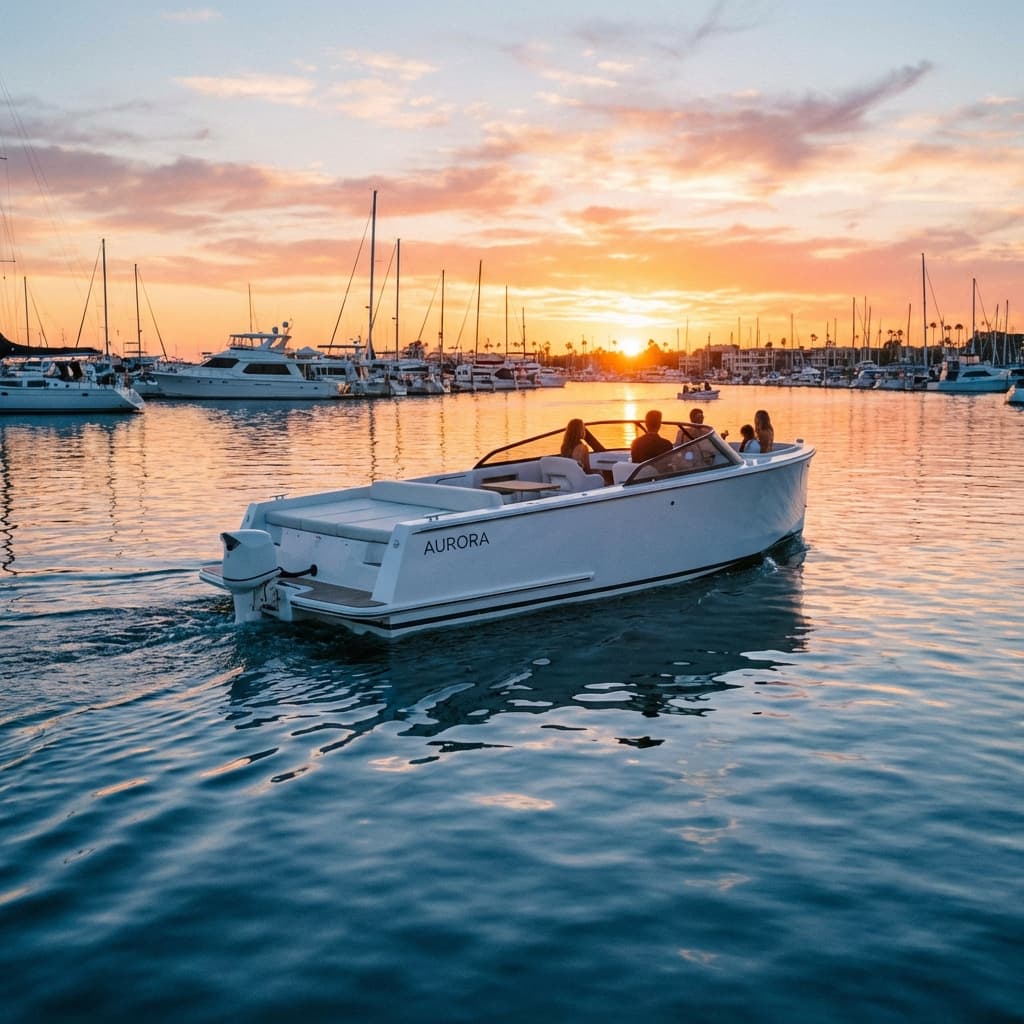
The water is quieter than you expected. There is no rumble of an engine, no smell of fuel, just the gentle hum of an electric motor as you glide across the surface. This is what sailing on an electric boat feels like, and it is quickly becoming one of the most exciting developments in recreational and commercial boating today.
Whether you are a first-time buyer or simply curious about making the switch from gas-powered vessels, understanding your options is essential before spending your money. The electric boat market has expanded rapidly, offering everything from compact kayaks fitted with small motors to full-sized cruisers capable of covering serious distances on a single charge.
In this guide, we will walk you through the main types of electric boats available, how far they can realistically travel, what you should expect to pay, and the key factors you need to consider before making a purchase. By the end, you will have a clear, confident foundation for deciding whether an electric boat is the right investment for you.
What Is an Electric Boat?
An electric boat is any vessel propelled by one or more electric motors that draw energy from an onboard battery bank, with no internal combustion engine in the drivetrain. Whether you are looking at a compact recreational runabout or a full-size commercial ferry, the fundamental principle is identical: stored electrical energy replaces burned fuel as the source of motion.
How Electric Propulsion Works
The drivetrain follows a straightforward four-step chain. A battery pack (typically lithium-ion or lithium-iron-phosphate cells, rated anywhere from 10 kWh for a small dinghy to over 1,000 kWh for commercial vessels) stores the energy. A motor controller converts that DC battery current and regulates precisely how much power reaches the motor at any given moment. The electric motor itself then turns the propeller or impeller, delivering full torque from a complete standstill for smooth, instant acceleration. A vessel control unit ties the battery management system and throttle together to keep everything safe and responsive. You can explore the engineering behind this architecture in detail through Wärtsilä's electric propulsion system overview.
How Electric Boats Differ from Combustion Vessels
The on-water experience is fundamentally different from what gasoline or diesel boaters are accustomed to. There are no fuel dock stops because energy comes from shore-power charging. There is no engine warm-up period because full torque is available the moment you advance the throttle. Operation is virtually silent, vibration is minimal, and there are zero direct exhaust emissions at the point of use, producing none of the NOx, CO2, or soot associated with combustion engines.
Configuration Types You Will Encounter While Shopping
Beginners will encounter three distinct categories. A fully electric vessel runs solely on battery power with no combustion backup, making it ideal for predictable, shorter routes. A hybrid electric boat pairs a combustion engine with an electric motor; in a parallel hybrid, both can drive the propeller independently or together, while in a serial hybrid the combustion engine drives a generator that powers the electric motor exclusively. Volvo Penta's breakdown of serial vs. parallel hybrid marine propulsion is an excellent reference for understanding this distinction. An electric-assist configuration adds a small electric motor to supplement a primary combustion engine, representing the most entry-level step into electrification.
Why Hull Selection Matters More Than Brand
One insight that surprises most beginners is that hull design and displacement govern real-world range and efficiency far more than motor brand or battery label. A heavy, high-drag hull will drain even a premium battery pack quickly, while a lightweight, efficient hull can maximize every kilowatt-hour. This makes choosing the right vessel type the single most consequential purchase decision in electric boating.
The 6 Main Types of Electric Boats
Not all electric boats are built alike. The category spans everything from silent day cruisers to self-navigating survey vessels, and understanding these distinctions will help you make a smarter purchase decision from the start.
1. Recreational and Leisure Boats
Recreational electric boats are the most visible face of the electric marine revolution, covering day cruisers, runabouts, and electric sailboats used on lakes, rivers, and coastal waters. Buyers in this segment are drawn primarily by near-silent operation, zero exhaust fumes, and the ability to access environmentally sensitive waterways where combustion engines are restricted or prohibited. Operating costs are dramatically lower than gas-powered equivalents, with electric propulsion delivering roughly 85% lower fuel costs over time. The product landscape has matured considerably, with at least 37 all-electric production models now commercially available across the recreational segment.
2. Electric Outboards
Electric outboards are motor-only propulsion units that bolt onto an existing hull, making them the most accessible entry point into electric boating for beginners. Rather than purchasing an entirely new vessel, you can retrofit your current boat with an electric motor and battery bank, spreading the transition cost over time. The best electric outboards for 2025 showcased at major trade events like IBEX reflect how rapidly this category has matured, with options now covering a wide range of thrust ratings suitable for everything from small dinghies to mid-sized fishing boats. This segment also benefits from growing competition among global manufacturers, which is accelerating performance improvements while putting downward pressure on prices.
3. eFoils and Electric Surfboards
eFoils and electric surfboards represent the high-performance, adrenaline-driven end of the electric boat spectrum. These craft use hydrofoil technology to physically lift the hull above the water surface at speed, eliminating wave drag and enabling surprisingly long rides on relatively small battery packs. Production models like the Hydroflyer FF reach 37 mph with a 25-mile range, while the Foilone Pegasus extends that to 30 knots and 50 nautical miles. Hydrofoil efficiency gains are not limited to personal watercraft either; larger recreational vessels have adopted the same principle to extend their usable range significantly.
4. Electric Pontoons
Electric pontoons are a natural pairing of platform and powertrain. The flat-deck, low-speed cruising profile of a pontoon aligns almost perfectly with battery efficiency curves, meaning you get more usable range per kilowatt-hour than you would from a faster, deeper-V hull. The global electric pontoon market was valued at $0.86 billion in 2025 and is projected to reach $1.97 billion by 2034, growing at a 9.8% CAGR, with North America accounting for 42.5% of revenue. Families, resorts, and charter operators have all accelerated adoption, and purpose-built electric pontoon platforms have largely replaced experimental conversions within just the past three years.
5. Commercial Electric Vessels
Ferries, water taxis, and workboats operating on fixed routes were among the earliest commercial adopters of electric propulsion, and for good reason. Predictable daily distances, reliable shore power access at terminals, and compelling total cost of ownership make the business case straightforward for operators. The Gussies awards program now formally recognizes commercial electric vessels as a nominated category, a sign that electrification in this segment has moved well past the experimental phase into mainstream industry recognition.
6. Autonomous Surface Vessels
Autonomous surface vessels (ASVs) sit at the frontier of electric marine technology. These remotely operated or fully self-navigating craft are deployed in hydrographic survey, environmental monitoring, port logistics, and defense applications, operating in conditions or locations where placing a human crew onboard is impractical or unsafe. Because they run on fixed mission profiles with clearly defined energy budgets, ASVs are particularly well-suited to battery-electric propulsion. This category is still consolidating its market identity but represents one of the fastest-growing application areas as sensor costs fall and navigation software matures rapidly.
Why the Electric Boat Market Is Moving So Fast
The numbers behind this market shift are hard to ignore. According to market analysis from Strategic Market Research, the global electric boat market was valued at $7.8 billion in 2024 and is forecast to reach $18.5 billion by 2030, representing a compound annual growth rate of 13.2%. That pace puts electric marine propulsion among the fastest-growing segments in the entire transportation sector. Zoom into a single sub-segment and the trajectory becomes even more striking: the North American electric sailboat market alone is projected to grow from $1.35 billion in 2025 to $4.38 billion by 2035. These are not marginal adjustments to an existing industry. They signal a structural realignment in how the world moves on water.
Regulatory pressure is driving commercial fleet decisions right now. The International Maritime Organization has established progressive decarbonization targets that are already reshaping procurement priorities for ferry operators, water taxi companies, and cargo fleet managers. MARPOL compliance requirements and tightening local emissions standards have moved electrification from a long-term aspiration to a near-term operational question. Commercial operators who once deferred the conversation are now evaluating electric vessels on active procurement timelines.
Fuel price volatility has changed the financial math. For a recreational boater who takes the boat out twenty weekends a year, diesel costs are manageable. For a commercial operator running a high-hour fleet across hundreds of days of service, those costs compound into a significant portion of the operating budget. As diesel prices fluctuate unpredictably, the stability of electricity costs becomes a tangible business advantage. The total cost of ownership over a five-to-ten-year operating cycle increasingly favors electric propulsion, particularly for vessels with predictable routes and reliable shore power access.
Government programs are narrowing the upfront price gap. In the United States, federal clean energy incentives under recent climate legislation extend to commercial marine applications. Canada has provincial and federal clean transportation programs that apply to vessel operators in several key markets. Across Europe, national subsidy schemes and EU-level green shipping initiatives are reducing the sticker price difference between electric and combustion alternatives. For first-time buyers, this means the premium for going electric is smaller today than it was even two or three years ago.
Battery technology is advancing on two parallel tracks. Lithium-ion systems are the current standard, delivering proven performance across an expanding range of vessel types. Solid-state battery chemistry is emerging as the next frontier, with the potential to offer significantly higher energy density, reduced pack weight, and improved range, all of which address the limitations that still give some buyers pause. Meanwhile, market research from MRFR confirms that increased R&D investment from both established marine manufacturers and well-funded startups is accelerating product development cycles. More capable vessels at more accessible price points are arriving to market each model year, and that momentum shows no signs of slowing.
The Biggest Thing Buyers Get Wrong: Real-World Range
Manufacturer range figures are the single most misunderstood specification in the electric boat market, and acting on them without adjustment is one of the costliest mistakes a first-time buyer can make. Published range numbers are calculated under ideal laboratory-style conditions: calm, flat water, a lightly loaded hull, moderate ambient temperature, and a steady, conservative throttle setting. These conditions rarely describe a real day on the water. Understanding the gap between rated range and real-world range before you buy will protect you from purchasing a battery that is too small for your actual needs.
Hull Type Determines Range More Than Battery Size
The most important variable in real-world range is not how many kilowatt-hours sit in your battery bank; it is the efficiency of the hull carrying that battery through the water. A displacement hull cruising at 5 knots draws a fraction of the energy consumed by a planing hull running at 25 knots, even when both vessels carry identical battery capacity. This happens because the relationship between speed and power in boats follows a cubic curve: double your speed and you need roughly eight times the power; triple it and power demand increases by a factor of twenty-seven. A boat that runs comfortably for six hours at displacement speeds may sustain high planing speeds for less than an hour on the same battery. Hull selection is therefore a more consequential range decision than battery size, which is why The Electric Boat Buying Guide for 2026 emphasises fit-for-purpose hull selection before any consideration of brand or specification.
The Variables That Stack Against You
Multiple real-world factors combine to reduce range below rated figures, and they compound quickly. Headwind and chop force the motor to work significantly harder to maintain speed. Heavy passenger or cargo loads increase displacement and drag. Aggressive acceleration from stop burns a disproportionate amount of energy during the inefficient transition phase before a planing hull gets up on plane. Cold ambient temperatures reduce usable battery capacity; research from the broader EV sector documents range losses of up to 50 percent in extreme cold, and the same lithium chemistry applies to marine battery packs. Running accessories, including navigation electronics, chart plotters, audio systems, and live wells, add a continuous parasitic draw that manufacturers rarely factor into headline range claims.
Benchmarks by Category and the Right Questions to Ask
As a practical guide, electric pontoons and displacement day boats operating on calm water tend to achieve 80 to 90 percent of their rated range under normal conditions. High-speed planing hulls, by contrast, commonly deliver 50 to 65 percent of rated range in everyday use, based on the physics described above and real-world data emerging from the growing fleet of production electric vessels. Always ask manufacturers and dealers for range figures at the specific cruising speed you intend to use most often, not the maximum advertised figure. A complete electric boat buyer's guide reinforces this approach, noting that speed-specific consumption data is the number that actually governs ownership experience. Also plan to retain at least a 20 percent battery reserve on every outing to account for wind, current, unexpected detours, and no-wake zones; on a 40 kWh pack, that means treating roughly 32 kWh as your usable trip energy.
The eBoat Directory buying guide resources provide category-specific guidance on interpreting range specifications across electric outboards, pontoons, and commercial vessels, giving buyers a structured framework for comparing real-world performance rather than relying on optimistic headline numbers from manufacturer brochures.
Total Cost of Ownership: The Numbers That Change the Equation
For many first-time buyers, the conversation about electric boats starts and ends with the sticker price. That framing misses most of the story. Total cost of ownership, which accounts for fuel, maintenance, incentives, and operational savings over the life of a vessel, is where electric propulsion makes its most compelling case.
The Upfront Premium Is Real, But It Is Shrinking
Electric boats currently carry a higher purchase price than comparable combustion vessels of the same size and category. Combustion recreational boats already span a wide range, from roughly $16,000 for entry-level runabouts to well over $150,000 for larger cabin cruisers, and electric equivalents typically sit above those benchmarks. However, falling battery costs and rising production volumes are steadily compressing that gap. Analysts project TCO parity with combustion vessels by the end of this decade even without subsidy support, following the same trajectory already visible in other electric vehicle categories. For buyers purchasing today, the premium is an upfront investment that the operating economics are designed to recover.
Fuel Savings: The Most Immediate Advantage
The operating cost gap between electric and combustion propulsion is substantial and measurable from the first season of ownership. A conventional powerboat burns 6 to 8 gallons per hour at cruising speed, generating annual fuel bills ranging from $2,000 to $10,000 depending on usage intensity. Diesel and gasoline prices are also volatile; national diesel costs rose from approximately $3.58 per gallon in April 2025 to $5.61 per gallon by April 2026, a swing that dramatically increased operating costs for combustion vessel owners. Electricity costs, by contrast, rose far more modestly over the same period. Commercial operators running ferries or water taxis on fixed daily routes feel this advantage most acutely, because their high annual operating hours translate the per-mile savings into significant annual dollar amounts.
Maintenance Costs Drop Significantly
Electric drivetrains contain far fewer moving parts than marine gasoline or diesel engines, and that mechanical simplicity translates directly into lower annual maintenance bills. Oil changes, fuel system servicing, impeller replacements, and the major overhaul cycles that combustion engine owners budget for across a vessel's life are largely eliminated. Conventional boat ownership already carries a useful rule of thumb: expect annual maintenance costs of roughly 10% of the vessel's value, with fixed annual costs running $3,000 to $8,000 before leaving the dock. Removing the combustion engine service categories from that baseline produces meaningful long-term savings that compound across years of ownership.
Incentives Can Reduce Your Net Acquisition Cost
Government programs on both sides of the border can reduce what you actually pay for a new electric vessel. U.S. buyers should research federal clean energy tax credits alongside state-level incentive programs, which vary by state. Canadian buyers should investigate provincial rebate schemes, as several provinces have expanded clean transportation incentives beyond road vehicles. The net acquisition cost after incentives can differ materially from the sticker price, so confirming eligibility before purchase is a practical priority, not an afterthought.
Payback Period Analysis for Commercial Operators
For fleet operators, the TCO question is best framed as a payback period calculation. Ferries and water taxis with high annual operating hours typically recover the electric premium within three to seven years, depending on route length, vessel size, and local electricity rates. The higher the annual hours, the faster the payback math resolves in favor of electric propulsion.
Fleet managers evaluating electrification can use the eBoat Directory ROI calculator to model their specific scenario, inputting their own fuel costs, operating hours, and vessel parameters to generate a customized payback projection built around their actual operation rather than industry averages.
Charging an Electric Boat: What North American and European Buyers Need to Know
Understanding charging logistics before you buy an electric boat is not optional. It is one of the most practical decisions in the entire ownership journey, and getting it wrong is a leading cause of buyer frustration in the first year of ownership.
Shore Power: The Everyday Solution
For the vast majority of recreational electric boat owners in North America and Europe, shore power at the marina slip is the primary and most reliable charging method. Standard marina pedestals at most established facilities already offer 30-amp and 50-amp AC connections, the same infrastructure used to run onboard systems on conventional boats. A 30-amp connection will typically charge a mid-sized recreational electric boat overnight, while a 50-amp connection cuts that window significantly, making either option workable for weekend and day-use boaters who return to their home slip each evening. If you are a regular user with a permanent slip assignment, the beginner's guide to electric boats from Voltari Electric confirms that onboard AC chargers and mobile charging options in the 40-amp to 80-amp range cover most practical ownership scenarios comfortably.
DC Fast Charging: Promising but Plan Carefully
DC fast charging for marine applications is emerging, particularly in Scandinavia and select Pacific Northwest marinas, but network density is a fraction of what automotive EV drivers experience. Norway, which has approximately 750,000 registered leisure boats and one of the highest household boat ownership rates in the world, is the clearest example of a market where marina electrification has moved fastest. Even there, fast charging availability is concentrated in select locations rather than distributed uniformly. For any passage beyond your home marina, route planning around confirmed charging access is essential, not a nice-to-have precaution.
Regional Buyer Checklists
North American buyers should contact their home marina before purchase and confirm three specific things: whether shore power is available at their assigned slip, what amperage is supported, and whether the existing dock electrical system can handle the sustained draw of overnight charging. Older dock infrastructure at many U.S. and Canadian marinas was not designed with electric vessel charging in mind and may require panel upgrades.
European buyers in the Swedish archipelago, Norwegian fjords, and along the Mediterranean coast generally benefit from more progressive marina electrification policies, driven partly by EU regulatory frameworks supporting zero-emission marine technology. However, infrastructure quality varies sharply between port authorities, and consistency by country is far from guaranteed. Verifying charging availability at your primary ports of call before finalizing any purchase is equally important on both sides of the Atlantic.
Onboard Flexibility and Commercial Solutions
Portable shore power adapters and integrated AC chargers onboard give recreational buyers a practical buffer when visiting marinas with legacy or non-standard connections. Carrying adapter hardware that covers the connector types common in your sailing region reduces the risk of arriving at a marina and finding no compatible outlet.
For commercial operators running ferries, water taxis, or workboats, the established model is dedicated depot charging at the home terminal. Critically, charging infrastructure should be part of the vessel procurement conversation from day one, budgeted and specified alongside the vessel itself. Treating it as a secondary question to be solved after delivery creates operational reliability problems that are far more expensive to fix after the fact.
Emissions Regulations and What They Mean for Buyers Right Now
Regulatory pressure is one of the most underappreciated forces reshaping the electric boat market, and buyers who understand it early will make significantly better procurement decisions than those who treat it as background noise.
The IMO's Long-Term Signal
The International Maritime Organization revised its greenhouse gas strategy in July 2023, and the targets are more aggressive than most buyers realize. The updated framework calls for at least a 20% reduction in total GHG emissions by 2030 compared to 2008 levels, striving for 30%, with a net-zero goal by or around 2050. An interim milestone of at least 70% reduction by 2040 is also built into the roadmap. For commercial maritime buyers, the practical implication is straightforward: vessels ordered today will still be operating in the 2040s, which means every procurement decision made now will need to satisfy a regulatory environment that grows progressively stricter with each passing decade. Fleet planners who are waiting to see how regulations develop are already behind.
The EU Is Applying Financial Consequences Now
European commercial operators are not waiting for a future compliance deadline. The EU Emissions Trading System was extended to maritime transport on 1 January 2024, creating a direct cost on carbon emissions. The phase-in schedule required operators to cover 40% of verified CO2 emissions in 2024 and 70% in 2025; from 2026 onward, the obligation rises to 100% and expands to include methane and nitrous oxide. You can review the full EU ETS Maritime Compliance Guide to understand how allowance purchases are calculated and what vessel categories fall within scope. Running parallel to this, the FuelEU Maritime regulation caps the greenhouse gas intensity of energy used onboard ships calling at European ports, with the first compliance reports due to verifiers in early 2026. Together, these two regulations are adding quantifiable, recurring cost to fossil-fuel operations on European inland and short-sea routes, which is accelerating the financial case for electrification on those corridors faster than most market forecasts anticipated.
U.S. Federal and State Standards
In the United States, the Environmental Protection Agency has progressively tightened Tier 3 and Tier 4 emissions standards for marine engines, targeting both exhaust hydrocarbons and nitrogen oxide output. California has moved further, with the California Air Resources Board pursuing restrictions that exceed federal minimums, particularly for commercial and near-shore applications. Several other coastal states are monitoring California's approach and developing analogous frameworks. For buyers operating in regulated coastal zones or considering commercial water taxi and ferry routes in U.S. harbors, the regulatory direction is clear even if specific deadlines vary by jurisdiction.
What This Means for Commercial Versus Recreational Buyers
Commercial operators, particularly ferry and water taxi services working within emissions-controlled port zones, face the most immediate and measurable compliance pressure. Evaluating electric or hybrid-electric propulsion as a near-term procurement priority is no longer a forward-thinking strategic choice; it is a practical response to costs that are already appearing on balance sheets. Hybrid-electric configurations are also worth evaluating as a transitional option, as they can satisfy near-term compliance thresholds while full-electric charging infrastructure matures in a given region.
Recreational buyers face a different but still relevant picture. Direct regulatory pressure on leisure craft remains lighter today, but restrictions on combustion engines are appearing with increasing frequency in environmentally sensitive areas, including national park waterways, protected marine reserves, and noise-controlled lake districts across both North America and Europe. Buyers who purchase a combustion-powered vessel today for use in such areas should factor the possibility of future access restrictions into their decision.
Staying current on this landscape matters for both buyer types. The eBoat Directory news section tracks emerging policy changes affecting the electric marine sector across North America and Europe as they are announced, making it a practical resource for monitoring developments that could affect your ownership costs, route access, or compliance obligations.
Electric Boat Brands Worth Knowing in 2026
Knowing which manufacturers are worth your attention will save you significant research time, but the most important rule applies before you even start browsing brand websites: identify the vessel category and use case that matches your needs first, then find who builds the best product in that category. With that framework in place, here are the brands shaping the electric boat market heading into 2026.
1. X Shore (Sweden)
X Shore is one of the most recognizable names in purpose-built electric boating. The Swedish manufacturer produces the Eelex series of fully electric day boats on a hull architecture designed from the ground up around electric propulsion, not adapted from a combustion-engine platform. The flagship Eelex 8000 delivers a 100 nautical mile range, 30 knots of top speed, and a 170 kW electric motor on an 8-meter hull. The X Shore 1 targets a broader mainstream price point, while the X Shore PRO is positioned for maritime professionals and commercial day-charter operators in both European and North American markets. The company operates a dealer network with boat configurators for both regions, making the purchase process accessible for first-time buyers.
2. Helios Marine
Helios Marine is widely cited in electric boating buying guides for illustrating what genuine hull-level engineering looks like in practice. The company's product philosophy centers on maximizing usable range through intelligent hull design rather than simply stacking more battery capacity into a vessel. The flagship Helios Omega 7.2 is a solar-assisted electric day cruiser built for relaxed, everyday boating, representing a fundamentally different use profile from a high-speed planing boat like the Eelex 8000. Understanding this distinction is exactly why use case comes before brand in the evaluation process.
3. Earthling Boats
Earthling is a newer entrant in the electric boat space and is deliberately targeting buyers outside the premium tier. The brand's focus on accessible price points and practical everyday range is broadening the addressable market considerably, introducing electric boating to recreational buyers who were previously priced out of the category.
4. Established Manufacturers
Duffy Electric Boat, Torqeedo, and Brig each bring established dealer infrastructure and service networks across North America and Europe. Torqeedo in particular offers a comprehensive propulsion ecosystem spanning outboards, inboards, pod drives, and hybrid systems for both recreational and commercial applications. These brands are strong candidates for buyers who prioritize warranty support and local service availability.
To build a shortlist matched to your specific vessel type, geography, and propulsion requirements, the eBoat Directory manufacturer directory organizes electric boat brands by category across recreational, commercial, and specialty segments, allowing you to filter before contacting a single dealer.
How to Use eBoatDirectory to Find Your Electric Boat
With so many electric boat categories, manufacturers, and specifications to evaluate, having a structured research platform makes a meaningful difference in the quality of your purchase decision. eBoat Directory is built specifically for this purpose, organizing the entire electric marine market into a single browsable hub so you are not piecing together information from dozens of disconnected manufacturer websites.
Navigate by Vessel Type First
The directory is structured around distinct product categories, including recreational boats, electric pontoons, electric outboards, eFoils and hydrofoils, personal watercraft, electric sailboats, and commercial vessels covering ferries, water taxis, and workboats. This taxonomy matters because it mirrors how buying decisions actually work. You are not shopping for "an electric boat" in the abstract; you are looking for a specific vessel type that fits a specific use case. Navigating directly to that category surfaces relevant models immediately rather than forcing you to filter through unrelated listings.
Use the Buying Guides Before Talking to Dealers
Before entering any sales conversation, the platform's category-specific buying guides give you the foundational knowledge to evaluate what you are being shown. These guides walk through how to interpret specifications like battery capacity and realistic range, what questions to ask dealers, and which features carry the most weight depending on your use case. A weekend recreational buyer and a commercial water taxi operator are evaluating entirely different criteria, and the guides reflect that distinction.
Model Commercial ROI Before Committing
For commercial operators considering fleet electrification, the platform's ROI calculator allows you to input your own operational parameters and model projected fuel savings, maintenance reductions, and payback periods. With electric boats delivering up to 85% lower fuel costs compared to gas-powered equivalents, the financial case is often compelling, but the calculator lets you verify that against your specific route economics before entering a procurement conversation.
Stay Current Without Monitoring Multiple Sources
The news and reviews section aggregates model launches, regulatory developments, and technology updates across the electric marine sector. Combined with trade show and events listings that identify where you can see vessels in person and arrange on-water demonstrations, the platform supports every stage of the research process from initial discovery through final evaluation. Coverage spans both North American and European brands, so buyers in either market can complete their research in one place.
Frequently Asked Questions About Electric Boats
How far can an electric boat travel on a single charge?
Range depends primarily on hull type and the speed at which you operate. Displacement hulls running at relaxed cruising speeds can achieve between 30 and 80 nautical miles or more on a single charge, because they move through the water rather than climbing on top of it. High-speed planing hulls typically deliver 20 to 40 nautical miles under real-world conditions, as the energy demand at planing speeds is substantially higher. The single greatest lever you have over range is throttle management; reducing speed even modestly can extend your usable range significantly.
Are electric boats worth the higher purchase price?
For most buyers who evaluate the full picture, yes. When you factor in eliminated fuel costs, dramatically reduced maintenance requirements (no oil changes, fewer moving parts, no cooling system servicing), and available purchase incentives over a five-year ownership period, total cost of ownership becomes competitive with or lower than a comparable combustion vessel. The advantage is most pronounced for high-use applications such as charter operations, daily commuter ferries, and frequent recreational boaters who would otherwise spend heavily on fuel each season.
How long does it take to charge an electric boat?
Overnight AC charging at a marina slip is the most common scenario, and it is more practical than many first-time buyers expect. A Level 1 charger delivers approximately 3 kW per hour, while a Level 2 charger runs at around 7 kW per hour; most vessels reach a full charge in six to twelve hours depending on battery capacity and charger output. DC fast charging can substantially reduce that window, though marine-specific fast charging infrastructure remains limited and is still expanding across North American and European marinas.
What is the best electric boat brand?
There is no single best brand. The right choice depends entirely on vessel category, intended use, geographic market, and budget. A brand well-suited for a performance day cruiser may be entirely wrong for a commercial water taxi. eBoatDirectory's manufacturer directory allows buyers to filter systematically by these criteria rather than defaulting to brand recognition alone.
Can I convert my existing boat to electric propulsion?
Conversion is feasible for many vessel types. Electric outboard motors offer a straightforward retrofit path for smaller hulls, while inboard conversion kits address larger vessels. Indicative costs for a small sloop range from roughly €10,000 to €18,000, while a 10 to 12 metre motorboat conversion can run €25,000 to €45,000 or more. Hull age, structural condition, and drivetrain compatibility are critical feasibility variables; a professional survey of the existing hull before committing to conversion investment is strongly advisable.
Are electric boats safe on the water?
Modern electric marine systems are engineered to meet rigorous safety standards. Battery Management Systems actively monitor cell voltage, temperature, and charge state, triggering protective shutdowns before conditions become hazardous. Waterproof enclosures and purpose-built thermal management systems address the marine environment directly. Electric boats also comply with U.S. Coast Guard standards in North America and relevant CE certification requirements in Europe, giving buyers a clear regulatory baseline for safety assurance comparable to, and in many cases stricter than, conventional combustion vessels.
Making the Switch: Your Next Steps
The research is clear, and the decision framework is straightforward. Start by identifying your use case and vessel category before evaluating any brand or specification. A solar-assisted day cruiser and a planing performance boat both carry the electric label, but they represent fundamentally different ownership propositions. Once your category is established, model your range requirements against your actual cruising speed and typical conditions, not manufacturer-rated maximums, which consistently overstate real-world performance.
Before comparing sticker prices, run a total cost of ownership analysis. Factor in fuel savings, reduced maintenance, and the federal, state, or provincial incentives that are currently available in both the United States and Canada. Those incentives can meaningfully close the upfront price gap and shift the financial case decisively in favor of electric propulsion.
Commercial operators should treat early evaluation as a competitive advantage. Regulatory timelines and fuel cost trajectories are both moving in the same direction, and operators who delay assessment carry more risk than those who act now.
eBoat Directory is the logical next step. Browse the directory by vessel category, use the ROI calculator for commercial applications, and review the category-specific buying guides before engaging with any dealer.
Conclusion
Electric boating is no longer a distant possibility; it is a practical, rewarding choice available right now. To recap the essentials: electric boats span a wide range of types and sizes, from small recreational crafts to capable cruisers. Range depends heavily on battery capacity, speed, and load, so matching the boat to your actual usage patterns is critical. Costs vary significantly, but long-term savings on fuel and maintenance often offset the higher upfront investment.
Before you buy, test different models on the water, ask hard questions about battery warranties, and research local charging infrastructure. The right electric boat exists for your lifestyle and budget; finding it simply requires the right information.
The quieter waters are waiting. Take what you have learned here, visit a dealer, and experience the future of boating for yourself.
Stay in the Loop
Get weekly updates on the latest electric boats, industry news, and exclusive insights.