Electric Motors for Kayaks: The Complete Buying Guide
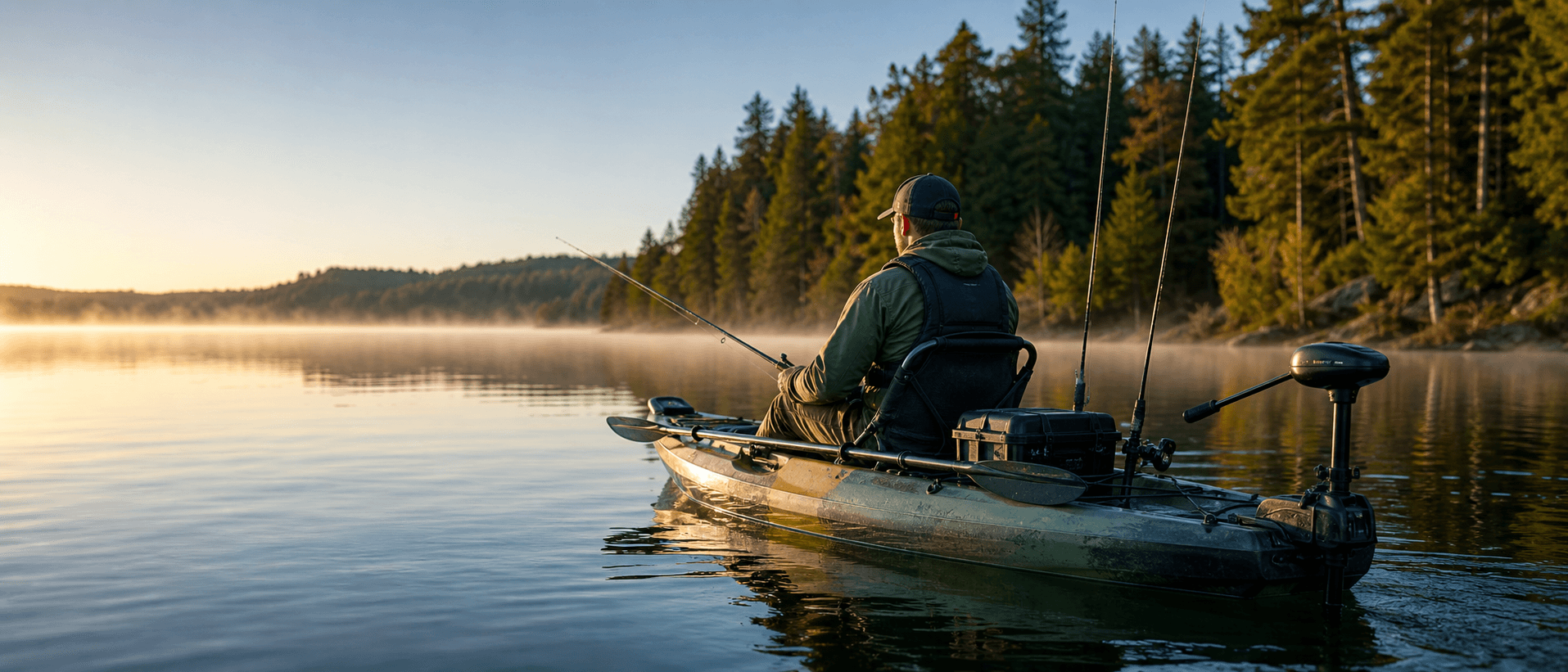
Paddling a kayak is one of life's great pleasures, but there are moments when your arms beg for a break. That is exactly where an electric motor for kayak use becomes a total game changer. Whether you are covering long distances, fishing in calm waters, or simply want to enjoy the scenery without the physical strain, adding an electric motor to your kayak opens up a whole new world of possibilities.
But with so many options flooding the market, choosing the right one can feel overwhelming, especially if you are just starting out. Thrust ratings, battery types, mounting systems, the choices seem endless at first glance.
That is why we put together this complete buying guide. Inside, you will discover the most important factors to consider before making a purchase, the key features that separate a great motor from a mediocre one, and our top picks to suit a range of budgets and paddling styles. By the end, you will have everything you need to make a confident, informed decision and get out on the water with the perfect setup.
Why Electric Motors Are Transforming Kayaking
Something significant is happening in the world of recreational paddling. The electric motor for kayak category is no longer a fringe accessory pursued by tech-forward anglers; it has become one of the fastest-growing segments in all of recreational boating. The kayak trolling motor market is projected to grow at 8.7% CAGR through 2033, meaningfully outpacing the broader electric trolling motor category at 6.22% CAGR. That gap matters. It tells you that demand for kayak-specific electric propulsion is accelerating faster than the overall industry, driven by a distinct set of buyers with distinct needs.
North America sits at the center of this shift. The region commands 38.7% of the global fishing kayak market, making it the primary driver of purpose-built product development and the key proving ground for new electric motor technology. Manufacturers developing kayak-specific systems are essentially building for North American anglers and recreational paddlers first, which means the widest selection of products, mounting options, and support ecosystems is available precisely where most readers of this guide are located.
The industry reached a visible inflection point at ICAST 2026, where major manufacturers debuted kayak-specific electric motors as core product launches rather than afterthoughts. This confirmed a structural shift: electric kayak propulsion had moved from niche accessory to mainstream manufacturer priority. The engineering focus shifted accordingly, with new systems designed around shallow-water clearance, narrow-hull mounting constraints, minimal weight tolerances, and compact lithium-ion battery requirements rather than simply adapting small-boat hardware to a kayak context.
Sustainability is accelerating this adoption in measurable ways. According to market analysis covering the 2026 to 2033 forecast period, eco-conscious consumer behavior is a verified growth driver across North American and European paddling communities. Buyers are actively choosing electric over gas alternatives for environmental reasons, not just performance ones. For a beginner evaluating their first powered kayak setup, that alignment between personal values and product performance makes the electric option easier to justify than ever before.
How to Choose an Electric Motor for Your Kayak
Buying the right electric motor for your kayak comes down to five decisions made in the right order. Get these variables wrong and you will end up with a motor that drains your battery too fast, tips your hull, or sits too deep in the water to clear the bottom. Get them right and you will have a setup that genuinely extends your range and improves every session on the water.
- Calculate your total weight first, then select thrust.
The most reliable starting point is a simple formula: allow roughly 2 lbs of thrust for every 100 lbs of combined weight, including the kayak itself, your body weight, and every piece of gear you bring onboard. A 400 lb total load calls for a minimum of 8 lbs of thrust under ideal conditions. Fishing kayaks loaded with a fish finder, tackle, rods, a battery, and a full catch can push that number considerably higher, so round up rather than settle for the bare minimum. An underpowered motor runs at full throttle continuously, burning through battery capacity far faster and wearing out internal components sooner. According to the best trolling motor for kayak buying guide from Air Kayaks, proper sizing is what separates a motor that genuinely extends your range from one that disappoints after the first hour.
- Account for motor weight in your stability calculations.
Motor weight is just as important as the thrust figure printed on the box. A heavy motor mounted at the bow or transom shifts your kayak's center of gravity forward or back, and on narrow hull designs this imbalance directly affects lateral stability and straight-line tracking. Before purchasing, check the motor's total head and shaft weight, and consider where that mass will sit relative to your seating position.
- Match shaft length to your kayak's freeboard.
Shaft length is a precision measurement, not an estimate. A shaft that is too short causes the propeller to break the surface and cavitate, losing thrust and generating noise. A shaft that is too long drags on shallow structure, submerged grass, and rocky bottoms. Measure your freeboard height before you shop, and aim to keep the propeller submerged at least 12 inches below the waterline under load.
- Prioritize smart features that help solo paddlers.
GPS anchoring, autopilot heading hold, and app connectivity have moved from premium-only to mid-range pricing in 2026. These features are especially valuable for solo kayakers who cannot simultaneously manage propulsion and cast a line. Reviewing the best fishing kayak motors for 2026 confirms that experienced guides now treat spot-lock GPS as a baseline expectation rather than a luxury add-on.
- Lock in battery compatibility before you finalize your motor choice.
Voltage requirements of 12V, 24V, or 36V must match your motor's specification exactly; a mismatch either underpowers the system or risks electrical damage. Beyond voltage, battery chemistry matters enormously on a kayak where every pound counts. A standard lead-acid group 31 battery can weigh over 60 lbs, while a comparable LiFePO4 lithium unit often comes in under 25 lbs. That 35 lb difference affects paddling performance, portage ease, and your kayak's overall trim. The best kayak motors guide from Kayak Angler consistently highlights lithium battery systems as the recommended pairing for modern kayak motor setups. Settle your battery chemistry, voltage, and weight budget early and let those constraints guide every other purchase decision that follows.
Thrust and Voltage Explained for Kayak Buyers
Two numbers define every electric motor for kayak purchase more than any other: thrust and voltage. Understanding what each one actually does, and how they interact, will save you from buying a motor that either overwhelms your hull or leaves you stranded halfway across the lake.
Thrust: Matching Pushing Power to Your Load
Thrust is measured in pounds-force (lbs) and represents the raw pushing power the motor delivers through its propeller. For a typical 14-foot fishing kayak carrying a total load of around 350 lbs (paddler, gear, and the kayak itself), you generally need 30 to 45 lbs of thrust for calm, flatwater conditions. That range gives you enough power to cruise comfortably and hold position without over-taxing your battery. Wind and tidal current change this equation significantly; even a moderate headwind can effectively double your real-world thrust requirement, so anglers who fish exposed water or moving rivers should size up rather than down.
The kayak motor selection process becomes easier when you think in the four thrust bands that define the current market:
Under 20 lbs: Ultralight and compact setups designed for solo recreational kayaks where portability is the priority. These motors are easy to transport but are limited to calm conditions and short distances.
20 to 40 lbs: The most common range for loaded solo fishing rigs on flatwater. This band covers most beginner anglers fishing lakes and slow-moving rivers.
40 to 60 lbs: Suited for heavier loaded kayaks, anglers carrying significant gear, or anyone fishing in choppier or faster-moving water.
Above 60 lbs: Reserved for tandem kayaks, high-current river environments, or anglers who want maximum speed headroom. Real-world data from community users shows 36V setups in this band achieving top speeds near 7 mph on 12 to 14-foot hulls, though hull physics means speed gains diminish sharply above cruising pace.
Voltage: Power Configuration, Not Raw Force
Voltage determines your battery configuration and how efficiently the motor delivers its rated thrust. A 12V system runs on a single standard battery and suits most solo fishing kayaks for moderate trips. A 24V system wires two 12V batteries in series, delivering more sustained performance for larger or heavier builds.
Here is the critical point that trips up many first-time buyers: higher voltage does not automatically produce more thrust. What it produces is more efficient power delivery at a given thrust level, which translates directly to longer runtime. Real-world data illustrates this clearly; a brushless bow-mount motor running at a relaxed 4 mph cruise draws roughly 10 to 11 amp-hours per hour from a 60 Ah battery, while pushing that same motor to top speed consumes more than five times the power for a speed gain of less than 60 percent. On an all-day fishing trip, voltage matching to your intended cruise speed matters far more than chasing maximum thrust figures.
Brushless Motors: Why Motor Design Matters
Brushless motor designs are now standard in purpose-built kayak motors from brands like ePropulsion, which launched its kLite 750 and Spirit 2 brushless outboards in 2026. Brushless motors convert voltage to thrust more efficiently than older brushed designs because there are no physical brushes wearing against a commutator ring. This means less energy lost as heat, longer service life, and significantly reduced maintenance over time. For saltwater kayak anglers especially, where corrosion and wear accelerate component degradation, brushless architecture is a meaningful long-term investment rather than simply a premium feature. A comprehensive motor overview for kayak buyers reinforces that purpose-built designs consistently outperform adapted boat motors in real-world kayak conditions.
Bow Mount vs. Transom Mount for Kayaks
Where you mount your electric motor changes how your kayak handles, how you control it, and which features you can access. This decision deserves careful thought before you buy.
- Transom Mount: The Right Starting Point for Most Beginners
Transom mount motors attach to the stern (rear) of the kayak and push the hull forward from behind. This is the most common configuration on the water today, and for good reason. Installation requires no permanent modifications on most kayaks; a mounting bracket clamps directly to the stern. Compatibility is broad, as transom mounts work with nearly every recreational and fishing kayak hull shape currently available. If you are setting up your first electric kayak motor, a transom mount is the logical default. Control is typically handled through a tiller handle or simple hand-operated speed dial, which beginners find intuitive from the first session.
- Bow Mount: Precision for Serious Anglers
Bow mount motors are fixed to the front of the kayak and pull the hull rather than push it. The steering response is noticeably more precise, and the defining advantage is position-holding. GPS-equipped bow mounts use spot-lock technology to anchor the kayak against wind and current without requiring any physical anchor. Kayak bass fishing community discussions capture the core trade-off clearly: one experienced angler described it directly as "speed versus spot lock precision." Transom mounts tend to offer higher top-end thrust, while bow mounts excel at controlled, stationary fishing. Tournament anglers and technical kayak fishers consistently favour bow mount configurations for this reason.
- Midship and Side-Mount: The Emerging Alternative
Midship and side-mount configurations represent a newer approach found primarily in purpose-built kayak motor systems. Placing the motor amidships reduces leverage on the bow and stern, which helps preserve hull balance on narrower performance fishing kayaks where weight distribution is critical. These low-profile systems are gaining traction as manufacturers design motors specifically for kayaks rather than adapting small-boat hardware.
- Control Systems Differ by Mount Type
Control interface is closely tied to mount position. Bow mounts almost exclusively use foot pedals or wireless remotes, freeing both hands for casting and rod management. Transom mounts more commonly use tiller handles or basic hand controls. The voltage split also matters practically: bow mounts commonly operate on 12V systems, while higher-thrust transom mounts frequently require 24V or 36V setups, which affects both battery size and total system weight on your kayak.
- Hull Shape Is the Final Deciding Factor
Your kayak's hull geometry can override every other preference. Sit-on-top fishing kayaks with factory-integrated motor mounts, increasingly standard in 2026 model lines, are often engineered to accept one mount type more effectively than the other. A narrow, V-hull performance kayak may become unstable with a heavy transom-mounted motor pulling the stern down under load. Always consult the manufacturer's motor compatibility specifications for your specific hull before purchasing. Matching motor mount to hull design protects both your investment and your on-water stability.
Battery Guide: Runtime, Chemistry, and Weight
Your motor choice is only as good as the battery powering it. Understanding battery chemistry, weight, and placement will determine whether your electric kayak setup delivers a full day on the water or leaves you paddling home early.
Why LiFePO4 Is the Only Chemistry Worth Considering
Lithium iron phosphate, universally abbreviated as LiFePO4, has become the clear standard for kayak electric motor setups in 2025 and 2026. The advantages over traditional lead-acid batteries are not marginal; they are fundamental. LiFePO4 batteries support 100% usable depth of discharge, meaning every amp-hour listed on the label is genuinely available to your motor. Lead-acid batteries, by contrast, should only be discharged to roughly 50% capacity to avoid permanent degradation, which means a 100Ah lead-acid battery delivers roughly the same usable energy as a 50Ah LiFePO4 unit in practice. LiFePO4 batteries also tolerate approximately 2,000 or more charge cycles compared to 300 to 500 cycles for lead-acid alternatives, which translates directly into lower long-term ownership cost. Any LiFePO4 battery you purchase should include a built-in Battery Management System (BMS) that protects against overcharging, over-discharging, and overheating, which are critical safeguards in a wet marine environment. For a detailed breakdown of how lithium chemistry compares across voltage and capacity options, the Lithium Trolling Motor Battery 2026 Buyer's Guide is a reliable starting reference.
Runtime: What to Realistically Expect
A 100Ah 12V LiFePO4 battery paired with a 30 lb thrust motor running at approximately half throttle will realistically deliver 6 to 8 hours of runtime on calm water. That benchmark covers a full fishing day for most anglers. Running the same amp-hour rating in a lead-acid battery under identical conditions may reduce usable runtime by 20 to 30 percent due to voltage sag; lead-acid batteries lose output voltage progressively as they discharge, which reduces motor efficiency throughout the session. LiFePO4 batteries maintain a flat voltage curve from full charge to near depletion, meaning your motor runs at consistent power from the first hour to the last. Real-world community data supports this; kayak anglers who have switched from lead-acid to LiFePO4 consistently report using only 15 to 25 percent of battery capacity across a 6 to 7 hour fishing day. The Trolling Motor Lithium Battery Runtime Guide offers a practical calculator to estimate runtime based on your specific motor's amp draw and battery capacity.
Weight Is a First-Order Decision on a Kayak
A 100Ah LiFePO4 battery weighs approximately 26 to 30 lbs. An equivalent 100Ah AGM lead-acid battery weighs 60 to 70 lbs. That 30 to 40 lb difference is enormous on a vessel where total capacity is measured in the hundreds of pounds. When your motor is off and you are paddling back to the launch, every pound of battery is deadweight affecting your hull speed, maneuverability, and fatigue. Beginners frequently underestimate this variable when budgeting for their first setup; the upfront cost premium of LiFePO4 is largely justified by the weight savings alone, before accounting for cycle life or runtime advantages.
Placement, Solar, and Emerging Options
Battery placement directly affects how your kayak tracks through the water. Position the battery amidships, as close to the center of the hull as possible, to keep weight distribution balanced. A heavy battery mounted at the stern will cause the bow to ride high, which increases wind resistance and reduces straight-line tracking efficiency. Some anglers mount the battery slightly forward of center to compensate for a stern-mounted motor, and this approach works well on most sit-on-top fishing kayak designs.
Solar integration is an emerging option worth noting for touring and multi-day trips. Small deck-mounted solar panels, typically in the 20 to 50 watt range, can trickle charge a LiFePO4 battery during low-thrust or drift fishing periods, meaningfully extending range on extended outings. This category is gaining traction heading into 2026 and beyond, particularly for paddlers covering long-distance water trails where recharging opportunities are limited.
Best Electric Motors for Kayaks in 2026
The kayak electric motor market reached a pivotal moment at ICAST 2026, where purpose-built propulsion systems dominated the conversation and signaled a clear shift away from repurposed small-boat motors. With the global kayak trolling motor segment projected to grow at 8.7% annually through 2033, manufacturers are now engineering systems specifically around kayak constraints: minimal weight tolerance, shallow-water clearance, narrow hull geometry, and compact battery requirements. The six motors below represent the best options available to kayak buyers in 2026 across every use case and budget level. As covered in The Kayak Motors We DESPERATELY Needed (ICAST 2026), this category has moved decisively from niche accessory to mainstream manufacturer priority.
- ePropulsion Klite 750: Best Lightweight Motor for Recreational and Touring Paddlers
The ePropulsion Klite 750 arrived at ICAST 2026 as one of the most talked-about launches in the kayak propulsion category, and for good reason. It weighs under 5 lbs, making it the lightest purpose-built stern motor currently available for solo kayaks and SUPs. At that weight, it adds almost no perceptible impact to a kayak's trim or stability, which matters enormously when you are paddling a narrow-hull touring boat or a sit-on-top recreational kayak with limited payload capacity. ePropulsion engineered the Klite 750 specifically to address a long-standing gap in the stern motor space, where no manufacturer had prioritized ultra-low weight without sacrificing real propulsion performance. For recreational paddlers who want to extend range without carrying a heavy setup, and for touring paddlers who cover long distances and need to conserve every pound, the Klite 750 is the clearest recommendation in 2026. Its brushless motor architecture also means reduced maintenance and improved energy efficiency compared to older brushed designs.
- Garmin Force Current: Best Premium Motor for Fishing Kayakers in the Garmin Ecosystem
The Garmin Force Current is a purpose-built kayak trolling motor engineered for serious fishing kayakers who already rely on Garmin chartplotters and navigation devices. Its defining feature is deep integration with the Garmin ecosystem: the motor connects directly to Garmin chartplotters, enables GPS anchor lock that holds your position automatically in current or wind, and operates via a wireless foot pedal that keeps your hands free for casting. For tournament-level kayak anglers who have invested in Garmin fish finders and mapping systems, this integration eliminates the fragmented setup of running separate GPS units alongside a disconnected motor. The wireless foot pedal is particularly valuable in a kayak cockpit environment where physical space is limited and hands-free operation is a practical necessity rather than a luxury. The Force Current sits at the premium end of the kayak motor market, and it earns that price point through the depth of its connectivity and the precision of its GPS anchor lock. If you are not already operating within the Garmin ecosystem, there are more cost-effective options on this list, but for Garmin users, this motor represents a genuinely cohesive system upgrade.
- Power-Pole MOVE Kayak Kit: Best Mid-Tier Motor for Shallow-Water Fishing
The Power-Pole MOVE Kayak Kit occupies a market position that was previously underserved: the gap between lightweight recreational motors and fully featured GPS fishing systems. It uses a brushless motor platform paired with kayak-specific mounting hardware that accounts for shallow-water clearance, a critical design consideration that many small-boat motors ignore entirely. Shallow-water anglers fishing flats, backwater channels, and grass-edge environments need a motor that can operate without fouling in low-depth conditions, and the MOVE Kayak Kit's engineering addresses exactly that requirement. The brushless design improves both energy efficiency and long-term durability compared to older brushed motors, reducing the maintenance burden for anglers who spend significant time on the water. This motor is an excellent choice for kayak anglers who want more capability than a basic tiller-control motor offers but are not yet ready to invest in a full GPS-integrated system. The kayak-specific mounting hardware also simplifies installation significantly compared to adapting a general-purpose trolling motor to a kayak hull.
- Minn Kota Ultrex (Kayak-Compatible Configs): Best Motor for Brand Familiarity and Dealer Support
Minn Kota has been the dominant name in trolling motors for decades, and the Ultrex in kayak-compatible configurations brings that legacy directly into the fishing kayak segment. The i-Pilot GPS system provides reliable anchor lock and route recording, and Minn Kota's extensive accessories ecosystem means you will find compatible mounts, battery trays, and replacement components through dealers across North America. For first-time kayak motor buyers who have previously used Minn Kota on jon boats or bass boats, the transition is intuitive because the control logic and interface remain consistent across the product line. The Ultrex's bow-mount configuration delivers responsive steering for anglers who spend hours working specific structure or cover, and the brand's strong dealer network means in-person service and warranty support are realistically accessible. While newer entrants are competing aggressively on innovation, Minn Kota's combination of proven reliability, a deep accessories catalog, and widespread dealer presence makes the Ultrex a low-risk choice for anglers who prioritize support infrastructure alongside performance.
- Bixpy Jet: Best Motor for Sea Kayaks and Touring Hulls
The Bixpy Jet solves a mounting problem that no other motor on this list addresses: what do you do when your kayak has no transom and no bow mounting surface? Sea kayaks and many touring hulls are designed without flat-surface mounting points, making traditional trolling motor installation impossible without custom fabrication. The Bixpy Jet attaches directly to the kayak's fin box or rudder system, turning the existing hardware your kayak already carries into a propulsion attachment point. This pod-style design keeps the motor compact and hydrodynamically integrated into the hull rather than bolted to an exposed bracket. For coastal paddlers, expedition sea kayakers, and touring paddlers who want motorized assistance on long crossings or into headwinds, the Bixpy Jet delivers propulsion without compromising hull design. It is also worth noting that saltwater paddlers should confirm corrosion-resistance ratings before purchasing any kayak motor for coastal use, as salt exposure accelerates wear on components not specifically rated for marine saltwater environments.
- Newport Vessels Kayak Series: Best Budget Motor for First-Time Buyers
The Newport Vessels Kayak Series is the most practical starting point for buyers who are new to electric kayak motors and want to understand the category before committing to a premium system. Available in 36 lb and 55 lb thrust configurations, both versions use simple tiller controls that require no learning curve and are compatible with standard 12V lithium batteries as well as lead-acid options for buyers who already own compatible power sources. At approximately $350 for the 36 lb configuration, it represents one of the lowest entry points in the market without sacrificing functional thrust output for a solo kayak. The tiller control format is straightforward: you mount the motor, connect the battery, and set your speed dial. There are no GPS features, no wireless controls, and no app connectivity, which is exactly appropriate for a first motor purchase where the goal is learning how a motorized kayak handles before investing in advanced features. According to Outdoor Life's best trolling motors guide for 2026, budget-tier motors remain a critical entry segment for new buyers, and Newport Vessels consistently occupies that position. As your experience grows and your use case becomes clearer, the simplicity of this motor will have taught you exactly what features you actually need in your next upgrade.
New for 2026: ICAST Launches to Watch
ICAST 2026, held July 14–17 in Orlando, Florida, functioned as the most significant product launch window the kayak electric motor category has ever seen. Kayak Angler Magazine described the On-the-Water demo day as "quite the motorized kayak spectacle," and mainstream fishing media including Bassmaster dedicated dedicated editorial coverage to kayak motor products for the first time. For beginners researching an electric motor for kayak in 2026, the show's output matters directly: you now have more purpose-built options than buyers at any prior point in the category's history.
Voyax Mossa 97
The Voyax Mossa 97 debuted at ICAST 2026 as a compelling new entrant in the purpose-built kayak motor space. The motor is notable for its compact form factor and high-thrust output relative to its total weight, a combination that matters considerably on a kayak where every pound affects stability and performance. Voyax is actively building North American distribution, so pricing and availability details are still emerging. Buyers interested in this motor should monitor authorized dealer announcements closely over the coming months as the brand establishes its retail presence.
ePropulsion Kmax 2200
ePropulsion arrived at ICAST 2026 with a pre-show product tease posted the day before the show opened, directing followers to Booth 1608 with a message framed around "the next chapter in electric propulsion, designed for anglers, built for adventure." The Kmax 2200 is the higher-thrust sibling to the Klite 750 and is positioned specifically for tandem kayaks or heavily loaded solo fishing rigs that demand more power. Its debut reinforces ePropulsion's standing as one of the most serious kayak-specific motor brands in the market today. If you are outfitting a tandem setup or regularly paddle with a heavy gear load, the Kmax 2200 belongs on your shortlist.
FluxJet Kayak Motor
FluxJet represents the wave of purpose-built startups entering the kayak electric motor market at the category level. Detailed specifications are limited at this stage, which is common for motors shown at trade shows before full commercial release. What FluxJet's presence at ICAST 2026 confirms is that investor and engineering attention is flowing into this segment at an accelerating rate. Competition at the startup level typically drives innovation in features, pricing, and design across the entire category, which ultimately benefits buyers.
Hobie as a Potential Category Disruptor
Hobie carries exceptional distribution leverage and deep kayak market equity built over decades. Industry observers at ICAST 2026 flagged the brand as one to watch for a motor product announcement, with Q3 to Q4 2026 identified as the likely window. A Hobie motor launch would carry immediate credibility with buyers who already trust the brand for kayak hardware. No confirmed announcement has been made at the time of writing, but this is one of the most closely watched potential moves in the category.
The density of launches at ICAST 2026 sends a clear signal: kayak electric motors have entered a mainstream product development cycle, and the pace of innovation is not slowing down.
Waterway Regulations for Electric Kayak Motors
Before you launch your electric kayak motor for the first time, understanding the regulatory landscape could save you from fines, equipment confiscation, or a frustrating encounter with a ranger. Waterway rules for motorized kayaks are more layered than most beginners expect.
Electric-Only Waterways Are More Common Than You Think
A growing number of protected lakes, reservoirs, and wilderness waterways in the United States restrict or ban gas-powered motors entirely while explicitly permitting electric motors. The Boundary Waters Canoe Area Wilderness in Minnesota, for example, prohibits motorized vessels in designated paddle-only zones, but many adjacent managed lakes within the Superior National Forest carry electric-only designations. Jackson Lake in Grand Teton National Park and portions of the Everglades waterway system apply site-specific motor restrictions that reward electric kayak owners with access that gas motor users simply cannot obtain. This regulatory trend is accelerating alongside growing environmental protections, making an electric kayak motor not just a preference but the only legal motorized option on a widening range of waterways.
Registration, Lights, and Life Vests
Adding an electric motor to your kayak reclassifies it as a motorized vessel in virtually every US state, triggering mandatory registration requirements. Forty-three states offer a non-motorized exemption for human-powered kayaks, but once a motor is attached, that exemption disappears. Registration typically requires proof of ownership, registration numbers displayed on the hull, U.S. Coast Guard-approved personal flotation devices for every person onboard, and navigation lights for low-light operation. Canadian paddlers face similar requirements, with provincial rules varying considerably between Ontario, British Columbia, and Quebec. Contact your state fish and wildlife agency or provincial transport authority before your first outing.
European and National Park Considerations
European buyers face a patchwork of inland waterway rules. Germany regulates electric motor use on lakes and rivers through individual state authorities (Länder), the Netherlands requires permits for motorized vessels on most canals, and France applies distinct rules across navigable waterways managed by Voies navigables de France. Verify your local authority's requirements before purchasing.
In US national parks, never assume that a gas motor ban automatically permits electric motors. Each park unit sets its own regulations, and violations can result in fines or on-the-spot equipment confiscation. Electric motors are, however, exceptionally well-positioned for future regulatory compliance. Market research identifies noise and environmental impact restrictions as an emerging regulatory factor on ecologically sensitive waterways, and electric motors address both concerns directly with near-zero emissions and a low acoustic signature.
Frequently Asked Questions About Electric Kayak Motors
How fast will an electric motor make my kayak go?
Most electric motors in the 30–55 lb thrust range will propel a standard fishing kayak at 3–5 mph under typical flat-water conditions. Heavier anglers, wider hull profiles, or kayaks loaded with gear will sit toward the lower end of that window. Wind and current will further affect real-world performance, so treat manufacturer speed claims as best-case figures rather than guaranteed outcomes.
Can I use any trolling motor on a kayak, or do I need a purpose-built model?
Standard small-boat trolling motors can be physically adapted to many kayaks, but purpose-built models offer meaningful advantages that justify the investment for most buyers. Purpose-designed motors are significantly lighter, feature shorter shaft lengths calibrated for low kayak freeboard, and include mounting hardware engineered for narrow hull rails and shallow-water clearance. An adapted small-boat motor may overhang the hull awkwardly, create drag, or compromise stability in ways a kayak-specific design avoids entirely.
What is the best battery for an electric kayak motor?
LiFePO4 lithium iron phosphate batteries are now the clear recommendation for kayak setups. They weigh roughly 50–60% less than equivalent lead-acid packs, deliver more consistent voltage throughout the full discharge cycle, and last significantly more charge cycles over their lifespan. Given the tight weight tolerances on a kayak, that reduction in battery mass translates directly into better handling and greater comfort on the water.
Do electric kayak motors require registration?
In most US states, yes. Adding any motor to a kayak converts it into a motorized vessel subject to state registration requirements. The only common exemption applies to vessels used exclusively on private water. Registration fees are often modest, but some states also require a boating safety certification before operating a motorized kayak. Always verify current requirements with your state's DNR or boating authority before your first trip.
How do I find electric kayak motor listings and manufacturer profiles?
The eBoat Directory at eboatdirectory.com is a purpose-built resource for exactly this research. The electric marine directory includes manufacturer profiles and product listings for leading electric propulsion brands, including those producing purpose-built kayak motors. It is a practical starting point for comparing options before you buy.
Choosing the Right Electric Motor for Your Kayak
Pulling together everything covered in this guide, five decisions separate a well-matched setup from an expensive mistake.
Size thrust to your total loaded weight. Add up the paddler, gear, battery, and motor before settling on a thrust rating. The standard rule is 2 lbs of thrust for every 100 lbs of combined weight. A 300 lb loaded kayak needs roughly 30 lbs of thrust minimum; a 450 lb tandem fishing rig needs closer to 45 lbs. Oversizing drains your battery faster without meaningful speed gains, since hull shape caps most kayaks at 4 to 6 mph regardless of motor power.
Choose LiFePO4 chemistry if your budget allows. Lithium iron phosphate batteries maintain consistent voltage throughout the discharge cycle, so your thrust stays strong through hour six rather than fading after hour three. The weight savings over lead-acid also protect hull stability and battery placement options.
Commit to a mount position before shopping motors. Bow and transom configurations are not interchangeable after purchase. The mount type determines steering method, hull trim, and which specific motor models are even compatible with your hull.
Verify local regulations before buying. Many protected and noise-sensitive waterways permit electric motors exclusively, making compliance a practical purchasing filter, not just a formality.
Use eboatdirectory.com to compare manufacturer profiles, track ICAST 2026 launches, and monitor new purpose-built kayak motor options as the category continues expanding through 2026 and beyond.
Conclusion
Choosing the right electric motor for your kayak does not have to be complicated. Keep these key takeaways in mind: match your thrust rating to your kayak's weight and size, prioritize battery life based on how far you typically paddle, select a mounting system that suits your kayak's design, and always balance features against your budget.
With the right motor, you transform your kayak into a versatile, effortless vessel capable of covering more water with less fatigue.
Now it is time to take action. Review our top picks, compare the specs against your specific needs, and make your purchase with confidence. Your next paddle session could be the most enjoyable one yet, powered by a motor that works as hard as you do. Get out on the water and experience the difference for yourself.
Stay in the Loop
Get weekly updates on the latest electric boats, industry news, and exclusive insights.