Mercury Outboard Motors vs. Electric Alternatives: Full Comparison
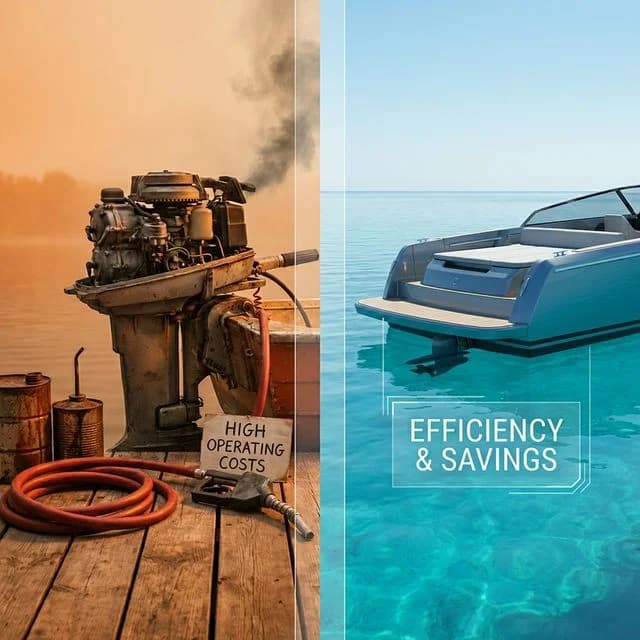
The boating world is at a crossroads. For decades, gas-powered engines have dominated the water, and Mercury outboard motors have stood at the top of that conversation as one of the most trusted names in marine propulsion. But electric alternatives are gaining serious ground, and many boaters are now asking a legitimate question: is it time to make the switch?
This comparison cuts through the marketing noise and gets straight to what matters. Whether you are a seasoned recreational boater, a weekend fisherman, or someone looking to upgrade an aging setup, understanding the real differences between Mercury outboard motors and modern electric alternatives will help you make a smarter, more informed decision.
In this guide, you will find a detailed breakdown covering performance, range, cost, maintenance requirements, and environmental impact. Both options have genuine strengths and notable limitations, and neither choice is universally right for every boater. By the end, you will have a clear picture of which propulsion system aligns best with your specific needs, budget, and time on the water.
Mercury Marine: Market Position and Brand Overview
Mercury Marine operates as the flagship marine propulsion brand of Brunswick Corporation, a publicly traded conglomerate with unmatched vertical integration across the marine industry. Brunswick's portfolio spans boat hulls (Boston Whaler, Sea Ray), electronics (Simrad, Lowrance via Navico Group), and even the Freedom Boat Club subscription network, giving Mercury a structural ecosystem advantage that standalone outboard brands simply cannot replicate. Within the global competitive landscape, Mercury sits firmly among the top five incumbents alongside Honda, Suzuki, Volvo Penta, and Yamaha, a group that collectively held 56.7% of the global outboard market in 2025. That concentration matters: understanding who controls this market is the essential starting point before any gas-versus-electric purchasing decision.
The broader market context reinforces why these incumbents carry so much weight. The global outboard engine market was valued at approximately USD 10 billion in 2025 and is projected to reach USD 17.2 billion by 2035 at a CAGR of 5.6%, with North America commanding the largest regional share. Mercury has aggressively capitalized on that dominance, holding close to 50% U.S. outboard market share as of 2025 and recording 60% overall outboard share at the 2026 Miami International Boat Show.
Mercury's brand identity is anchored firmly in high-horsepower performance. The product ladder runs from the FourStroke Pro XS series for tournament fishing applications all the way to the 600hp V12 Verado, currently the highest-production-horsepower outboard on the market. That performance positioning makes Mercury the default benchmark against which electric outboard alternatives are measured, particularly in range-intensive and high-demand use cases.
Brunswick's scale extends into digital integration as well. The VesselView engine management platform, combined with Simrad's AutoCaptain autonomous piloting system, represents an interconnected digital ecosystem that smaller electric propulsion brands are still years away from matching in dealer coverage and software maturity. For any buyer comparing conventional and electric propulsion options, Mercury's market position is not simply a brand preference; it is the competitive baseline that defines what any alternative must overcome.
The Mercury Outboard Lineup: Breaking Down Every HP Segment
Mercury's outboard portfolio spans an unusually wide horsepower range, and understanding how each tier is structured reveals both the brand's strategic priorities and the varying degrees to which electric propulsion can realistically substitute for conventional combustion engines today.
Entry-Level Portables: 2.5hp to 20hp
Mercury's FourStroke portables are engineered specifically for dinghies, inflatables, and lightweight aluminum tenders, where compact dimensions and minimal maintenance outweigh raw power considerations. Four-stroke technology now holds a 51.7% share of the global injection-type outboard market, a figure that reflects sustained consumer demand for cleaner combustion, lower fuel costs, and reduced noise at low throttle settings. Buyers in this segment are typically weekend sailors, sailing club members, and coastal cruisers who need a reliable auxiliary engine rather than a performance powerplant. Notably, this tier is also where electric substitution is already most viable, given modest power requirements and manageable battery weight penalties.
Mid-Range Workhorses: 25hp to 115hp
The 25hp to 115hp range anchors Mercury's volume sales across fishing boats, pontoons, and entry-level center consoles. Mercury's Pro XS variants prioritize wide-open-throttle performance for bass and tournament fishing applications, while the Command Thrust models use a larger-diameter gearcase to deliver superior low-end torque suited to heavier displacement hulls. Fuel economy is a genuine differentiator in this segment, as buyers accumulate significant hours annually and operating costs matter over a multi-year ownership window.
High-Power Segment: 150hp to 300hp
Mercury's V6 and V8 FourStrokes and Verado models target performance runabouts and serious offshore fishing platforms. High-power engines collectively hold a 55.3% power-segment share of the global outboard market, confirming this tier as the commercial and recreational mainstream. Mercury's V8 Verado integrates electro-hydraulic power steering and Digital Throttle and Shift as standard equipment, raising the technology baseline for buyers stepping up from mid-range motors.
Ultra-High-Power Segment: 350hp to 600hp
The Mercury V10 Verado lineup, recently expanded to include a new 425hp model, represents the current ceiling of conventional outboard engineering alongside the V12 600hp Verado. The 425hp model carries a 150-amp alternator, claimed to be the highest output in its class, and is 22% quieter at cruise than prior configurations. This segment is also where electric alternatives face the steepest technical barriers; energy-density limitations in current battery technology make matching the range and sustained output of a 400-plus horsepower combustion engine commercially impractical at present.
Each HP tier outlined here maps directly to a distinct buyer profile and, critically, to a different readiness level for electric substitution, a distinction that will frame every comparison that follows in this analysis.
HP to kW Equivalency Guide: Translating Mercury Ratings to Electric
The standard mechanical conversion is straightforward: 1 horsepower equals approximately 0.746 kilowatts. Apply that formula to any Mercury FourStroke rating and you have a theoretical electric equivalent. The problem is that the formula alone tells only half the story. Electric outboard manufacturers frequently publish peak output figures, which represent power achievable for seconds under maximum demand, rather than continuous shaft output figures that reflect sustained real-world performance. A Mercury's rated horsepower is a continuous figure measured under load. Without specifying which rating an electric manufacturer is citing, side-by-side comparisons become misleading at best. Always confirm whether an electric motor's published rating reflects peak or continuous output before treating it as equivalent to a Mercury spec sheet figure.
Lower Power Tiers: Where Electric Matches Up Best
A Mercury 9.9hp FourStroke delivers approximately 7.4kW of continuous output using the standard conversion. The electric market approaches this figure from both ends of the range. At the lower end, the Torqeedo Travel 1103 CS produces 1.1kW continuous, and the ePropulsion Spirit Plus sits at roughly 3kW, making both suitable for displacement hulls and light tenders rather than true 9.9hp replacements. The Torqeedo Cruise 10.0 RS, rated at 10kW continuous shaft output, is the closest electric equivalent to that 9.9hp Mercury, offering near-parity thrust for displacement and semi-displacement applications at cruising speeds. This is the power tier where the electric market is most commercially developed, with the widest range of products and the most independent test data available.
Mid-Range and High-Power Gaps
A Mercury 115hp FourStroke translates to approximately 85.8kW. Flux Marine's 75kW and 110kW production systems represent the nearest electric alternatives in this segment as of 2026, bracketing the equivalent figure rather than matching it precisely. Above 150hp (roughly 112kW), no commercially available electric outboard currently delivers a true drop-in equivalent for sustained high-speed running. Buyers in this segment face a genuine trade-off: operational cost savings and zero-emission compliance benefits versus meaningful range constraints at planing speeds. The 150hp ceiling is an engineering challenge being actively addressed by new entrants, not a permanent boundary.
Mercury to Electric Equivalency Reference Table
Use the table below as a single cross-reference point rather than consulting multiple manufacturer datasheets separately.
| Mercury Gas Model | Rated HP | kW Equivalent | Nearest Electric Alternative | Electric Rated Output | Notes |
|---|---|---|---|---|---|
| Mercury 2.5hp FourStroke | 2.5hp | ~1.9kW | Torqeedo Travel 603 | 0.6kW continuous | Dinghy/tender use |
| Mercury 5hp FourStroke | 5hp | ~3.7kW | ePropulsion Spirit Plus | ~3kW continuous | Light displacement hulls |
| Mercury 9.9hp FourStroke | 9.9hp | ~7.4kW | Torqeedo Cruise 10.0 RS | 10kW continuous | Closest match available |
| Mercury 25hp FourStroke | 25hp | ~18.7kW | ePropulsion X40 | ~10kW continuous | Gap remains significant |
| Mercury 115hp FourStroke | 115hp | ~85.8kW | Flux Marine 110kW | 110kW | Nearest production option |
| Mercury 200hp V8 | 200hp | ~149kW | No equivalent (2026) | N/A | Range constraints apply |
Confirm continuous versus peak ratings directly with each manufacturer before finalising a specification comparison, as rating disclosure practices vary considerably across brands and model years.
Head-to-Head: Mercury vs. Torqeedo, Flux Marine, and ePropulsion
With horsepower equivalencies established, the next step is applying them to real buying decisions. The electric outboard market has matured to the point where segment-by-segment comparisons against Mercury's gas lineup are not only possible but necessary for any serious purchasing evaluation.
Torqeedo Deep Blue 100R and Cruise Series vs. Mercury Mid-Range
Torqeedo holds the strongest brand recognition in the electric outboard space, and the Deep Blue 100R represents its most direct challenge to Mercury's mid-range FourStroke lineup. Where Torqeedo pulls decisively ahead is in digital integration: the Deep Blue ecosystem supports solar charging input, remote diagnostics via the TorqTrac app, and generates emissions documentation formatted to IMO standards, which is increasingly valuable for commercial eco-tourism operators and harbor-regulated zones in Europe. Mercury counters with an undeniable advantage in dealer service density. With thousands of certified Mercury service centers across North America, a boater stranded at a remote marina will find Mercury support far more accessible than Torqeedo's comparatively limited service network. Mercury also maintains the edge in sustained wide-open-throttle performance over extended durations, particularly in rough offshore conditions where consistent power delivery at high RPM defines safety margins, not just speed.
Flux Marine FM-75 and FM-110 vs. Mercury V6 150hp
Flux Marine is directly targeting the performance gap that kept electric outboards out of serious consideration for center console owners. The FM-110 produces 110kW of peak output, positioning it as a credible challenger to the Mercury V6 150hp in the center console segment. Independent real-world testing conducted by EMO Electric placed a Flux Marine 115hp-class motor on a Scout 215 XSF, a platform virtually identical to those Mercury V6 owners run offshore. You can review Flux Marine vs. gas outboard performance analysis for detailed performance context. The upfront cost premium for the FM-110 is significant relative to a Mercury V6, but fuel expenditure drops to near zero, and annual operating costs shift from fuel and oil to electricity at fractions of the equivalent dollar amount. For buyers running high annual hours, the total cost of ownership equation shifts meaningfully within a three-to-five year window.
ePropulsion Navy 6.0 Evo and X Series vs. Mercury 9.9hp to 40hp
ePropulsion presents the most compelling case for buyers considering Mercury's portable and small-tender segment. The Navy 6.0 Evo and X series offer integrated battery-and-motor systems that eliminate the separate battery sourcing required by earlier electric outboards. Weight savings versus comparable Mercury FourStrokes are substantial, often exceeding 30 to 40 percent, which matters significantly in dinghy and tender applications where transom load affects handling and stability. Noise levels in operation are near-silent compared to even Mercury's quietest four-stroke small-horsepower models. The 2026 electric outboard spec showdown provides a useful cross-brand comparison for this segment. Maintenance demands drop sharply: no carburetor cleaning, no oil changes, no spark plug replacements, and no winterization fuel treatments.
Side-by-Side Comparison
| Dimension | Mercury V6 150hp | Flux FM-110 | Torqeedo Deep Blue 100R | ePropulsion X Series |
|---|---|---|---|---|
| Upfront MSRP | ~$16,000 | Premium tier | Premium tier | Mid tier |
| Est. Annual Fuel/Energy Cost | $2,500 to $4,000+ | Under $500 | Under $400 | Under $300 |
| Service Interval | 100 hours/annually | 300+ hours | 300+ hours | 300+ hours |
| Motor Weight | ~230 lbs | ~180 lbs est. | ~165 lbs | ~55 lbs |
| Noise Level | 67 to 72 dB(A) | ~58 dB(A) | ~55 dB(A) | ~52 dB(A) |
| CO2 Per Hour (operating) | ~13 to 18 kg | 0 (grid dependent) | 0 (grid dependent) | 0 (grid dependent) |
| Warranty | 3 years standard | Contact dealer | 2 to 3 years | 2 years |
Note: Some figures are estimates based on available manufacturer data and independent testing; verify current specs directly with each manufacturer before purchase.
Objective Verdict by Use Case
The Practical Sailor buyer's guide covering 14 electric outboard options reinforces a pattern that emerges across all three matchups: use case determines the outcome more than brand loyalty does. For high-speed offshore fishing, competitive water sports above 50mph, or extended bluewater cruising where charging infrastructure does not exist, Mercury remains the practical and honest choice in 2026. Battery energy density has not yet closed the range gap for those mission profiles. However, for harbor commutes, eco-tourism vessels, freshwater bass fishing, pontoon lake cruising, and tender operations off sailboats or larger yachts, the electric alternatives reviewed here now match or measurably exceed Mercury on total value. Lower operating costs, reduced maintenance burden, and zero direct emissions make the value equation increasingly clear for buyers whose use cases align with these categories.
Total Cost of Ownership: Fuel and Maintenance vs. Electric Lifecycle Costs
The financial case for or against any powertrain ultimately comes down to numbers, and the Mercury vs. electric comparison is no exception. Running a Mercury 115hp FourStroke at cruise speed burns roughly 6 gallons per hour. At 2026 U.S. average marine gasoline prices hovering near $3.50 to $4.00 per gallon at the dock, that translates to approximately $21 to $24 per hour in fuel costs alone. An equivalent electric outboard drawing from a 20kWh battery pack, charged at average U.S. marina shore-power rates of around $0.15 to $0.20 per kWh, costs approximately $2 to $3 per full charge cycle. Even accounting for marina electricity rates running somewhat higher than residential rates, the per-hour energy cost differential is stark and compounds significantly across a full boating season.
Recurring Maintenance: Where the Gap Widens Further
Mercury outboard service schedules are well-documented and non-negotiable for warranty compliance. Gear oil changes are required annually, impeller replacements fall due every two to three years, and spark plug service is recommended every 100 hours. Factoring in fuel filter changes, throttle and shift cable inspections, and periodic gearcase pressure tests, mid-range Mercury FourStroke owners typically budget $300 to $600 per season in routine service costs, before accounting for unplanned repairs. Over five seasons, that recurring line item adds up to $1,500 to $3,000 in maintenance spend before a single unexpected failure occurs.
Electric outboards operate on a fundamentally different service logic. There are no combustion intervals, no oil to change, no impeller submerged in a water pump housing, and no ignition system to service. Core annual maintenance involves saltwater flushing after use, propeller inspection for fishing line and ding damage, and battery state-of-health monitoring through the motor's companion app. Independent analysis consistently shows annual electric outboard service costs running 60 to 70 percent lower than equivalent gasoline models, with some smaller electric units needing less than $100 in annual attention.
The Battery Variable and Honest 10-Year TCO
No TCO comparison is complete without addressing battery replacement. Lithium-ion marine battery packs are currently warranted by leading manufacturers for 8 to 10 years or 2,000 or more charge cycles. That warranty window covers most recreational users comfortably, but the replacement cost of a quality marine pack, potentially $1,500 to $4,000 depending on capacity, must be included in any honest 10-year projection. Buyers who ignore this variable will underestimate lifecycle cost; buyers who overweight it without offsetting it against $15,000 or more in cumulative fuel savings will reach an equally distorted conclusion.
The most reliable way to resolve this is with real numbers specific to your situation. The eBoat Directory ROI calculator allows you to input your annual hours, local fuel price, marina electricity rate, and battery pack size to generate a personalized break-even timeline. For recreational users averaging 100 to 150 hours per season, that break-even typically falls between four and seven years, after which every hour on the water delivers net savings versus a comparable gasoline outboard. For a deeper look at how these cost dynamics play out across real ownership scenarios, the gas vs. electric operating cost analysis on eBoat Directory provides five-season projections across multiple power classes. The arithmetic increasingly favors electric for volume users; the remaining question is whether the upfront premium and range characteristics align with your specific use case.
Emissions, Regulations, and the Pressure on Conventional Outboards
Market analysts have reached a clear consensus: tightening marine emission standards represent one of the most significant structural headwinds facing conventional gasoline outboard manufacturers through 2035. According to outboard motor market research from Mordor Intelligence, environmental regulations promoting electric alternatives are a documented restraint on gasoline outboard growth, while simultaneously acting as the single most powerful accelerant for electric propulsion adoption. The European Environment Agency has reported that marine activities account for nearly 15% of coastal water pollution, a figure that has intensified legislative momentum on both sides of the Atlantic. For buyers evaluating a Mercury purchase today, this regulatory backdrop is not a distant abstraction; it is an active variable in the total ownership equation.
The compliance investment required from conventional outboard manufacturers is substantial and ongoing. U.S. EPA Tier 3 and EU Stage V standards progressively tighten allowable limits for nitrogen oxides, unburned hydrocarbons, and carbon monoxide from gasoline marine engines. Modern four-stroke outboards have achieved real progress under this pressure, with recent engine innovations delivering fuel efficiency gains of 20 to 25% and emissions reductions of up to 90% compared to earlier two-stroke designs. However, these achievements have required sustained R&D investment in variable valve timing, direct fuel injection, and advanced combustion management systems. That compliance cost does not disappear at the factory gate; it flows directly into retail pricing, contributing to the steadily rising sticker prices on current Mercury FourStroke models.
The emissions gap between gasoline and electric propulsion remains wide even after those gasoline improvements. A typical Mercury 115hp FourStroke produces approximately 130 to 160 grams of CO2 per kilometer of equivalent water travel at cruise speed. An equivalent electric outboard operating on U.S. average grid electricity produces roughly 30 to 50 grams of CO2-equivalent per kilometer, representing a 70 to 80% reduction. As the grid continues to decarbonize, that electric advantage will only widen over the 10 to 15 year service life of a motor purchased in 2026.
The forward regulatory risk is geographic and accelerating. California's marine emission standards are already functioning as a regional forcing mechanism for electric adoption. Numerous North American and European municipalities, national parks, marine protected areas, and designated Canadian lakes are actively implementing or formally considering zero-emission boating requirements. Per outboard engines market analysis covering 2025 to 2033, this jurisdictional patchwork is expanding in scope and enforcement reach through the forecast period.
Buyers weighing a Mercury outboard purchase in 2026 should map the expected 10 to 15 year service life of that motor against the regulatory trajectory in their specific boating jurisdiction. A motor that is fully compliant today may face access restrictions within five to eight years in protected waterways or regulated coastal zones. That potential loss of access represents a real, quantifiable ownership risk that belongs in any honest total cost of ownership calculation alongside fuel, maintenance, and resale value.
North American Buyer Considerations: Charging, Incentives, and Waterway Rules
North America accounts for the largest share of global outboard engine consumption, and that dominance extends into the electric transition. The North America electric outboard engines market was valued at USD 0.93 billion in 2024 and is projected to reach USD 1.62 billion by 2033, growing at a CAGR of 6.34%. Despite that momentum, charging infrastructure remains one of the most consequential variables for buyers considering a switch away from gasoline power. Premium coastal marinas, yacht clubs, and high-traffic recreational hubs in states like Florida, California, and Washington have invested meaningfully in shore-power upgrades. Inland reservoir facilities, rural lake ramps, and smaller municipal docks have not kept pace, creating a genuine coverage gap that buyers must evaluate before purchasing.
Incentive Programs Worth Calculating Before You Buy
The financial case for electric outboards strengthens considerably when incentive programs are factored in. California's Clean Boating Initiative provides rebates of up to USD 7,500 for qualifying electric marine motor conversions. New York and Washington have expanded clean vessel programs that can offset between 20 and 50 percent of purchase costs on qualifying systems. Canadian buyers, particularly commercial electric vessel operators, may be eligible for federal and provincial clean technology credits that further reduce net acquisition cost. Because program eligibility thresholds and funding availability shift frequently, the U.S. Department of Energy's Alternative Fuels Data Center provides the most reliable state-by-state lookup tool for confirming current incentives before finalizing a purchase decision.
Range Planning: A Different Mental Model Entirely
Electric outboard range planning requires a fundamentally different decision framework than simply locating the nearest fuel dock. Buyers must evaluate battery state of charge at departure, the availability of regenerative charging during low-speed trolling passages, and confirmed shore-power access at the destination marina. Leading systems now achieve 60 to 90 miles between charges in real-world pontoon configurations, with runtime exceeding five hours at moderate throttle. Treating range planning as a pre-departure checklist rather than a drawback reframes the process as a discipline that experienced boaters can integrate quickly.
Service Networks Now Competitive in Mercury's Core Territories
For buyers in the Great Lakes, Gulf Coast, and Pacific Northwest regions where Mercury has historically dominated, the service gap argument has materially narrowed. ePropulsion, Torqeedo, and Flux Marine all maintain U.S.-based service and distribution infrastructure as of 2026, reducing the after-sale risk that once made Mercury's dealer network a decisive advantage. The North America electric boats market is forecast to reach USD 3,818.6 million by 2031, and that growth trajectory is accelerating investment in regional service capacity across all major brands. Buyers should still confirm authorized service locations for their specific model before purchasing, but the previously stark gap between Mercury's infrastructure and electric alternatives has closed significantly. The eBoat Directory marina and charging listings provide a practical starting point for identifying electric-capable marinas along your regular routes before committing to a system.
Which Motor Is Right for You: Verdict by Buyer Profile
Performance and Offshore Fishing Buyers (150hp and Above)
Mercury remains the defensible practical choice for offshore and performance buyers in 2026. Sustained wide-open-throttle operation in open water draws battery reserves at a rate that current electric systems cannot reliably sustain across a full offshore run. High-power electric configurations do exist at the 150hp, 300hp, and 600hp scale, but these are early-stage commercial and semi-commercial products rather than proven substitutes for Mercury's Verado or Pro XS lineup in demanding offshore conditions. Buyers in this segment should actively monitor Flux Marine's development roadmap, as the brand is positioning directly against gas performance outboards. A dual-motor transom configuration, pairing a primary electric drive with a generator-assisted range extender, is worth evaluating if your hull architecture supports it.
Freshwater and Inshore Fishing Buyers (9.9hp to 60hp)
This is the segment where the electric case has become genuinely compelling. ePropulsion and Torqeedo are mature, commercially proven platforms covering the full 9.9hp to 60hp equivalent range, and their operational advantages for anglers are significant. Silent running eliminates the engine noise that spooks fish in shallow-water environments; zero fuel smell removes a persistent source of water contamination; and access to no-emissions waterways, where gas motors are restricted or outright prohibited, is increasingly a practical necessity rather than a bonus. Per the 2026 electric vs. gas buyer's guide from Rover Marine, electric outboards now span from 1.5hp equivalents up through 115hp equivalents, covering this entire buyer segment. For anglers running 80 or more hours per season, the fuel and maintenance savings compound quickly enough to offset the higher upfront purchase price within a few seasons.
Pontoon and Slow-Cruise Recreational Buyers
Pontoon buyers represent the clearest electric win scenario in 2026. These hulls operate at displacement or semi-planing speeds where electric range penalties are minimized and efficiency advantages are maximized. The Torqeedo Deep Blue series and ePropulsion Navy systems are appropriately sized for pontoon platforms, delivering the silent operation, zero fuel smell, and elimination of cold-start maintenance that define the pontoon ownership experience at its best. Total cost of ownership savings are fully realizable at the moderate cruise speeds these hulls are designed for. Buyers should work with their dealer to address battery bank weight distribution carefully during installation, as placement affects trim and stability on pontoon platforms in ways that a standard transom mount does not.
Commercial Operators (Water Taxis, Eco-Tour, Dive Vessels)
The ROI case for electric propulsion is most compelling in commercial applications. Operators running predictable routes with high annual hours accumulate fuel savings at a rate that accelerates the payback timeline substantially compared to recreational use. Zero-emission operation is increasingly a licensing and reputational requirement for vessels working in marine protected areas, eco-tourism corridors, and coastal reserves. Fleet operators should conduct a full lifecycle cost analysis using eBoat Directory's commercial ROI calculator, which is built specifically for multi-vessel scenarios where fuel, maintenance, and regulatory compliance costs need to be modeled together at scale.
Budget-Constrained First-Time Buyers
A used Mercury FourStroke remains the lowest absolute entry point in 2026. Mercury's wide service network and strong reliability reputation make a pre-owned FourStroke a lower-risk choice for buyers without technical support resources nearby. That said, the forward-looking risk calculus deserves serious attention. Fuel costs continue to rise, and as marine emission regulations tighten progressively through this decade, the resale market for gasoline outboards is likely to soften. Per Tiny Boat Nation's 2026 electric vs. gas comparison, gas outboards still make sense when upfront budget is the binding constraint, but first-time buyers should treat that used Mercury as a transitional purchase rather than a decade-long commitment.
Key Takeaways for Outboard Buyers in 2026
Mercury Marine produces world-class outboards, but the 2026 market has matured to the point where electric alternatives deliver genuine competitive performance across multiple horsepower tiers. For buyers operating below 150hp in predictable, range-defined conditions, electric options routinely match or beat Mercury on total cost, emissions profile, and acoustic comfort.
Three factors separate informed buyers from those who default to gasoline: the HP-to-kW translation gap, lifetime TCO projections, and the pending emission regulations now advancing in both North America and Europe. Overlooking any one of these tilts a purchase decision on incomplete data.
Before committing to any motor, use the eBoat Directory to browse electric outboard listings, run side-by-side model comparisons, and generate a personalized ROI calculation grounded in your actual usage patterns.
Buyers requiring above 150hp should schedule a market revisit in 12 to 18 months. Flux Marine and several emerging manufacturers are actively pushing peak power outputs higher, and the segment gap is narrowing faster than most industry observers anticipated.
Above all else, align your purchase with the regulatory and infrastructure trajectory of your primary boating region. That single consideration carries more long-term weight than any spec-sheet comparison available today.
Stay in the Loop
Get weekly updates on the latest electric boats, industry news, and exclusive insights.