Accessible Electric Boats: 2026 Buying Guide
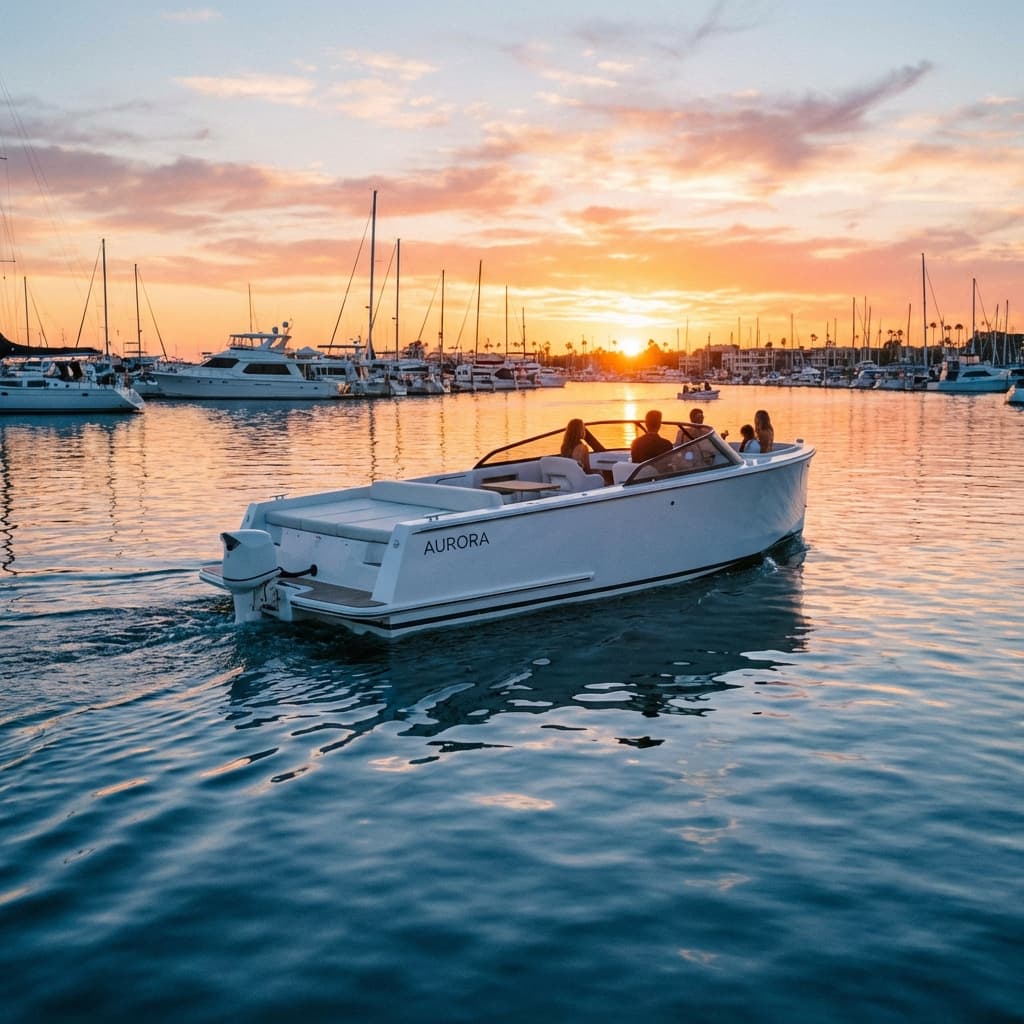
The electric boat market has matured. You no longer need an astronomical budget to own a quality electric vessel. In 2026, several manufacturers offer accessible electric boats that deliver performance, range, and reliability.
This guide examines the leading entry-level and mid-range options based on technical specifications, real-world performance, and total efficiency.
Quick Comparison Table
| Model | Range | Speed | Passengers | Typical Use |
|---|---|---|---|---|
| Duffy Sun Cruiser 22 | 12.5 hours | 6 mph | 12 | Harbor cruising |
| Vision Marine E-Motion 180E | 75 miles | 30 mph | 8 | Day cruising |
| Genesis 24 | 50 miles | 25 mph | 10 | Family recreation |
| Pioner 11 Easy + Motor | Variable | 5 knots | 4 | Inland waters |
1. Duffy Sun Cruiser 22 — Proven Reliability
Category: Harbor Cruiser
Range: Up to 12.5 hours
Top Speed: 6 mph
Passengers: 12
The Duffy Sun Cruiser 22 is the most popular electric boat in North America. Since 1970, Duffy has built over 10,000 electric boats, establishing the Sun Cruiser as the gold standard for harbor cruising.
Technical Specifications:
- Power System: 48V DC inboard motor
- Battery: 21.6 kWh lithium-ion
- Charging: 110V AC (standard outlet)
- Length: 22 feet
- Beam: 9.3 feet
- Weight: 1,950 kg
Performance: The Sun Cruiser prioritizes efficiency over speed. At 6 mph, the boat delivers 12.5 hours of runtime—enough for a full day on the water. The 48V system charges overnight on a standard 110V outlet.
Real-World Use: Harbor cruising, sunset tours, and protected waters. Not suitable for open ocean or rough conditions.
Comparison: Electric propulsion offers significantly lower energy costs over its lifetime compared to gas equivalents, often paying for itself through reduced fuel and maintenance needs within a few seasons of regular harbor use.
2. Vision Marine E-Motion 180E — High Performance
Category: Performance Day Boat
Range: 75 miles
Top Speed: 30 mph
Passengers: 8
Vision Marine Technologies builds the E-Motion 180E around their proprietary 180 HP electric outboard. This is the first electric boat under $100K that matches gas boat performance.
Technical Specifications:
- Power System: 180 HP (134 kW) electric outboard
- Battery: 70 kWh lithium-ion
- Charging: 240V Level 2 (8 hours) or DC fast charge (2 hours)
- Length: 18 feet
- Beam: 8.5 feet
- Weight: 1,800 kg
Performance: The 180 HP motor delivers instant torque. 0-30 mph in under 5 seconds. At cruising speed (20 mph), expect 75 miles of range. At full throttle, range drops to 35 miles.
Real-World Use: Watersports, day cruising, and coastal exploration. Handles 2-3 foot chop without issue.
Battery Management: The 70 kWh battery pack uses thermal management to prevent degradation. Vision Marine guarantees 80% capacity after 2,000 cycles (approximately 10 years of normal use).
Value Strategy: By eliminating traditional engine overhauls and fuel costs, performance electric vessels offer a compelling long-term value proposition for active boaters.
Learn more about Vision Marine →
3. Genesis 24 — Spacious Family Option
Category: Family Runabout
Range: 50 miles
Top Speed: 25 mph
Passengers: 10
Genesis Marine Technologies builds the Genesis 24 for families who want space, comfort, and electric propulsion.
Technical Specifications:
- Power System: Dual 40 kW electric motors
- Battery: 60 kWh lithium-ion
- Charging: 240V Level 2 (6 hours)
- Length: 24 feet
- Beam: 8.5 feet
- Weight: 2,200 kg
Performance: Twin motors provide redundancy and improved handling. At 15 mph cruising speed, the Genesis 24 delivers 50 miles of range. The dual-motor setup allows for precise maneuvering in tight marinas.
Real-World Use: Family day trips, swimming, and entertaining. The spacious deck accommodates 10 adults comfortably.
Unique Features:
- Solar panel option adds 15% range
- Retractable bimini top
- Integrated swim platform
- Bluetooth audio system
Efficiency: High-efficiency twin motor setups allow for precise maneuvering while maintaining solid cruising range for local exploration.
4. Pioner 11 Easy + Electric Outboard — Utility Choice
Category: Compact Utility
Range: 20-40 miles (depends on motor)
Top Speed: 5 knots
Passengers: 4
The Pioner 11 Easy is a Norwegian-built aluminum hull designed for electric outboards. Pair it with a Torqeedo or ePropulsion motor for a complete electric boat under $15,000.
Recommended Setup:
- Pioner 11 Easy hull
- Torqeedo Cruise 4.0
- External lithium battery pack
Technical Specifications:
- Power System: 4 kW electric outboard
- Battery: 3 kWh lithium-ion
- Charging: 110V AC (4 hours)
- Length: 11.5 feet
- Beam: 5 feet
- Weight: 130 kg (hull only)
Performance: At 4 knots, expect 6-8 hours of runtime. At full speed (5 knots), range drops to 3-4 hours. The lightweight aluminum hull requires minimal power.
Real-World Use: Lakes, rivers, and protected coastal waters. Perfect for fishing, exploring, or commuting.
Why This Works: The Pioner hull is maintenance-free aluminum. No gel coat to repair. No wood to rot. Rinse with fresh water and store.
Ownership: Aluminum hulls are famously low-maintenance, and paired with an electric motor, they represent one of the most cost-effective ways to get on the water reliably.
How to Choose the Right Electric Boat
1. Define Your Use Case
Harbor Cruising:
- Low speed (5-10 mph)
- Long runtime (8+ hours)
- Comfort over performance
- Recommendation: Duffy Sun Cruiser 22
Day Cruising:
- Medium speed (15-25 mph)
- 50+ mile range
- Mix of cruising and watersports
- Recommendation: Genesis 24
Performance:
- High speed (25+ mph)
- Instant acceleration
- Watersports capability
- Recommendation: Vision Marine E-Motion 180E
Entry-Level Utility:
- Efficient investment
- Basic functionality
- Easy maintenance
- Recommendation: Pioner 11 Easy + outboard
2. Calculate Range Requirements
Electric boat range depends on three factors:
Battery Capacity (kWh): Larger batteries = longer range. But also more weight and cost.
Speed: Energy consumption increases exponentially with speed. At 20 mph, you use 4x the energy compared to 10 mph.
Conditions: Wind, waves, and current reduce range by 20-40%.
Formula:
Range (miles) = (Battery kWh × 0.8) / (Power kW at cruising speed)
Example: Genesis 24 at 15 mph
- Battery: 60 kWh
- Power at 15 mph: 20 kW
- Range: (60 × 0.8) / 20 = 2.4 hours × 15 mph = 36 miles
Add 20% buffer for conditions: ~30 miles usable range
3. Understand Charging Options
Level 1 (110V):
- Standard household outlet
- 1.4 kW charging power
- 8-24 hours for full charge
- Suitable for: Small boats, overnight charging
Level 2 (240V):
- Dedicated circuit (like electric car charger)
- 7-19 kW charging power
- 2-8 hours for full charge
- Suitable for: Most electric boats
DC Fast Charging:
- Commercial charging stations
- 50+ kW charging power
- 30 minutes to 80%
- Suitable for: Performance boats, commercial use
4. Factor in Total Cost of Ownership
Electric boats typically have a higher initial purchase price than gasoline boats, but the savings in fuel and maintenance can bridge that gap within a few years of regular use. On average, electricity costs 80-90% less than gasoline per mile, and the absence of complex mechanical systems drastically reduces annual service bills.
Technical Considerations
Battery Technology
Lithium-Ion (Li-ion):
- Energy density: 150-250 Wh/kg
- Cycle life: 2,000-3,000 cycles
- Used in: Most electric boats
Lithium Iron Phosphate (LiFePO4):
- Energy density: 90-120 Wh/kg
- Cycle life: 3,000-5,000 cycles
- Used in: Utility boats, conversions
Thermal Management: Batteries degrade faster in extreme temperatures. Look for boats with active cooling systems.
Motor Types
Inboard:
- Mounted inside hull
- Quieter operation
- Better weight distribution
- Examples: Duffy, Genesis
Outboard:
- Mounted on transom
- Easy to service
- Replaceable
- Examples: Vision Marine, Torqeedo
Pod Drive:
- Mounted under hull
- 360° rotation
- Excellent maneuverability
- Examples: Candela, Edorado
Propulsion Efficiency
Direct Drive:
- Motor connects directly to propeller
- 85-90% efficient
- Simple, reliable
- Used in: Most electric boats
Hydrofoil:
- Boat lifts above water
- 90-95% efficient
- Reduced drag
- Used in: Candela C-8, Edorado 8S
Maintenance Requirements
Electric boats require minimal maintenance compared to gas boats.
Annual Maintenance Checklist:
Every 50 Hours:
- Check battery connections
- Inspect propeller for damage
- Test emergency shutoff
- Time: 30 minutes
- Cost: $0 (DIY)
Every 100 Hours:
- Check motor brushes (if applicable)
- Inspect wiring for corrosion
- Test battery capacity
- Time: 1 hour
- Cost: $100 (professional)
Annually:
- Full system diagnostic
- Battery health check
- Update software (if applicable)
- Time: 2 hours
- Cost: $300-500 (professional)
No More:
- Oil changes
- Spark plug replacement
- Carburetor cleaning
- Winterization (in most cases)
Financing Options
Traditional Boat Loans:
- 10-20 year terms
- 10-20% down payment
- Available from: Most marine lenders
Green Energy Loans:
- 5-15 year terms
- 0-10% down payment
- Available from: Credit unions, green banks
Manufacturer Financing:
- Promotional rates
- Shorter terms (3-7 years)
- Available from: Duffy, Vision Marine
Where to Buy
Direct from Manufacturer:
- Ideal for: New boats, warranty support
- Pros: Factory warranty, customization
- Cons: Limited negotiation, no trade-ins
Authorized Dealers:
- Ideal for: Test drives, local support
- Pros: Service network, trade-ins accepted
- Cons: Higher prices, limited inventory
Used Market:
- Ideal for: Budget buyers, rare models
- Pros: Lower prices, immediate availability
- Cons: Limited warranty, unknown history
Online Marketplaces:
- Boat Trader
- YachtWorld
- Facebook Marketplace
Frequently Asked Questions
Q: How long do electric boat batteries last?
A: 10-15 years with proper care. Most manufacturers guarantee 80% capacity after 2,000 cycles. At 50 uses per year, that's 40 years to reach 2,000 cycles. In practice, batteries degrade from calendar aging (10-15 years) before cycle degradation.
Q: Can I charge an electric boat at a marina?
A: Most marinas offer 110V shore power (included in slip fees). Some offer 240V for faster charging ($50-100/month extra). DC fast charging is rare but expanding.
Q: What happens if I run out of power?
A: Same as running out of gas. You need a tow. Most electric boats have battery management systems that reserve 10-20% capacity and warn you well before depletion.
Q: Are electric boats slower than gas boats?
A: Not necessarily. The Vision Marine E-Motion 180E matches gas boat performance (30 mph). But most electric boats under $100K prioritize efficiency over speed.
Q: Can I use an electric boat in saltwater?
A: Yes, but saltwater accelerates corrosion. Rinse with fresh water after each use. Check manufacturer specifications for saltwater rating.
Q: Do electric boats require special insurance?
A: No. Standard boat insurance covers electric boats. Some insurers offer discounts for electric propulsion (5-10% savings).
Final Recommendations
For Harbor Cruising: Duffy Sun Cruiser 22
- Proven reliability (10,000+ boats built)
- Lowest total cost of ownership
- Suitable for 90% of recreational boaters
- View specs →
For Performance: Vision Marine E-Motion 180E
- Matches gas boat performance
- Advanced battery technology
- Ideal for watersports enthusiasts
- Learn more →
For Budget Buyers: Pioner 11 Easy + Electric Outboard
- Under $15,000 complete
- Maintenance-free aluminum hull
- Good entry point for beginners
- Browse outboards →
For Families: Genesis 24
- Spacious deck (10 passengers)
- Dual-motor reliability
- Solar panel option
- View specs →
Next Steps
- Define your needs: Be honest about how far you'll travel
- Calculate range needs: Account for wind and passengers
- Test drive: Never buy without testing in real conditions
- Check local incentives: Some states offer rebates for electric boats
- Plan charging: Ensure your marina or home can support charging
Ready to explore more?
Last updated: January 26, 2026
Stay in the Loop
Get weekly updates on the latest electric boats, industry news, and exclusive insights.