The Rise of 75+ HP Electric Outboards in Recreational Boating
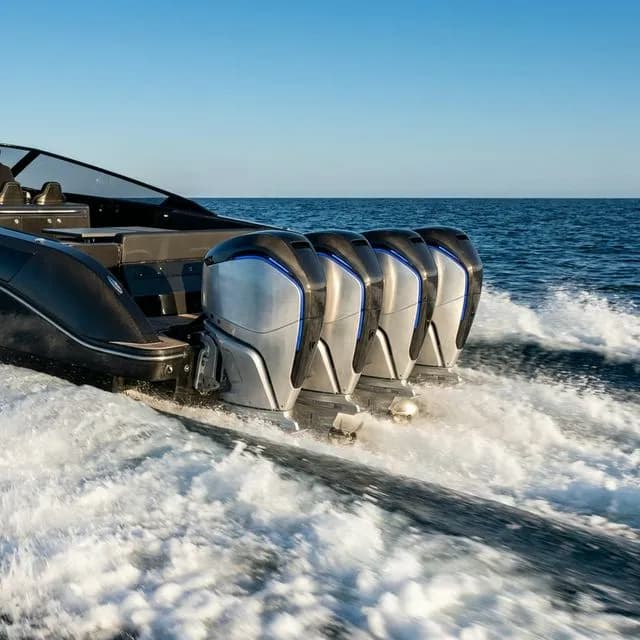
Electric propulsion has moved beyond trolling motors and displacement cruisers. Multiple manufacturers now offer electric outboard systems that match the real-world thrust and duty cycle of 75 hp and above. That power class can push planing hulls, not just slow cruisers. It opens electric propulsion to runabouts, pontoons, RIBs, and light commercial craft.
This shift matters because 75 hp marks the entry point for mainstream recreational boating. Below that range, electric has served as auxiliary power and short-range propulsion. Above it, electric becomes a viable replacement for the gas outboards that dominate family boating and small workboat fleets.
How to read “hp-equivalent” claims
Gas outboards are rated by peak horsepower at wide-open throttle. Electric systems often publish continuous power plus a higher peak rating for short bursts. Continuous prop shaft power is the anchor metric. Torque and prop selection shape on-water results.
A rough conversion helps set expectations: 1 hp equals 0.746 kW. A “75 hp-class” electric outboard usually needs on the order of 55 kW continuous output, with a higher peak for acceleration. When manufacturers market “hp-equivalent,” they often refer to thrust and acceleration, not a direct peak-to-peak horsepower match.
Mercury Avator: A legacy brand commits to electric
Mercury’s Avator line is signaling a massive commitment from the world's top outboard manufacturer. While the initial models focused on portable power, the expansion into higher output classes is well underway.
The Mercury Avator 110e delivers about 11 kW of continuous power. While positioned as comparable in thrust to 15 hp gas outboards, the platform's modular 48V LFP battery system and SmartCraft integration set the stage for much larger systems. The key point is market validation: dealer networks, service standards, and consumer confidence follow the incumbents.
Torqeedo Deep Blue 50R: The early benchmark for high power
Torqeedo helped define the high-power electric outboard segment with the Deep Blue series. The Torqeedo Deep Blue 50R delivers about 50 kW continuous at the prop, which places it in the 80 hp class by continuous output. It uses a high-voltage architecture and pairs with large battery packs in the 38–77 kWh range.
This system has seen deployment in commercial and heavy-duty recreational use. It proved that electric outboards can handle sustained load, not just short demonstrations. Weight and price remain barriers, but the Deep Blue set a reference point for the segment.
Vision Marine E-Motion 180E: Electric outboards enter the runabout core
Vision Marine’s E-Motion 180E targets the heart of the recreational market: 18–25 ft planing boats. The system is marketed as 180 hp equivalent. Its continuous power rating sits lower than that headline figure, but on-water performance has matched the intent: strong acceleration, fast planing, and top-end speed suitable for common bowriders and sport pontoons.
The Vision Marine E-Motion 180E package includes the outboard, a large battery pack around 60 kWh, controls, and a display. It uses a high-voltage architecture and liquid cooling. Vision also pushed visibility through high-speed demonstrations, including a twin-motor record run. The takeaway is that electric outboards can power performance hulls, not just quiet cruisers.
Evoy: Electric propulsion as a system, not an engine
Evoy focuses on integrated propulsion stacks for fast boats. Its Evoy Breeze 120+ class system delivers about 90 kW continuous output, with peak power available for acceleration. Battery capacity varies by configuration, often in the 50–75 kWh range.
Evoy ships with a dedicated helm display, software updates, remote diagnostics, and connected features. Charging options include higher-power AC hardware, and the company has discussed DC fast-charge compatibility. Evoy also outlines a roadmap for larger systems in the 300 hp class and beyond, aimed at tougher applications and higher speed boats.
ACEL Power: The 75 hp threshold product
ACEL Power’s IE series targets the 75 hp range as a critical threshold. The IE 75 is positioned as a true 75 hp continuous outboard, offered as a full system with batteries, digital controls, display integration, and connectivity.
ACEL has also presented plans for higher-power models like the IE 150 and the flagship IE 250. This matters because 75 hp is the category that maps to common family boats and fishing rigs. A dependable 75 hp electric outboard with strong support can unlock a large installed base of hulls that boat builders and repower customers already understand.
What changes when boats can plane on electric
Planing hulls demand high power. At speed, energy draw rises fast. A 50–60 kWh pack can drain quickly at wide-open throttle. That limits full-speed range. It does not eliminate the use-case for many boaters.
Many recreational days include bursts of power plus long idle periods: towing, cruising between coves, fishing at low speed, swimming, and dockside time. Fleets and tour operators also return to base often, which fits charging routines. For these patterns, electric outboards can deliver the experience people care about: torque, smooth control, low noise, no fumes, and reduced maintenance.
Battery weight changes design. Packs need placement low and central. That can improve stability and ride, but it requires hull planning. Commercial operators can also justify higher upfront cost with lower energy and maintenance spend over time.
What to watch next
Three factors will shape the next phase of the electric transition:
- Charging: Dockside infrastructure and higher-power charging options.
- Power Density: Lighter motors and better system integration.
- Cost: Scale, competition, and maturing supply chains.
The 75+ hp class is the adoption hinge. It is where electric outboards move from niche propulsion to practical replacement. The boats people already own and the boats builders already sell can go electric without a new category of boating. That change is underway.
Stay in the Loop
Get weekly updates on the latest electric boats, industry news, and exclusive insights.